Do you know where your employees are at all times?
Perhaps the more balanced and employee-retention-friendly questions are, “Do you need real-time data on employee locations, and is this practice ethical?” Or what is the comparison between productivity Vs privacy?
These questions are particularly relevant now because tech giant Microsoft recently added location tracking functionality to Microsoft Teams, causing mixed reactions among employers and employees. The debate is whether productivity or privacy is more important and whether this feature affects one to the detriment of the other.
This article explores what the new location tracking MS Teams feature does, arguments for this feature, ethical concerns, and how employers can strike a balance between productivity and privacy.
What the New Microsoft Teams Location-Tracking Feature Does
The first point employers need to know before using the new location-tracking feature of Microsoft Teams is exactly what it does.
Microsoft Teams can now collect location data and display it for employers, allowing them to track the whereabouts of their employees within work hours to ensure productivity. The purpose of this data is to enable employers to contact employees and provide support when they are away from their desks for longer than expected.
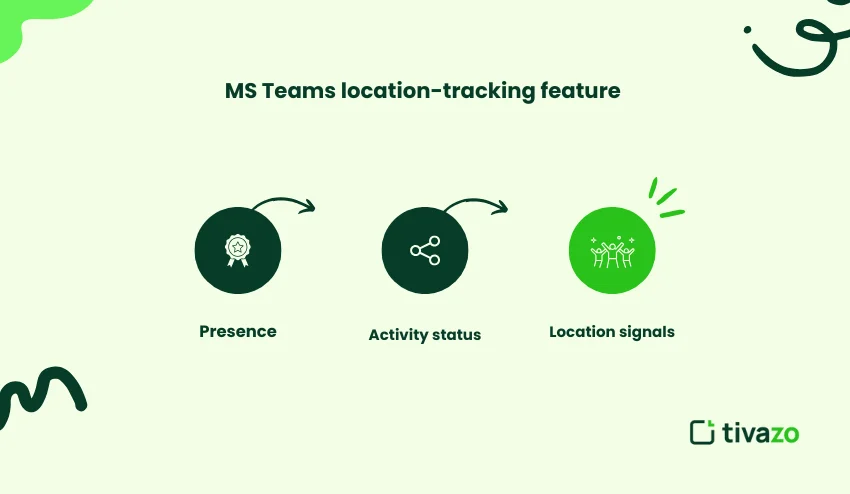
The MS Teams location-tracking feature collects three types of data:
1. Presence
This data includes availability, which the app collects via logins, calendars, and calls, and is displayed as real-time status dashboards. An ethical concern is that constant visibility pressures employees unfairly.
2. Activity status
Activity status tracks engagement, which MS Teams gathers from mouse, keyboard, and app usage. It shows this data to employers as productivity summaries. An ethical consideration is that surveillance can misinterpret focused work as inactivity.
3. Location signals
Location signals infer employee whereabouts, and the app collects this data from an IP, device, and travel data, displaying it as on-site or remote indicators. However, it can erode privacy.
The intended use of the location tracking for MS Teams is to strengthen the relationship between managers and remote workers. However, some employees have already stated concerns about the way employers may use the feature to erode privacy and fire employees who don’t comply.
The Productivity Argument for Location Tracking
The main argument for including the new location-tracking feature in MS Teams is that it benefits organizations by increasing employee productivity.
The claim is that managers can form stronger relationships with remote and hybrid employees if they know where they are, so they are aware of when they are available for liaising and offering support.
The location tracking feature has strong potential use cases for workforce planning because of the real-time visibility and data-driven insights it provides that can optimize the efficiency of staff by scheduling meetings when employees are free.
It can improve safety by ensuring there are adequate staffing numbers present at high-risk sites and enhance accountability when employees agree to share their location.
Employee Privacy, Trust, and Ethical Concerns
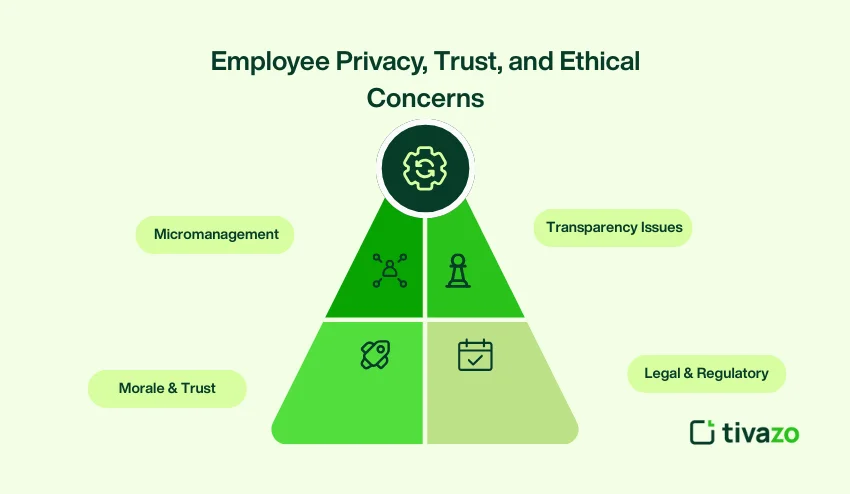
Tracking employee locations brings up several issues, mostly falling into the categories of employee privacy, trust, and ethics.
1. Fears of over-monitoring and micromanagement
Location visibility may encourage excessive oversight, which can often place undue pressure on managers to track movements rather than outcomes, which reduces the autonomy that employees in hybrid workplaces value so highly and defend fiercely.
2. Data ownership, consent, and transparency issues
Employees may lack clarity on data collection purposes, storage, access rights, and consent, depending on how their organization regulates these rights. This kind of data situation raises serious concerns about control over personal information.
3. Impact on employee morale and trust
If employees are aware they are constantly under surveillance, the environment can lower their morale, increase stress, and weaken trust, all of which are challenging problems to correct when employees begin to feel monitored instead of supported or empowered.
4. Legal and regulatory considerations in different regions
Location data handling must align with regional privacy laws, which carry with them varying consent requirements, retention limits, and enforcement standards across jurisdictions. Organizations need to be aware of the regulations in their region before using the location tracking feature of MS Teams.
Corporate Travel Expense Management in a Tracked Work Environment
Location awareness intersects perfectly with business travel and hybrid work, because this awareness allows employees to be accountable and managers to know whether their employees are at their desk, out of their home or on-premises office.
Modern travel and expense tools are vital in the way they work alongside location tracking to maintain employee visibility and transparency to ensure strong relationships between employees and managers.
Navan’s corporate travel expense platform is one of the best approaches to achieve these aims, as it combines travel booking, expense management, and policy enforcement, all of which work effectively alongside the location tracking data that MS Teams now provides.
Check out a couple of the Navan expense management reviews to see for yourself how Navan may be able to streamline travel expenses for your organization.
Tivazo: Comparison between Productivity Vs Privacy

Whereas location tracking in applications such as Microsoft Teams is concerned with the location of the employee, Tivazo does not go as far as violating the privacy of individual employees but rather directs attention to the method of accomplishing work. Tivazo is meant to assist organizations in tracking productivity based on work patterns, time utilization, and task development as opposed to a physical location.
Tivazo allows employers to know instead of monitoring the exact movements of employees.
In the areas of inefficiency or overloads
This strategy will measure productivity results based on trust and not surveillance so that the employees feel trusted and not watched. Tivazo is also open about transparency, as employees can view personal productivity data and improve themselves instead of complying out of fear.
Tivazo was designed to offer more privacy-friendly location signals, which is why it is more in line with privacy expectations and the current hybrid work culture globally, so it is worthy of consideration or an addition to Microsoft Teams monitoring capabilities.
Striking a Monitoring, Trust, and Performance With Tivazo
Misinterpretation is also one of the largest threats to location tracking tools, as staying out of a desk does not necessarily imply that it is not productive. Tivazo solves this problem by emphasizing tracking activities rather than 24/7 monitoring.
The Tivazo critical features are
- Task and project time tracking, not physical presence tracking.
- Not micromanagement, but productivity analytics, which illuminate the trends.
- The break and disengagement distinction provides insights into idle time.
- A user-friendly reporting dashboard for the managers, but do not disclose sensitive personal information.
This enables managers to make empirical decisions such as reassessing workloads or enhancing work processes without hurting morale. Employees are left to be independent, and organizations can see performance and efficiency.
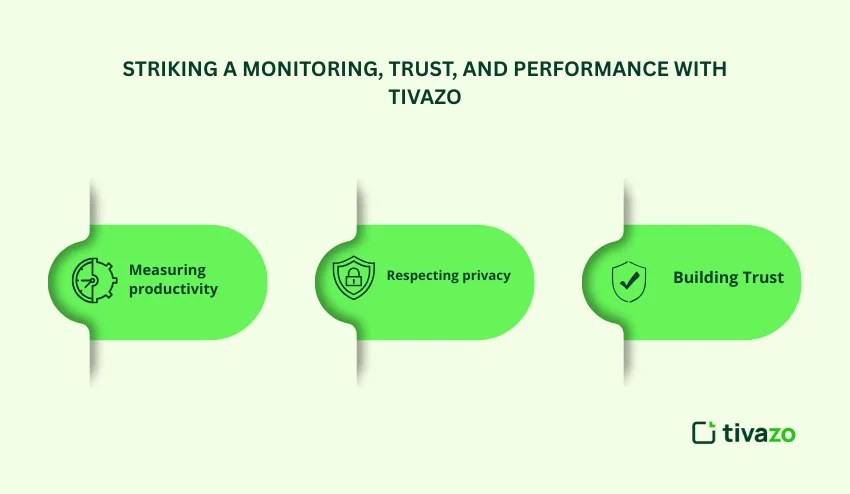
Finally, Tivazo assists companies in creating the right balance:
- Measuring productivity
- Respecting privacy
- Building trust
In a time when retaining staff and promoting ethical leadership are more important than ever, spying tools such as Tivazo can help prove that maintaining surveillance does not need to be like surveillance.
Conclusion
MS Teams’ new location tracking feature will definitely be useful for organizations with thousands of remote and hybrid employees who need to utilize travel management data collection. However, organizations that use this feature must do so responsibly and transparently to reduce resistance.
Leaders must consider the ethical concerns of using location tracking, ask their employees how they feel about it, and ensure its use will be within regional regulations before enabling this new feature at scale.