Every HR manager knows the feeling of employee onboarding.
A new hire starts Monday. You’ve got a stack of documents to explain, policies to walk through, and the same twenty questions you’ve answered a hundred times before. Meanwhile, your actual work piles up.
By the time you finish onboarding one person, another offer letter goes out. The cycle never ends.
Here’s what nobody tells you about scaling a team. The bottleneck isn’t hiring. It’s what happens after someone accepts the offer.
Traditional onboarding eats time. Lots of it. And most of that time goes toward repetitive tasks that don’t require human judgment at all.
That’s where AI changes the game.
Why Traditional Onboarding Is Broken
Think about what onboarding actually involves.
Explaining company policies. Walking through benefits packages. Showing people where to find documents. Answering questions about PTO, dress codes, and expense reports.
Important stuff. But not stuff that requires you personally.
I talked to a startup founder last month who calculated that her team spent 12 hours onboarding each new employee. Twelve hours of meetings, explanations, and follow-up questions.
Multiply that by 20 hires per year. That’s 240 hours. Six full workweeks spent saying the same things over and over.
She didn’t have that kind of time. Neither do you.
The Two AI Tools That Actually Help with Employee Onboarding
Most AI hype is just noise. But two specific applications genuinely solve the onboarding problem.
The first is AI-powered chatbots trained on your company data. The second is automated video creation from simple text scripts.
Together, they handle about 80% of what makes onboarding exhausting.
Let me explain how each one works.
AI Chatbots That Know Your Company
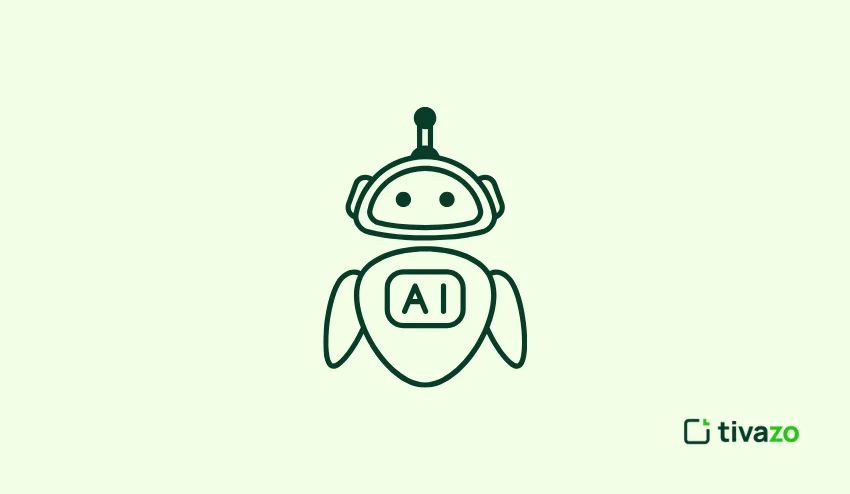
Imagine a new hire has a question about parental leave policy at 9 PM.
Old way: They email HR. HR responds tomorrow. Perhaps tomorrow will be a busy day. The worker waits a little, more or less annoyed.
New way: They ask the chatbot. It pulls the answer directly from your policy documents. Instant response, accurate information, and zero HR time required.
This isn’t science fiction. AI chatbot solutions now let you upload your employee onboarding handbook, benefits guides, and company policies
The AI is trained on your personal information, and on the basis of your real documents, it answers questions.
New hires can ask things like
What’s the process for requesting time off? How does our health insurance work? Where do I submit expense reports? What’s the policy on remote work?
The chatbot handles it all. With source citations, employees know exactly where the information came from.
One HR director told me her team went from answering 50 repetitive questions per week to maybe 5. The chatbot caught everything else.
That’s not replacing human connection. That’s freeing humans to focus on work that actually needs them.
Training Videos Without the Production Hassle
Here’s the other onboarding time sink. Training content.
You know you should have videos explaining your tools, processes, and culture. Every best practice guide says so.
But creating videos traditionally means scripts, filming, editing, and probably reshooting because someone stumbled over their words. Most teams give up before they start.
AI solves this, too.
Text to video tools let you write a simple script and generate a professional video automatically. Complete with voiceover, graphics, and editing.
No camera. No lighting setup. No awkward filming sessions.
Write what you want to say. The AI handles everything else.
This means you can create employee onboarding videos for specific roles and processes without the production overhead. Update them when things change without reshooting everything.
A SaaS company I know created its entire onboarding video library in one afternoon. Previously, they’d been meaning to do it for two years.
What This Looks Like in Practice

Let me paint the picture of AI-assisted onboarding.
- Day one: The new hire receives login credentials and access to the company chatbot. They can immediately ask questions about anything in your documentation.
- First week: They work through a series of short training videos covering your tools, communication norms, and role-specific processes. Each video was generated from a text script in minutes.
- Ongoing: Whenever questions come up, the chatbot provides instant answers. No waiting for HR. No digging through folders trying to find the right document.
HR’s role shifts from information delivery to genuine support. Checking in on how people are adjusting. Addressing unique situations that actually need human judgment. Building relationships instead of repeating policies.
The Numbers That Matter
Firms that apply AI to conduct onboarding record some impressive findings. The productivity time is greatly reduced. Recruits increase at an accelerated rate when they can obtain answers almost immediately rather than having to wait.
HR workload decreases by hours per new employee. Those hours go back into strategic work that moves the business forward.
Consistency improves dramatically. Every employee onboarding gets the same accurate information. No more variations based on who happened to onboard them.
Employee satisfaction rises because people feel supported without feeling like they’re bothering anyone.
The ROI shows up quickly. Most teams see the benefit within their first few hires.
Getting Started Without Overwhelm
You don’t need to overhaul everything at once.
Start with the chatbot. Upload your employee onboarding handbook and key policy documents. Let new hires start asking questions.
Then identify your most-asked onboarding questions. Create short video answers for the top five. See how it feels.
Expand from there based on what works.
The goal isn’t perfection on day one. It’s reducing friction gradually while learning what your team actually needs.
The Bigger Picture
AI isn’t replacing human HR. It is managing the mechanical components so that humans do human things. Any hour spent clarifying PTO policy is an hour that is not spent on culture building, conflict resolution, or strategic hiring. The repetitive stuff has to get done. It just doesn’t have to be done by you personally.
Smart teams are figuring this out. They’re using AI to scale their onboarding without scaling their HR headcount for employee onboarding
The tools exist. They’re accessible. They work.
The only question is whether you’ll keep doing things the hard way or let technology handle what technology does best.
Your new hires are waiting. Your HR team is stretched thin. The solution is right there.
Start this week. Your next onboarding cycle will thank you.
How Tivazo Helps Improve Employee Onboarding
Tivazo brings employee onboarding to a whole new level with AI chatbots. In a conventional structure, new employees spend hours or days before getting responses to queries about PTO, benefits, or company policies. This slows down the pace of productivity and exerts unwanted strain on the HR teams. The solution to this is offered by Tivazo, which will give instant and accurate responses 24 hours a day.
HR teams can use Tivazo to train the chatbot to respond to questions in a specific and consistent way by including the company handbooks, policy documents, and frequently asked questions in Tivazo. Questions such as “How do I submit an expense report?” could be asked by the new employees. or “What is the remote work policy?” and get direct instructions without having to wait till HR comes.
This not only accelerates learning but also increases employee confidence and satisfaction. To the HR, Tivazo minimizes redundant inquiries, enabling the teams to concentrate on strategic projects such as mentoring, culture-building, and performance support.
Finally, Tivazo allows closing the gap between human assistance and automation. It also manages to deal with the day-to-day onboarding tasks, ensuring that the employees feel that they are supported on the first day, and the HR teams can concentrate on the work that actually counts, thus making it very efficient, scalable, and engaging to all.
Conclusion
Tivazo facilitates the process of employee onboarding through chatbots, which are automated with AI and automated training videos. Chatbots can give immediate answers to frequently used HR questions, eliminating repetitive activities and assisting new employees in receiving the necessary information in real-time. Role-specific training is also straightforward and uniform with AI-generated videos and does not require much work to film and edit them.
With these processes being automated, Tivazo allows HR departments to engage in strategic activities such as mentoring, culture building, and employee onboarding support. Onboarding can be effectively scaled by even small teams, and it makes it more consistent and enhances the satisfaction of new hires. Onboarding is more efficient and quicker with Tivazo, which provides employees with adequate support during their first day and allows HR to concentrate on areas of importance.