
Stress in the workplace is not merely an HR problem; it is a productivity killer. Employees experience burnout and lack of engagement, and even the highest-performing employees will not be able to remain motivated when overwhelmed. This is the reason why a stress free work environment is a necessity for modern organizations.
This is because a healthy work environment with trust, flexibility, and support has direct effects on employee well-being, job satisfaction, and retention. Small changes can create a low-stress workplace where individuals can prosper, whether by creating a positive workplace culture or simply by encouraging work-life balance and mental wellness.
You will find useful tips, stress-reducing practices, and leadership-driven remedies to create a positive work climate that employees will be truly fond of and work better in.
👉You May Also Like: Handle Stress at Work: 7 Effective Tips for 2026
What is a Stress-free Environment?
A stress free workplace is a place where employees feel secure, encouraged, and empowered to do their best job without being pressured or feeling anxious all the time. In such an environment, effective communication, achievable workloads, and respect among employees make a healthy working environment that is concerned with the well-being of the employees.
A stress-free working environment promotes work-life balance, mental health in the workplace, and burnout by developing a favorable work culture. When psychological safety and flexibility form part of day-to-day operations, employees have greater job satisfaction, enhanced concentration, and engagement.
Organizations can achieve a low-stress workplace through stress management and a positive workplace culture that enhances productivity, reinforces relationships, and promotes the long-term mental health of employees.
Tips For Creating a Stress-Free Work Environment
Stress free work environment is not just about pressure reduction, but it is about creating a working environment where employees feel supported, motivated, and even safe in mind. The following practical suggestions will enable you to create a healthy workplace that fosters the well-being, engagement, and long-term success of the employees.
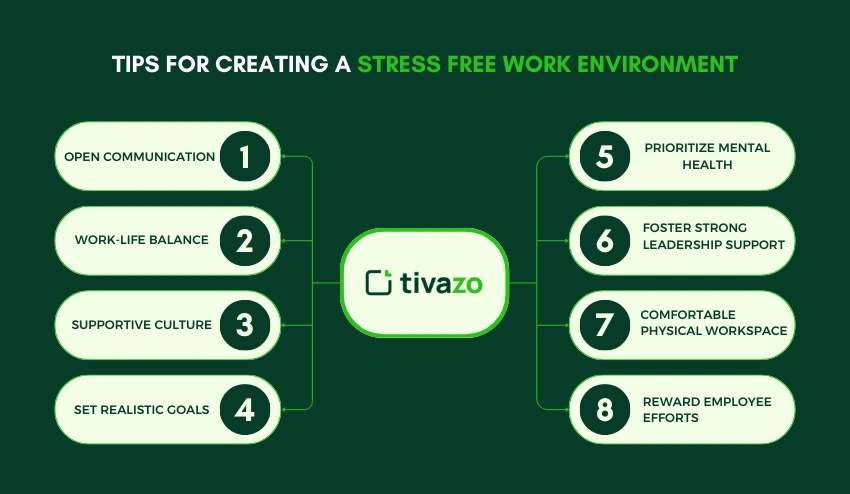
1. Promote Open and Transparent Communication
A stress free work environment is based on open communication since it eliminates uncertainty and fear. Employees are less anxious and have confidence in their work when they are well aware of their role, responsibilities, and expectations.
Open communication by the leadership creates trust and psychological safety in the workplace. Employees feel freer to express their concerns, share ideas, and seek help without fear of adverse effects.
Open-door policies, regular meetings, and feedback sessions enhance a favorable work culture and employee engagement, which in turn leads to a decrease in stress at the workplace.
2. Encourage Work-Life Balance
A low-stress workplace is just a product of a workplace that respects personal time. The boundaries are lost due to the long hours and 24/7 availability that adversely impact employee mental wellness.
Flexible work schedules, remote work, and sufficient time off should be encouraged so that employees can rest. This directly advocates work-life balance and averts emotional burnout.
Employees will be more focused, energetic, and creative in the workplace when they are balanced, which supports a productive workplace.
📖Related: 6 Reasons Why Work-Life Balance Is Important
3. Create a Supportive and Inclusive Culture
A good working environment makes employees feel respected, valued, and involved. The inclusion will minimize the emotional stress and make employees feel like belonging.
Team building, teamwork, and respect build interpersonal relationships and morale. This creates a good working culture in which employees help each other.
An inclusive and supportive working environment boosts employee satisfaction levels, turnover, and improves the overall well-being of employees.
4. Set Realistic Goals and Workloads
One of the major threats to stress free working environment is unrealistic expectations. The workloads are high, and they may cause burnout and disengagement.
Having priorities and realistic goals contributes to the time management of employees. It lessens stress and enhances their loyalty to their abilities.
Workloads that are balanced are relevant in the prevention of burnout and sustainable performance in the long term.
5. Prioritize Employee Mental Health
Mental health at work is something that should be supported in order to have a proper, healthy working environment. Mentally supported employees are stronger and more involved.
Making wellness programs, counseling, or mental health days available demonstrates concern about the well-being of the employees. Such programs contribute to the minimization of stress and absenteeism.
An environment that places importance on mental health promotes trust and long-term commitment among employees.
6. Foster Strong Leadership Support
Leadership directly affects the levels of stress in the workplace. Empowering managers can assist employees to overcome difficulties without any extra burden.
Open communication, emotional safety, and trust are promoted in empathic leadership. Workloads or stressors can be better discussed by employees.
Effective leadership enhances the experience of the employees and supports the work culture.
7. Design a Comfortable Physical Workspace
The physical environment contributes significantly to reducing stress at the workplace. The lack of light, noise, or uncomfortable seats may augment day-to-day stressors.
Ergonomic chairs, natural lighting, and silence enhance concentration and lessen fatigue. The factors are associated with improved mental and physical health.
A cozy working environment encourages efficiency and positivity towards the whole experience of the employees.
8. Encourage Stress-Relieving Activities at Work
Stress-relieving activities are also an addition to the incorporation of stress-relieving activities that enable the employees to cope with pressure. Easy interventions such as mindfulness sessions, stretching breaks, or wellness programs are different.
Such events promote the mental health of employees and promote healthy coping strategies. Employees are refreshed and focused after returning to work.
Periodical stress-reduction programs enhance a low-stress environment and enhance engagement.
📖Read More: Mental Clutter: 8 Powerful Ways to Clear Your Mind Fast
9. Recognize and Reward Employee Efforts
The role of recognition is very strong in establishing a favorable employee experience. When you feel appreciated, it lowers your emotional stress and motivates you.
Frequent recognition in the form of praise, incentives, or rewards promotes confidence and morale. Employees feel that their input is important.
Recognition boosts employee satisfaction and strengthens a good, positive working culture.
10. Provide Growth and Development Opportunities
The aspect of uncertainty in a career may be a significant cause of stress at work. The provision of learning and development decreases anxiety and creates confidence.
Skill development and training programs motivate employees to develop professionally. This enhances interest and investor loyalty.
Organisations that are growth-oriented promote employee welfare as well as enhancing retention and performance.
The process of fostering stress free working environment is a continuous process that involves empathy, structure, and consistency. The focus on communication, balance, and the well-being of employees can help organizations to create a healthy working environment where employees feel appreciated, supported, and motivated to achieve.
What are Stress Relieving Activities at Work?
Stress-relieving activities at work are practices and initiatives designed to reduce mental pressure, restore focus, and support employee well-being. These activities play a vital role in creating a stress free work environment by helping employees manage daily challenges without feeling overwhelmed. When thoughtfully implemented, they contribute to a healthy work environment that supports both productivity and mental wellness.
Balance, connection, and emotional resiliency are promoted by stress-relief activities in a positive culture. Work-life balance, enhancing employee engagement, and upholding mental health in the workplace by preventing burnout are some of the benefits they promote. Companies that focus on such activities have a favorable organizational culture where employees feel appreciated, revitalized, and motivated to deliver their best.
Stress-Relieving Activities at Work
- Mindfulness or meditation sessions
- Short stretch or movement breaks
- Breathing and relaxation exercises
- Flexible work hours or remote work options
- Wellness programs for employees
- Quiet or relaxation spaces
- Team-building activities and social events
- Encouraging regular breaks during work hours
- Access to mental health resources or counseling
- Physical activities such as yoga or desk exercises
- Recognition and appreciation initiatives
- Workshops on stress management and emotional well-being
These activities, when practiced consistently, help maintain a low-stress workplace and strengthen a productive work environment focused on long-term employee mental wellness.
Conclusion
Building a stress free workplace is not only a policy but also an investment in the health, interest, and sustainable output of employees. Organizations should have a healthy workplace culture, which is achieved by promoting a healthy work-life balance, encouraging mental health in the workplace, and providing stress-relieving activities that make employees feel appreciated, motivated, and empowered. A stress-free work environment not only alleviates burnout and enhances concentration but also enhances retention, teamwork, and job satisfaction. These practices are vital and should be ranked among the priorities so that your team is successful, which will lead to personal development and the success of the organization in a good and healthy work atmosphere.