Time tracking does not need to be like surveillance. Most employees are also afraid of being overseen all the time. Invasive tracking may destroy trust and productivity.
The changes to privacy first time tracking. Through transparency, consent, and minimum data collection, organizations can learn without undermining the confidence of employees.
Tivazo is at the forefront with features that secure the data of the employees, and that of the managers is informed. This blog will discuss the meaning of privacy first time tracking, the reason why it generates trust, and how your team can do it successfully.
What Does “Privacy First Time Tracking” Really Mean?
Privacy first time tracking is concerned with the measurement of work without crossing individual borders. It concentrates on gathering the information that is only crucial in the comprehension of productivity.
Contrary to time tracking in the traditional sense, which can capture all keystrokes, URLs, or screenshots, privacy-oriented systems restrict their data gathering to the bare minimum, such as the number of hours worked or tasks accomplished. Employees remain aware and in charge of what is being monitored.
The strategy focuses on openness. Teams understand what data is being gathered, why it is important and how it will be utilized. Consent is the key – everything is tracked when employees consent.
It also implies security by design. Gathered data is coded and can only be accessed by authorized personnel. This minimizes threats of violations and abuse.
Scenario: A privacy-first tool such as Tivazo can blur sensitive sections or record only the necessary activity instead of taking full screenshots of an employee on their desktop. Employees are still able to view and manipulate their own data.
The Privacy Challenge in Modern Time Tracking
Most of the traditional time tracking tools emphasize control rather than trust. They record screenshots, keystrokes and browser logs. This is meant to increase productivity but in most cases, it makes employees feel like they are observed instead of being assisted.
This may result in anxiety and disengagement. Employees can fear that they are being judged unjustly or micromanaged. This in the long run reduces morale and may even lead to turnover.
Legal and compliance risks also exist. Monitoring personal data without the appropriate consent can be against the privacy regulations such as GDPR or CCPA. Lack of compliance by companies will result in fines and tarnishing of reputation.
Lastly, it has an effect on culture. Surveilled teams will not exchange ideas freely and will not work as a team. Once trust is lost, it is difficult to regain.
Why Privacy First Time Tracking Builds Trust
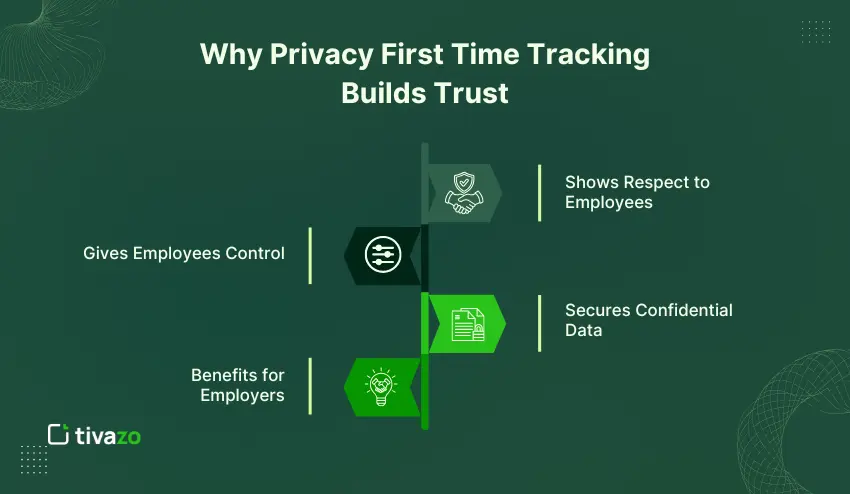
1. Shows Respect to Employees
Trust starts with respect. Privacy first time tracking demonstrates to employees that their employer appreciates limits and openness. Workers are more motivated and engaged when they feel respected.
2. Gives Employees Control
When the employees understand the data that is collected and the purpose, they become more confident. Consent-based tracking eliminates anxiety and enables teams to control their own work data.
3. Secures Confidential Data
Such characteristics as masked screenshots or restricted activity logs do not reveal personal or confidential information. This is an added strength of the message that privacy of employees is a priority.
4. Benefits for Employers
Privacy first time tracking is not only good for employees but also for managers. The teams would be more open to giving feedback, working in teams, and being loyal. There is an enhancement in productivity, a reduction in the number of disputes over work hours, and reinforcement of the culture in the company.
Quick Checklist – Building Trust
- Inform employees what is being tracked.
- Require opt-in consent for monitoring features.
- Use masked screenshots or minimal data collection.
- Give employees access to their own data.
- Review privacy practices regularly.
What Privacy First Time Tracking Looks Like in Practice
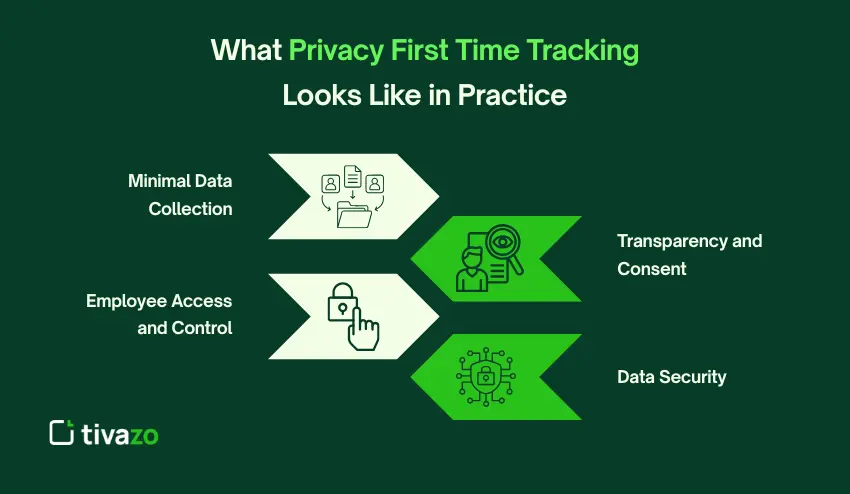
1. Minimal Data Collection
Privacy-first tracking is concerned with collecting just enough. It does not record the number of keystrokes or web addresses visited but records hours spent, number of tasks done, and project time. This is a non-invasive method where the managers can get an understanding without encroaching on personal space.
2. Transparency and Consent
Employees are notified as to what is monitored and the purpose. The key is consent- the process of tracking starts once the employee consents. Effective communication makes all people aware of the intention and boundaries of surveillance.
3. Employee Access and Control
Users are able to access their personal information any time. They are able to demand corrections or deletions, which makes them trust the system. Trust and accountability is strengthened through this control.
4. Data Security
Gathered information is coded and can only be accessed by authorized individuals. Role-based access and retention policies ensure sensitive information is not used or breached by unauthorized persons.
5. Real-World Example: Tivazo
Tivazo upholds privacy-first practices by providing masked screenshots, activity logs, and transparent consent processes. Managers receive the information they need, and employees feel secure because sensitive data is protected.
How Tivazo Embodies Privacy First Time Tracking
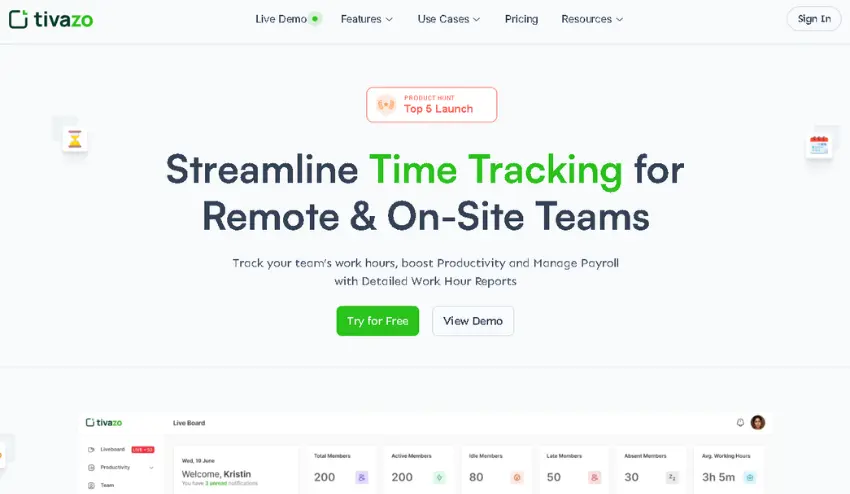
Smart Tracking and Control by the user
The privacy first time tracking software developed by Tivazo enables managers to view the work hours and project time without gathering data that is not required. The time tracking of employees can be controlled by employees, hence employee privacy in time tracking.
The Masked Screenshots of Security.
Tivazo, in contrast to the traditional tools, employs masked screenshots to keep confidential data safe. This is what makes the time tracking secure and yet gives managers information on the progress of work.
Clear Policies and Agreement.
Tivazo focuses on time tracking on consent. Consumers know the type of information that is gathered and its purpose. Consent tracking establishes trust and complies with the GDPR and other privacy laws ( GDPR time tracking).
Encryption and Compliance of Data.
All the information is coded and kept in a safe place. Role-based access makes sure that the sensitive information is seen by authorized personnel only. The design of Tivazo renders it one of the most privacy-conscious productivity applications in the market.
Why Teams Choose Tivazo
Tivazo can help organizations monitor productivity without jeopardizing trust by using intelligent tracking, consent, transparency, and security. There is increased morale and fewer conflicts in teams.
Step‑By‑Step Guide: Setting Up Tivazo With Privacy in Mind
1. Invite Your Team Transparently
Begin by calling your team together and defining what will be monitored. It is important to stress that Tivazo is a privacy first time tracking software and that the data of employees is treated securely. Trust is established at the very beginning.
2. Configure Privacy Settings
Adjust screenshot masking, idle time detection, and data collection options. Use employee privacy in time tracking. Modify screenshot masking, idle time detection, and data collection settings. With time tracking features, use employee privacy to safeguard sensitive information without losing productivity information.
3. Review Consent Workflows
Make sure that all the team members provide clear consent to monitoring. The consent-based system of Tivazo provides consent-based time tracking, which is compatible with GDPR and other privacy policies ( GDPR time tracking).
4. Set Access and Roles
Role-based permissions limit access to sensitive data. Detailed reports can only be viewed by authorized managers, and this provides secure time tracking throughout your organization.
5. Monitor and Adjust
Periodically revisit settings and data collection practices. Keep your team updated and change privacy settings accordingly. This will uphold trust and make the best out of privacy-centered productivity tools.
Checklist – Privacy-First Setup Steps:
- Invite the team with transparency
- Configure screenshot masking & data limits
- Obtain explicit consent
- Assign role-based access
- Review privacy practices regularly
Common Myths About Privacy First Time Tracking
Myth 1: Lack of Monitoring is Lack of Insight into Productivity
Others feel that employee privacy limits the transparency of work. As a matter of fact, privacy first time tracking tools such as Tivazo offer crucial metrics such as hours worked, task progress, and project tracking without invasive monitoring. Teams are responsible and trusted at the same time.
Myth 2: Privacy-First Tracking Is Small Team Only
Startups are not the only ones that are privacy-conscious about tracking. Employee privacy in time tracking can be deployed in large organizations at scale. Evenly distributed teams can ensure transparency and compliance with proper configuration.
Myth 3: Hiding Data under the Masquerade Conceals Significant Context
There is a belief that concealing screenshots or minimizing the amount of data collected will not allow the managers to learn the work patterns. Tivazo is a secure time tracking that stores productivity data and secures sensitive information. Employees retain their privacy, and managers receive the data they need.
Myth 4: GDPR Compliance is too complex
Time tracking to apply GDPR does not need to be complicated. The compliance is made easier by Tivazo consent workflows and data protection features. Organizations are able to follow time in a responsible manner and at the same time comply with the law.
Conclusion
Privacy first time tracking is not just a trend, but a way to gain trust, protect employees, and increase productivity. Such tools as Tivazo enable organizations to monitor work effectively and to focus on the privacy of employees in time tracking.
Through transparency, consent, and security, teams feel respected and empowered. This will minimize conflicts, enhance morale, and create a culture of accountability.
Getting started is simple. Install privacy first time tracking software, set up consent processes, and give employees explicit access to their personal data. Enhance this with checklists and privacy-friendly practices to the fullest.
This process is easily accomplished by Tivazo, which provides safe time tracking and compliance options that comply with GDPR and other regulations (GDPR time tracking). Your team gets access to the insights that will help them succeed, and employees are confident in the way their data is processed.