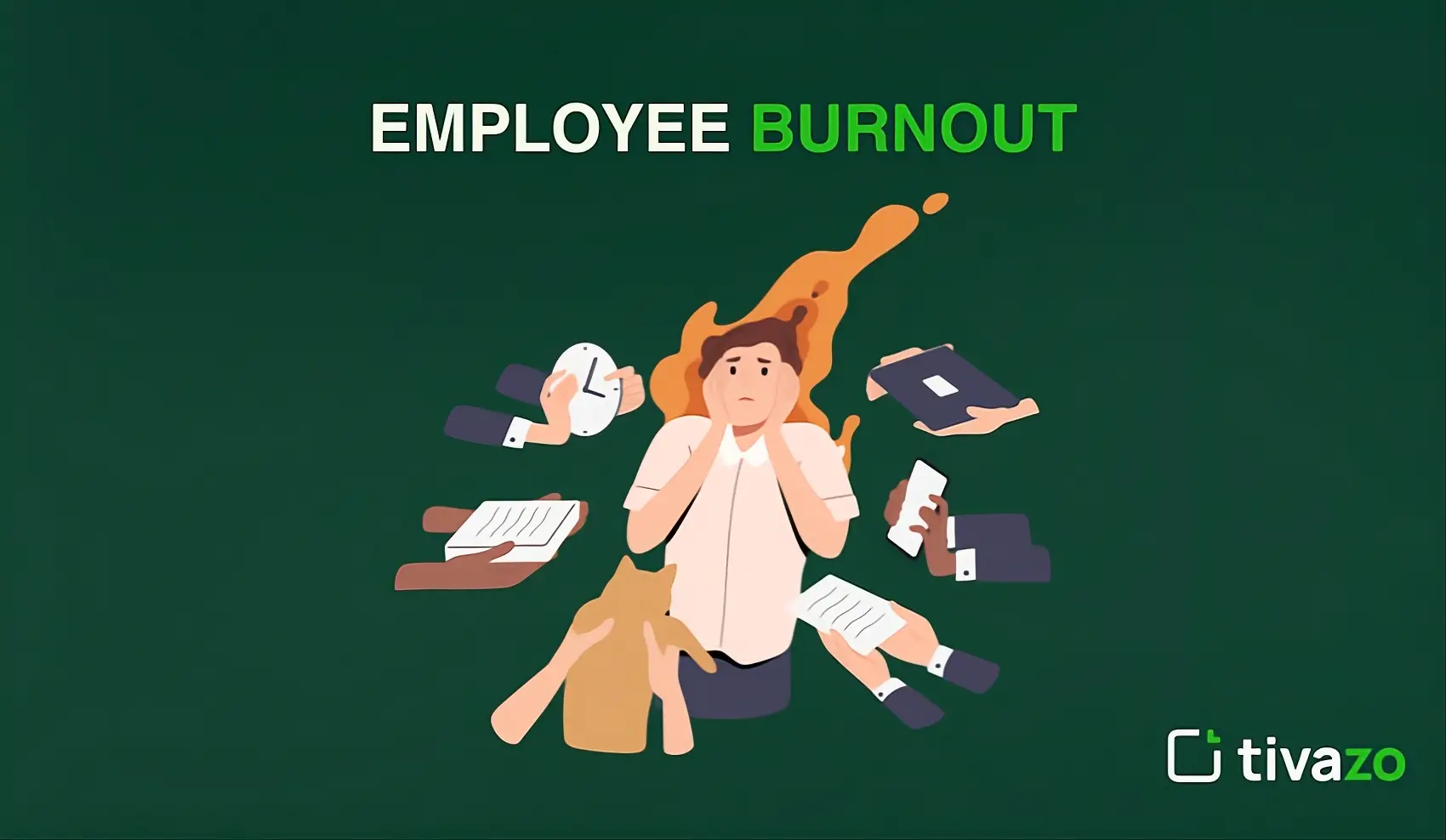
Employee Burnout is now a big challenge in modern workplaces, as more workers than ever before seem to be experiencing fatigue, stress, and detachment from their work, which is now understood as a widespread phenomenon, rather than a personal battle that people face in the workplace.
Research indicates burnout levels are increasing in all sectors and levels of occupations, from entry-level employees to senior management. Burnout is a function of work, having a spill-over effect on personal well-being.
Having an awareness of what burnout results from and being equipped with the tools needed to combat burnout can help employees and organizations alike. This guide will examine what burnout is, prevention methods, and effective remedies.
What Is Employee Burnout?
Employee burnout is a state of physical, emotional, and mental exhaustion caused by prolonged work stress. It happens when employees feel overwhelmed, emotionally drained, and unable to meet constant demands.
Burnout isn’t just about having a bad day or feeling tired after work. It’s a chronic condition that affects millions of employees worldwide. When left unaddressed, it creates a cycle that becomes difficult to break. The World Health Organization recognizes burnout as an occupational phenomenon.
Definition of Employee Burnout
What is employee burnout exactly? Employee burnout is said to consist of three main dimensions:
- Exhaustion: A feeling of depletion of physical and emotional energy.
- Cynicism: Building Negative Attitudes Towards Work and Associates
- Reduced Effectiveness: A reduction, or perceived reduction, in personal or
It is not just tiredness from having a long day; it’s not just tiredness, it’s not going to go away.
Why Burnout at Work Is Increasing
Workplace burnout has grown significantly in recent years due to several factors converging together:
- Working remotely: As the boundaries between work and personal life are usually blurred, more hours worked is one sure consequence.
- Always-on culture: Constant connectivity creates pressure to respond and stay available
- Economic pressures: Job insecurity increases stress and adds responsibilities.
- Increased workload: In this regard, fewer employees doing more work has caused continuous burnout.
Connection Between Workload Management and Burnout
Poor management of workload is a direct contributor to burnout in many aspects, including:
- Lack of priorities: With the build-up of tasks without setting priorities, employees get confused and have no idea where to start.
- Unrealistic expectations: Unrealistic time limits and consistently changing goals raise the levels of stress while making planning impossible.
- Uneven distribution: Some team members are overloaded while others have spare capacity, which creates resentment and inefficiency.
Good workload management plan is helpful in the prevention of burnout in the work setting:
- Fair distribution: It guarantees that tasks are distributed in a fair manner among the team members.
- Realistic timelines: Realistic timelines are established, ensuring quality work by preventing a race.
- Clear Priorities: Employees understand what is really important and where to put the importance accordingly.
Main Causes of Employee Burnout in the Workplace
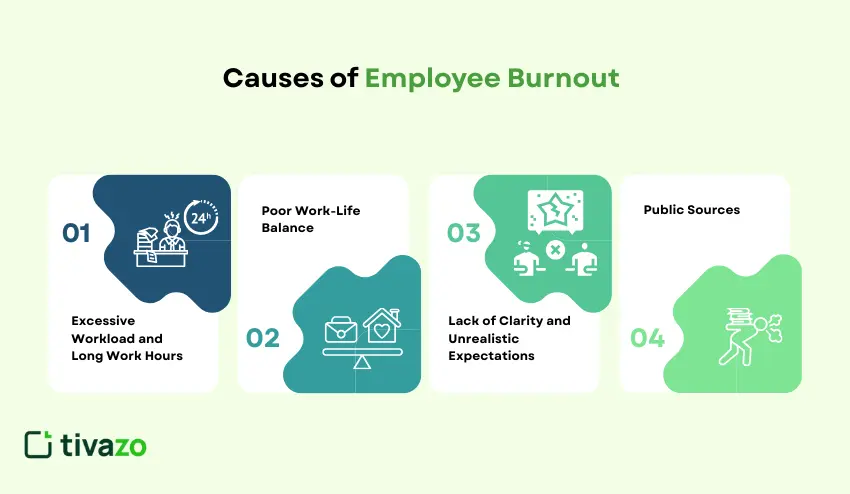
Burnout doesn’t happen overnight; it builds up over time through various workplace factors. Identifying these causes of employee burnout in the workplace is the first step toward creating healthier work environments. Most organizations unknowingly create conditions that push employees toward exhaustion.
Excessive Workload and Long Work Hours
Overwhelming workloads tend to be the leading driver of employee burnout. When employees are regularly outperforming their capacity, exhaustion follows. The situation is made worse by the fact that workers see no end to the pressure.
Long working hours leave hardly any time for recovery. Workers who frequently have to work overtime are more likely to burn out. Continuous pressure of doing more with less is exhausting in terms of energy and motivation; thus, this load of burnout is not bearable.
Poor Work-Life Balance
Work-life balance suffers when job demands spill into personal time. Employees need time to recharge outside of work. Without this separation, stress accumulates with nowhere to go.
When work consumes evenings and weekends, stress builds up continuously. Personal relationships and health often suffer as a result. Companies that don’t respect boundaries contribute to employee mental fatigue.
Lack of Clarity and Unrealistic Expectations
Unclear expectations frustrate people. The employees end up spending a lot of their time and energy guessing what they should do instead of actually doing work.
Unrealistic goals set workers up for failure. If targets are impossible, the motivation bottoms out in no time. And adding to the chaos, priorities keep changing, making workers feel like they are always behind.
Ineffective Workload Management
Without proper systems in place, work distribution becomes unfair. Some employees carry too much while others have capacity. This imbalance is one of the main causes of employee burnout in many organizations.
Missing tools or resources make simple tasks harder than they need to be. Lack of support from managers compounds the problem: when workers encounter challenges solo, stress mounts rapidly.
Signs and Symptoms of Employee Burnout
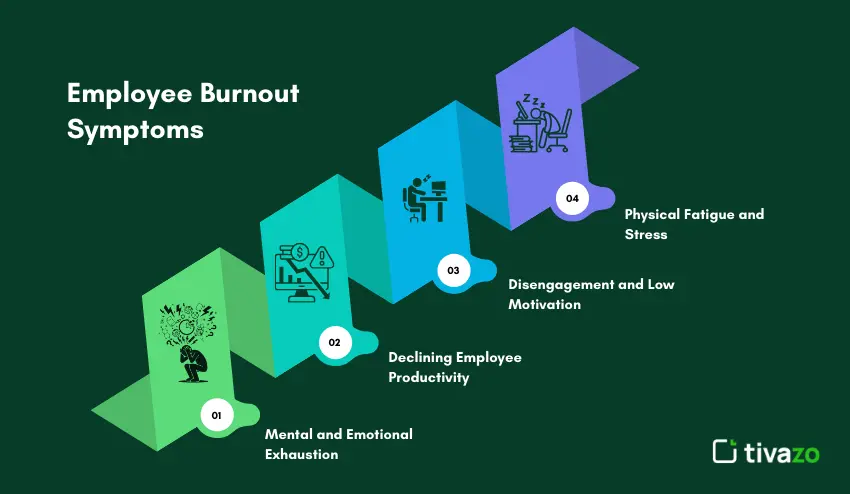
Early intervention can be done by identifying the burnout indicators in the workplace. in the workplace. Burnout does not present itself in a universal manner, but some trends are observed to be common across individuals. The knowledge of such symptoms of employee burnout assists managers in providing assistance where necessary.
Mental and Emotional Exhaustion
The burnout is characterized by emotional exhaustion. The employees are exhausted despite spending an entire night. This is a deeper fatigue than physical fatigue.
They have difficulty concentrating and making decisions. It is difficult to think clearly because of mental fog. The excitement is replaced by cynicism and negativity, and minor issues seem insurmountable.
Declining Employee Productivity
The issue of burnout has a direct effect on the productivity of employees. What used to take an hour now takes much longer. The work quality is compromised because the level of concentration declines.
Errors are increased. The workers are failing to meet deadlines that they would comfortably met previously. Their productivity declines significantly.
Disengagement and Low Motivation
Employees who are burned out retreat into their jobs. They cease to attend meetings or give ideas. This retreat shields them against additional fatigue.
They lose their love of the job. They do the bare minimum and nothing less. When burnout enters the house, employee engagement goes down.
Physical Fatigue and Stress
Physical problems are some of the symptoms of employee burnout. The headaches, muscle tension, and sleep problems become frequent. These are physical signs that indicate that burnout has reached a level beyond mental stress.
Stress which is chronic undermines the immune system. The employees fall ill more frequently. Others complain of digestive issues or appetite changes.
How Employee Burnout Affects Productivity
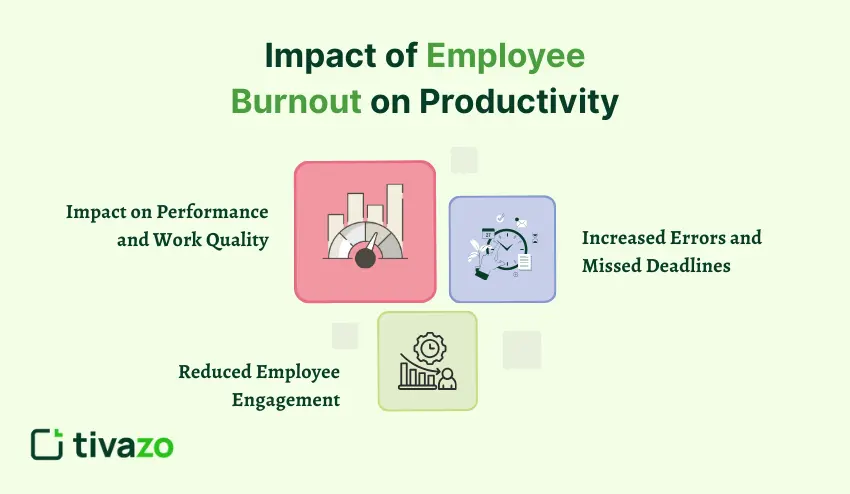
Work burnout produces a negative feedback loop of performance. The relationship between the welfare of employees and productivity is definite and quantifiable. Burnout transmitted by a workplace can be disastrous when it comes to its aggregate effect.
Impact on Performance and Work Quality
Tired workers are not able to work optimally. The quality of their work reduces due to the loss of mental resources. What was naturally done before is now taking incredible effort.
The first to be affected are creative thinking and problem-solving. Exhausted employees will remain with the familiar and safe. The absence of innovation occurs when individuals are not energized to think otherwise.
Increased Errors and Missed Deadlines
Careless mistakes are caused by fatigue. Information is missed due to the lack of focus. According to workplace burnout statistics, these mistakes cost time and resources to correct.
Projects take longer than planned, turning tasks that were once simple into complex challenges. Missed deadlines create ripple effects that affect the entire team’s performance.
Reduced Employee Engagement
Uninvolved employees do not provide feedback and ideas. During meetings, they sit quietly. Such silence deprives teams of different points of view.
They do not want to get involved in new challenges. Both growth and development cease. Poor engagement among the employees demoralizes the team.
How to Prevent and Reduce Employee Burnout
By acting to avert burnout among workers, workers and business outcomes will be safeguarded. The prevention needs leadership in terms of constant attention. The positive side of this is that most of the successful strategies do not demand huge budget increments.
The following are the major strategies of preventive measures in employee burnout:
Here are key strategies for how to prevent employee burnout:
- Enhance workload planning by reviewing team capacities and duties on a regular basis. Use time tracking software to identify where time actually goes.
- Promote work-life balance through establishing a clear boundary of working time. Adhere to individual time and do not send post-hours correspondence.
- Encourage employee participation by checking on them frequently and providing valuable feedback. Hear complaints, and they will not escalate to serious issues.
- Be specific about objectives and encourage employees to know what success will be like. Eliminate unnecessary impediments that hold them up.
For a deeper look at specific techniques, check out our guide: 10 Effective Ways to Reduce Employee Burnout.
Solutions for Employee Burnout
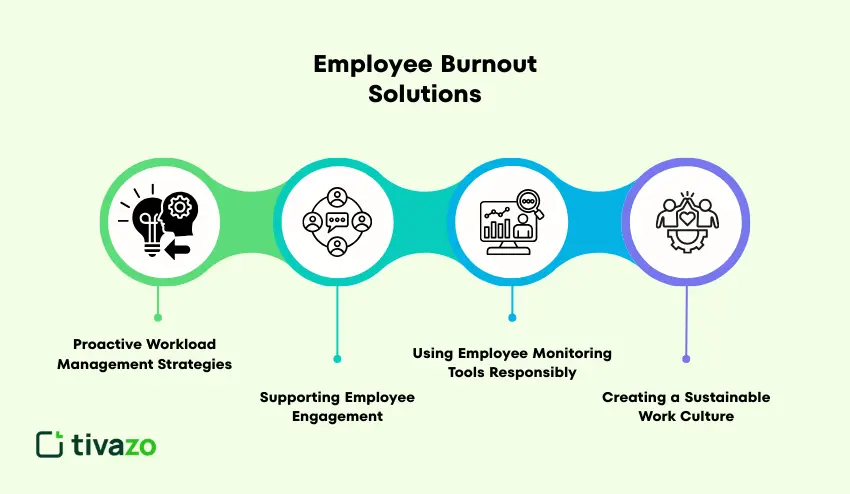
The issue of employee burnout needs both short-term and long-term cultural adjustments to handle the problem. Rapid solutions are temporary, but final solutions need reconsideration in the way work is done. Companies that are effective in their fight against burnout consider burnout as a systemic problem. Effective strategies also contribute to managing workplace stress across the team.
Proactive Workload Management Strategies
Oversight workload allocation is frequently. Adjust in advance before troubles arise. Check-ins on a regular basis will assist in identifying imbalances at an early stage.
Scheduling Build buffer time. Impractical deadlines cause stress. Bring in the extra assistance as required; chronic understaffing never fails to bring about burnout.
Supporting Employee Engagement
Provide meaningful work opportunities. The people require observing their contribution. Work makes no sense, and the motivation is lost.
Reward merit publicly and frequently. Appreciation goes a long way. Stress is minimized when employees are involved in making decisions that touch on their autonomy.
Using Employee Monitoring Tools Responsibly
Burnout patterns can be identified with the aid of employee monitoring tools when applied for ethical purposes. Monitor workload patterns, not all keystrokes. The aim is to learn working trends.
Micromanagement is not management; instead, use data to assist employees. Insights from tools like Tivazo can help redistribute work fairly and maintain transparency. The facts are expected to assist you in the redistribution of work fairly. Ensure privacy and learn information about observing others creates trust.
Creating a Sustainable Work Culture
Create a culture of cherishing rest. Tiredness should not be a status symbol. Glory in sustainable high performance.
Demonstrate the best practices at the highest level. Leaders set the tone. Solve issues at the initial stage of growth.
Conclusion
Employee burnout is a severe employment problem with definite causes and identifiable symptoms. The major causes are excessive workloads, poor work-life balance, and poor workload management.
Some of the common indicators include mental burnout, low employee productivity, disengagement, and physical burnout. By recognizing these employee burnout symptoms at an early stage, the organizations can take action before the situation deteriorates.
The social problems will need both personal and organizational solutions. Enhanced workload control, better employee involvement, and sustainable working practices are significant. Burnout prevention cannot be done only with one factor; it should be part of a comprehensive approach.
Avoiding employee burnout is not only a good idea for the employee, but it is also critical to long-term employee productivity and business success. The future of your organization and the health of your team are safeguarded by investing in prevention today.