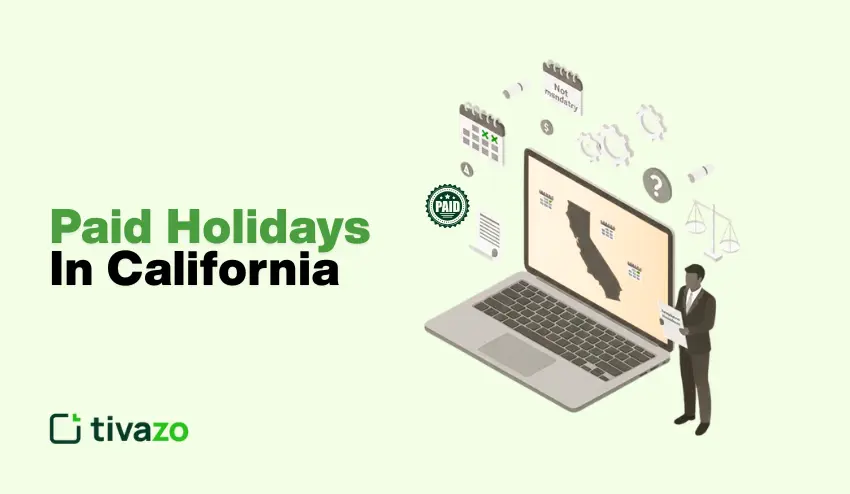
If you’re working in California, you might wonder which holidays your employer must pay you for. The short answer is simple: California law does not require private employers to provide paid holidays. There are no mandatory paid holidays under state law for most workers.
Paid Holidays in California: Understanding the Law
Many employees assume that holidays like Christmas or Thanksgiving come with automatic paid time off. This belief is common, but it’s not backed by California employment law. Unlike some other benefits, holiday pay isn’t a legal requirement for private companies.
California takes a hands-off approach when it comes to holiday pay requirements. The state lets employers decide their own policies. This means your holiday benefits depend entirely on your employer’s generosity or your employment contract.
Why the Confusion Exists
People often confuse company policies with legal requirements. Many employers do offer paid holidays as a benefit. This makes workers think it’s the law. In reality, it’s just good business practice to attract employees.
What California Law Actually Says
The California Labor Code doesn’t mandate holiday pay for private employees. There’s no list of holidays that must be paid. Employers can choose to observe holidays or ignore them completely.
Are Paid Holidays Required in California by Law?
No, California law does not require paid holidays for private-sector employees. This is true whether you work for a small business or a large corporation. The California Division of Labor Standards Enforcement (DLSE) confirms this fact.
Private organizations are totally free to make their own holiday policies. They can provide ten paid holidays, five paid holidays, or no paid holidays at all. It is totally up to them. The law does not regulate this area of employment.
What This Means for Workers
You cannot file a complaint with the DLSE if your employer doesn’t give paid holidays. There’s no California mandatory paid holiday law to enforce. Your employer isn’t breaking any rules by making you work on Christmas without extra pay.
However, if your employer promises paid holidays in writing, they must follow through. That’s a contract issue, not a labor law violation.
Federal Law Doesn’t Help Either
Federal employment law also doesn’t require paid holidays. The Fair Labor Standards Act (FLSA) covers overtime and minimum wage, but not holiday pay. This applies nationwide, not just in California.
California Holiday Pay Requirements: Employer Policies vs Legal Mandates
Even though paid holidays aren’t mandatory, many employers still provide them. Why? Because it helps them compete for talented workers. Good benefits packages attract better candidates.
When employers do offer holiday pay, it becomes part of your compensation package. This might be outlined in several places:
Where Holiday Policies Are Defined
- Employee handbook: Most companies list their holiday schedule in the employee handbook
- Employment contract: Individual agreements might guarantee specific holidays
- Collective bargaining agreement: Union workers often negotiate holiday pay
- Company policy manual: This document typically spells out all benefits
Once an employer sets a holiday policy, they should apply it consistently. If they promise five paid holidays, they need to honor that promise. Breaking written policies can lead to legal problems.
Common Holiday Schedules in California
Most California employers who offer paid holidays include these days:
- New Year’s Day
- Memorial Day
- Independence Day
- Labor Day
- Thanksgiving Day
- Christmas Day
Some companies add Martin Luther King Jr. Day, Presidents’ Day, or Veterans Day.
Others offer floating holidays that employees can use whenever they want.
When Policies Change
Employers can change their holiday policies at any time. They should give advance notice, but California employment law holiday pay rules don’t require specific timing. If your company decides to cut paid holidays, they legally can.
Holiday Pay Rules California: Working on a Holiday
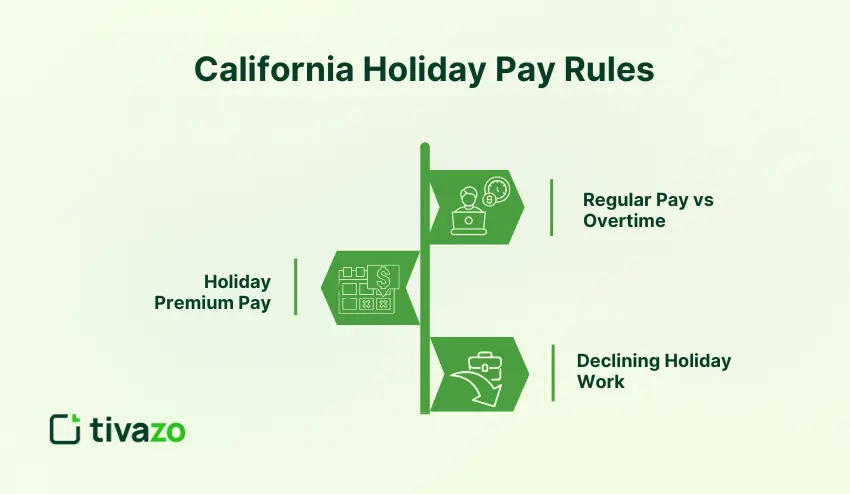
What if you work on Christmas or another holiday? If you work on a holiday, it is considered an ordinary workday under California law. You will be paid at your regular hourly wage unless otherwise provided by your employer.
Regular Pay vs Overtime
California has tough rules regarding overtime pay. If you work over eight hours a day or 40 hours a week, you will be paid overtime, irrespective of whether it is a holiday or not. The holiday itself will not earn you overtime pay.
What happens if you work on Christmas or another holiday? Under California law, it’s treated like any other workday. You earn your regular hourly rate unless your employer has a different policy.
Holiday Premium Pay
Some employers voluntarily pay “time and a half” or even double time for holiday work. This is a company benefit, not a legal requirement. If your employee handbook promises holiday premium pay, your employer must honor it.
Without a written policy, you have no right to extra holiday pay. Your employer can schedule you on any holiday at your normal rate.
Declining Holiday Work
Can you refuse to work on a holiday? It depends on your employment contract. Most workers in California are “at-will” employees. This means that employers can assign you to work at any time they want. If you refuse to work, you might face disciplinary action or termination of employment.
If you have an employment contract or a union contract, you can check your contract to see what it says about working on holidays.
California State Employee Holidays vs Private Sector Employees
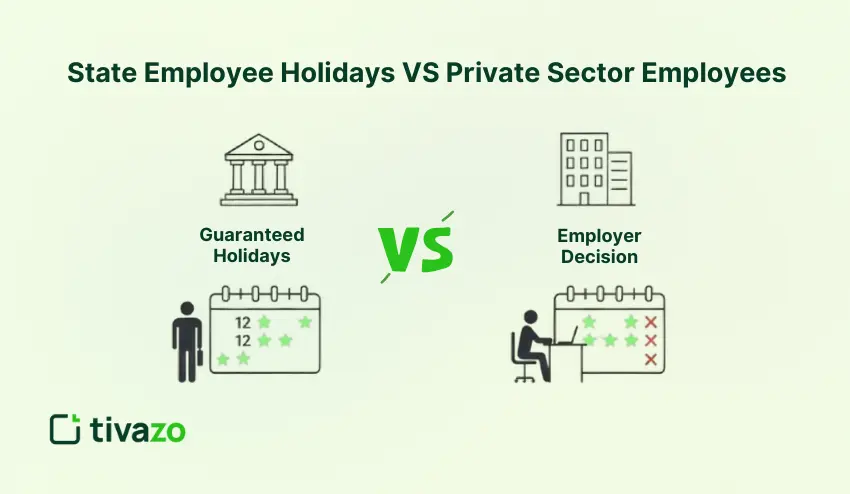
California state government workers receive paid holidays. The California Department of Human Resources (CalHR) sets the official holiday schedule for state employees. This typically includes:
- All the common holidays listed earlier
- Additional days like Cesar Chavez Day
- The day after Thanksgiving, in some cases
Important note: These state holidays apply only to government workers. They don’t extend to private companies. State employees get these benefits because of their specific employment status, not because of broader California law.
Many people see government offices closed on certain days and assume everyone gets those holidays paid. That’s not how it works. Private employers can stay open and require employees to work on any state holiday.
Comparing Public and Private Sectors
The difference between state and private employment is significant. State workers enjoy benefits that private workers don’t receive by law. This includes guaranteed paid holidays. Private employees rely on their individual employers to provide similar benefits.
California Employment Law Holiday Pay: Key Takeaways
To understand holiday pay in California, it is essential to begin with one basic fact: There are no mandatory paid holidays for private sector employees. This is determined by your employer.
The California Labor Code and the California Division of Labor Standards Enforcement do not regulate this issue for most employees. However, if your employer provides paid holidays through company policies, employee handbooks, or collective bargaining agreements, they are required to live up to their obligations.
If you are required to work on a holiday, you receive regular pay unless overtime laws apply or your employer’s policy provides premium pay. The holiday itself does not automatically qualify you for premium pay.
State holidays designated by the California Department of Human Resources apply only to state employees. Private employers are not required to follow this holiday schedule.
If you are seeking paid holidays, you should seek employment with companies that offer paid holidays.