Your brand doesn’t earn trust all at once, but in fragments. By “fragments”, we mean every page, post, and document that either confirms who you are or creates doubt.
A buyer may visit your website, notice a leadership post later that day, and review a proposal a week later. All those interactions set an expectation. And when those expectations change from one platform to the next, confidence fades.
That’s why more companies invest in branding services, expecting consistency to follow. However, alignment doesn’t come from visuals alone, but from repeating the same thinking, language, and priorities across platforms.
Why is this discipline so important? Because research shows that companies that maintain strong brand consistency can see an overall growth increase of 10–20%.
If you want to add your brand to that list, keep reading.

Source: Freepik
Consistency Starts With Understanding Buyer Expectations
It’s easy to align platforms, but aligning assumptions is something else.
Many brands fail because they speak to everyone as if everyone wants the same type of connection.
Here’s an important fact to always keep in mind: not every buyer wants a “relationship” with your brand (and that’s fine!).
A large Harvard Business Review study of more than 7,000 consumers debunked what customers really want.
Only 23% said they feel a relationship with a brand. The remaining 77% reject the idea altogether. To them, a brand is a provider, not a companion.
When asked why, the answer was blunt: a brand is not family, not a friend, and not a colleague. What they valued most in digital interactions was simple and transactional, often centered on discounts and ease.
So, how do you fix this? Segment your consumers — who’s in the 23% and who’s in the 77%?
Segment Expectations Before You Segment Channels
One sure way to consistency is to stop treating all buyers the same. Some people want ongoing engagement, some will prefer speed and value with minimal noise. It’s possible for both to trust you, but only if you respect their expectations.
Here’s what helps separate the two:
- Frequency of repeat purchases
- Willingness to engage with non-transactional content
- Response to incentives versus insights
Consistency Is Built After the First Sale, Not Before
The first deal just creates awareness. What follows determines belief. This is where many brands lose alignment, even when acquisition messaging looks tight.
Why Repetition Builds Trust Over Time
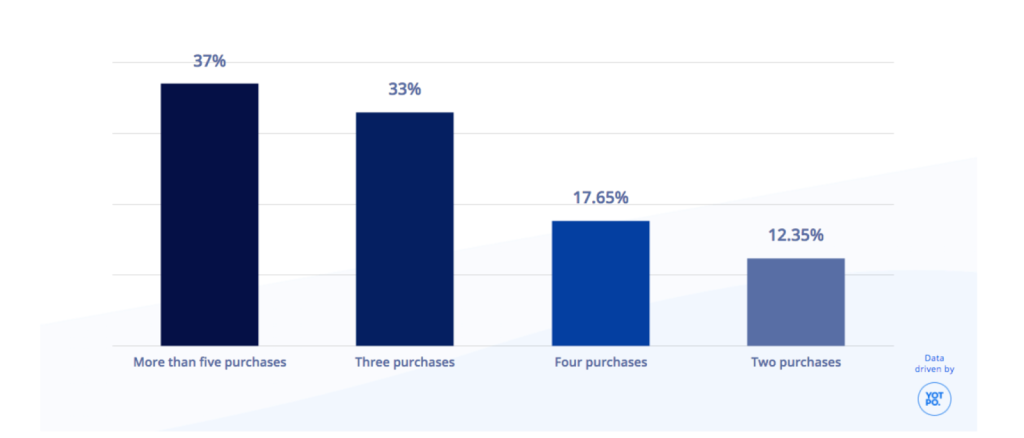
Research shows that 37% of customers reach loyalty after 5 purchases. What we see here is that consistency is a long-term signal, not a launch tactic.
Buyers look for familiar language, stable promises, and predictable standards each time they return. When those signals change, even slightly, doubt appears.
Still, consistency doesn’t just mean repeating slogans, but reinforcing the same value logic across interactions.
Over time, two things happen thanks to that repetition: it lowers perceived risk and reduces the need for persuasion because expectations already exist.
Source: yotpo.co
Where Brands Commonly Break After the Deal
Post-sale touchpoints often grow without oversight — new teams add content, new tools introduce new language. The result feels fragmented, even when the intent is good.
Here’s what usually happens:
- Onboarding emails that introduce new promises
- Support content that uses different terminology
- Upsell messages that contradict earlier value claims
A simple fix to all this is continuity. It’s what buyers want, and it’s what turns repeat behavior into a habit.
Personalization and Consistency Are Not Opposites
It’s 2026, and brands should no longer treat personalization as a threat to brand control. It’s a false assumption that only slows progress.
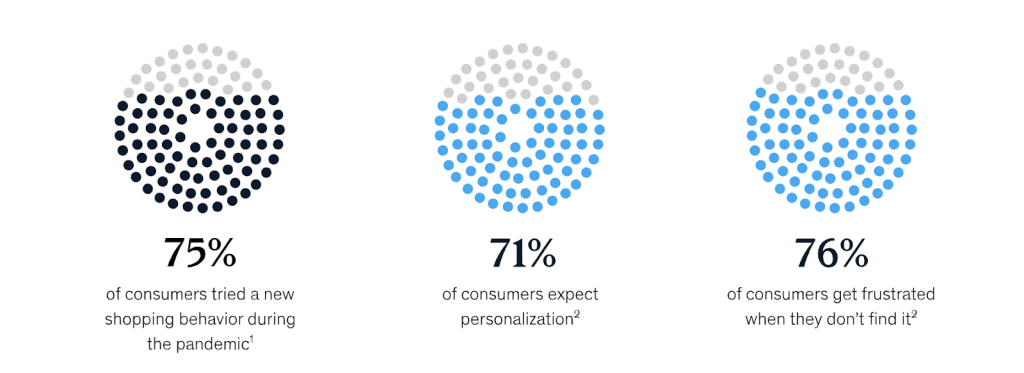
A study from McKinsey shows that 71% of customers expect personalized experiences, from digital touchpoints to packaging and follow-ups. And although it’s a study from 2021, it’s more relevant than ever.
The biggest mistake here is thinking personalization requires rewriting the brand each time.
Consistency holds when the structure stays the same, and the details adapt. The core message, tone, and priorities remain. What changes is the entry point.
Personalization should respond to context, not reinvent the intent. A returning buyer doesn’t need a new story, but that the same story applies to their situation.
Some of the best ways to apply personalization:
- Timing of messages
- Use cases highlighted
- Depth of information provided
Still, it shouldn’t touch your value logic, positioning language, or standards of proof. Those elements need to stay intact.
Source: mckinsey.com
Consistency in an AI-Saturated Market
We all see it — content volume has exploded, due to AI. That’s not the problem; the problem is that much of it sounds the same.
That sameness can work in your favor and make consistency easier to spot.
Last year’s research shows that 82% of consumers prefer brands that rely on authentic stories rather than highly polished advertising. Don’t mistake this for a call for casual tone or loose standards.
It’s really a signal that buyers are tuning out surface-level perfection and paying closer attention to coherence.
As teams publish more content at a faster pace, even small wording changes start to matter. A strong promise on your website, followed by soft or unclear language on social media, sends mixed signals.
The same happens when detailed, opinionated long-form content sits next to short posts that say very little. The intent might be consistent, but the brand feels less defined.
It’s best to choose certain messages and repeat them with discipline. When teams agree on what the brand should say (and what not), recognition improves without increasing output.
Trust Signals Matter More Than Claims
Buyers have become fluent at spotting overstatement. They compare what you say across platforms and look for proof.
There’s a 2023 McKinsey research that shows that 88% of Gen Z in the U.S. don’t trust brand claims when it comes to environmental, social, and governance efforts. The issue isn’t awareness, but credibility.
If you reference impact, standards, or responsibility, those references must show up the same way everywhere.
Vague language on a landing page paired with silence in product content equals doubt. So does changing the tone between marketing and leadership communication.
The recipe for strong, consistent branding comes down to one thing: commitments, supported by action and repetition, do more than claims ever will.
With steady messaging, your buyers won’t need convincing. They’ll see what you stand for, and even more importantly, that you stand by it.