Most companies struggle with a simple question: Are our people working at their full potential?
You can’t answer that without measuring workforce performance. Yet many organizations rely on outdated methods or gut feelings to assess how their teams are doing.
Workforce performance isn’t just about individual employees. It’s about how your entire team functions together. When you measure and improve workforce performance correctly, you reduce costs, increase productivity, and build a stronger business.
This guide shows you how to measure performance and make real improvements using the right metrics and best practices.
What Is Workforce Performance?
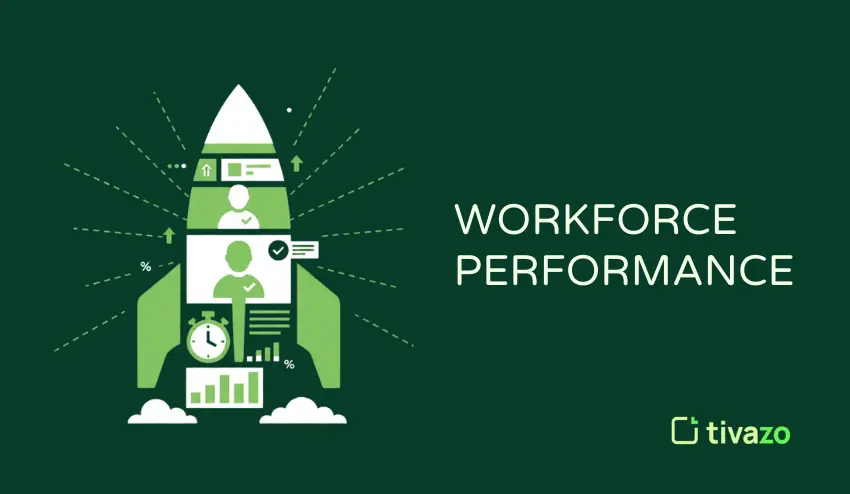
Workforce performance measures how well your entire team achieves business goals. It looks at productivity, efficiency, and output across all employees in your organization.
Think of it this way: employee performance tracks one person. Workforce performance tracks everyone together. It shows whether your team is delivering results that match your business needs.
The Difference Between Employee and Workforce Performance
The Difference Between Employee and Workforce Performance
Employee performance is centered on personal objectives and success. You measure the performance of one individual based on their output, quality, and contribution.
Workforce performance is more extensive. It involves:
- The way team members work together.
- The overall rate of productivity.
- The total labor cost against revenue.
- The business results of collective efforts.
All are important, but workforce performance provides you with the whole picture of success.
Why Workforce Performance Matters in Modern Business
Your workforce drives every business result. When performance drops, so do profits.
Modern businesses face new challenges. Remote work makes visibility harder. Hybrid teams need different performance management approaches. Competition increases pressure to do more with less.
Companies that evaluate employee performance can:
- Spot performance issues before they hurt revenue
- Allocate resources more effectively
- Make decisions based on data and analytics, not assumptions
- Respond quickly to changing conditions
Without measurement, you’re managing blind.
Why Workforce Performance Matters More Than Ever
The workplace has changed dramatically in recent years. These changes make performance management more critical than before.
Remote and Hybrid Work Challenges
Remote teams are now standard. But distance creates visibility gaps. You can’t see who’s struggling or who’s thriving when everyone works from home.
Hybrid models add more complexity. Some employees work in the office while others stay remote. Ensuring consistent job performance across both groups requires new approaches and better tools.
Productivity Visibility Gaps
Traditional management relied on observation. Managers and employees interacted face-to-face, making it easier to gauge performance.
That doesn’t work anymore. You need systems that show real productivity, not just activity. Without proper tracking, you miss important patterns in employee productivity.
Cost Control Pressures
Labor is one of your largest expenses. When economic conditions become tighter, cost control becomes necessary.
But cutting staff isn’t always the answer. Better employee performance management helps you do more with your current team. You identify inefficiencies and fix them instead of reducing headcount.
Data-Driven Decision Making
Gut feelings aren’t enough anymore. Stakeholders want evidence. Executives need key metrics. Investors require proof of efficiency and measurable results.
Performance data helps make better decisions. You can show where your money goes and what you get for your work.
Key Workforce Performance Metrics to Track
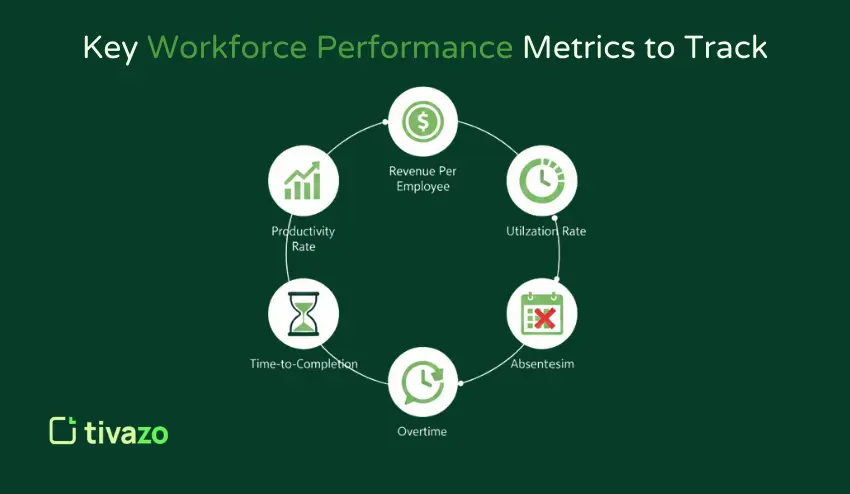
You can’t improve what you don’t measure. These metrics provide you with a clear understanding of how your workforce is performing and help you measure success.
Productivity Rate
Productivity rate measures the output per employee. To calculate it, divide the total output by the total hours worked.
For instance, if your team is producing 500 units in 1,000 hours, your productivity rate is 0.5 units per hour. Measure this rate over time to identify trends in employee productivity.
Revenue Per Employee
This metric measures the average revenue generated by each individual employee. To calculate it, divide the total revenue by the total employees.
The higher the revenue per employee, the better the performance of your workforce. If this rate falls, analyze why this is happening through performance analysis.
Utilization Rate
The utilization rate measures the amount of available time that employees use for productive work. This is particularly important for billable services.
To calculate it, divide the billable hours by the total available hours. A low utilization rate indicates wasted capacity and potential performance problems.
Absenteeism Rate
Absenteeism negatively impacts performance and team morale. Measure the percentage of scheduled days that employees are absent.
High absenteeism signals problems with morale, well-being, or engagement. It also increases the cost when you need replacements.
Overtime Costs
Normal overtime is expected. Excessive overtime is a sign of poor planning or understaffing.
Watch overtime costs as a percentage of total labor costs. Increasing overtime costs mean that your workforce is becoming less efficient.
Time-to-Completion
How long does it take your team to complete standard tasks? Measure this metric consistently to evaluate employee effectiveness.
Increasing time-to-completion indicates bottlenecks or efficiency problems. Decreasing times show improvement in work performance.
Engagement Indicators
Engaged employees perform better. While harder to quantify, engagement affects all other performance metrics.
Keep track of survey responses, employee turnover, and engagement with company programs. This data indicates the overall health of your workforce.
How to Effectively Measure Workforce Performance
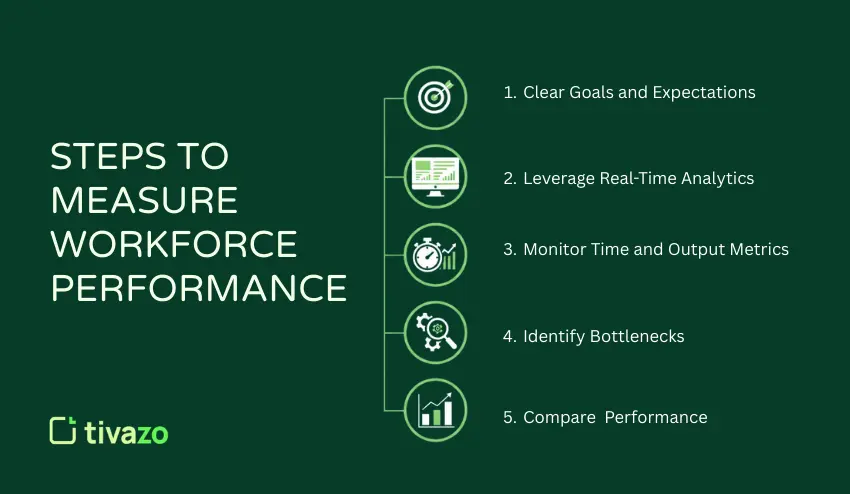
To effectively measure workforce performance, you have to do it the right way. Here’s how to gain the right information about employee performance and business success.
Establish Performance Goals and Expectations
Begin with measurable goals. What constitutes success for your business?
Identify key performance metrics that support your business goals. Ensure that employees and managers understand what you are measuring and why. Establishing clear expectations enables individual employees to understand what constitutes success.
Leverage Real-Time Analytics
Don’t wait for the next scheduled performance review, when you are simply reacting to problems that occurred long ago. Real-time workforce performance analytics enable you to take corrective action right away.
Today’s technology enables you to instantly view workforce performance. A visual project management board can help you keep track of your team’s productivity. You can see what’s happening in real-time, not after the damage is done. This enables managers to make more informed decisions.
Monitor Time and Output Metrics
Monitor time and output metrics together. Tracking just the time worked does not give you the complete picture of employee productivity.
You must be able to measure the time spent on tasks and the output generated. Together, these metrics give you the complete picture of efficiency and enable you to accurately measure employee performance.
Identify Bottlenecks
Performance decline usually occurs at certain points in your process. Identify where the work slows down or where the employees struggle.
When you identify bottlenecks, you can do something about them. It may be a training and development concern. It may also be a process concern related to the work environment.
Compare Planned vs Actual Performance
Create performance goals and compare actual performance to them. This method of performance measurement will help you determine if you are achieving your objectives.
Continuous comparison will enable you to make plans according to reality. If performance goals are not met, you need to improve performance or adjust goals.
Common Challenges in Managing Workforce Performance
Even with good intentions, organizations face obstacles when trying to improve employee performance and manage their workforce effectively.
Lack of Visibility
You can’t manage what you can’t see. Many companies lack tools that show real-time performance feedback.
Without workforce visibility, performance issues grow before anyone notices them. Solutions exist in human resources technology, but you need to implement them.
Manual Tracking Errors
Spreadsheets and paper timesheets create mistakes. Someone enters wrong data, formulas break, or information gets lost.
Manual processes also waste time. Your team spends hours collecting data instead of analyzing it to evaluate employee performance.
Disconnected Systems
Payroll runs on one system. Scheduling uses another. Time tracking happens somewhere else. Nothing talks to each other.
Disconnected systems make it nearly impossible to get accurate performance data. Integration is essential for effective performance management.
Delayed Reporting
When reports arrive weeks after the fact, you’re always behind. Old data can’t solve current problems or help you track employee progress.
Delayed reporting means missed opportunities. By the time you see an issue, it’s already cost you money and affected morale.
Compliance Risks
Labor laws vary by location. Regulations change frequently. Keeping up manually is nearly impossible for hr teams.
Non-compliance leads to fines and legal problems. Good performance management systems include compliance tracking and automation.
Strategies to Improve Workforce Performance
Once you measure performance, you can improve it. These strategies deliver real results for improving employee performance across your organization.
Improve Transparency
Show employees how their work contributes to business goals. Share performance data openly with team members.
Transparency builds accountability and confidence. When people see the numbers, they understand why performance matters and how to improve their performance.
Optimize Scheduling
Match staffing to demand. Don’t overschedule during slow periods or understaff during busy times.
Good scheduling reduces costs and prevents burnout. It’s one of the fastest ways to improve employee productivity and job performance.
Minimize Idle Time
Determine when employees have no work to do. Then eliminate this downtime by improving workflow management.
This may involve improved planning. In other cases, it means balancing workloads among team members.
Automate Performance Tracking
End manual timesheet and report tracking. Automated systems record data accurately without requiring additional effort from managers or employees.
Automation enables your team to concentrate on improvement, not data gathering. It also offers more useful information for performance evaluations.
Foster Accountability
Clearly communicate performance goals. Provide employees with the means to monitor their own progress and assess their performance.
When individuals take responsibility for their performance, they will improve it. Accountability leads to better performance and increased employee motivation.
Offer Training and Development Opportunities
Develop training programs that enable employees to develop new skills. Training enhances individual employee performance and overall workforce performance.
Opportunities for development also boost employee morale and reduce turnover. Employees who develop and grow perform better.
Reward Good Performance
Reward good employee performance. Recognition motivates and encourages good performance.
Employee benefits, bonuses, and recognition are effective. Choose the best one that fits your work environment and budget.
Use Predictive Workforce Analytics
Predictive workforce analytics can predict future performance from current trends. This lets you act before problems occur.
Predictive insights help with planning, budgeting, and resource allocation. They turn performance data into a competitive advantage for your company.
The Use of Technology in Workforce Performance Management
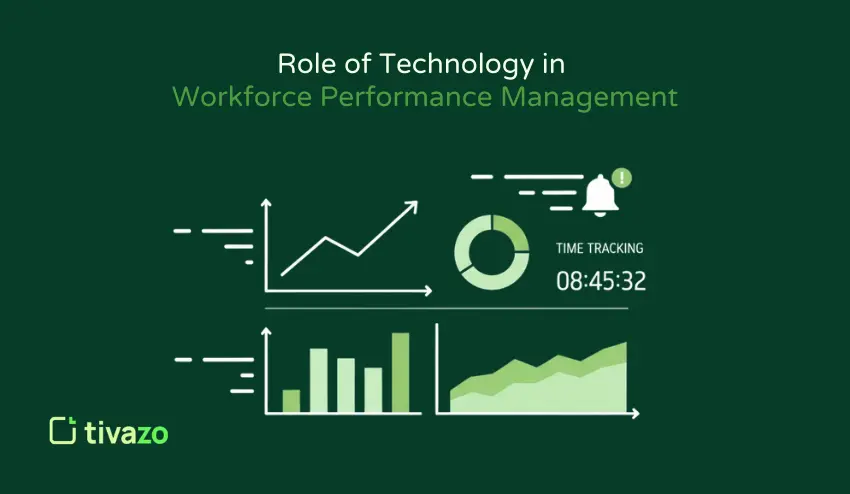
Technology is changing the way businesses manage the performance of their workforce. Technology makes it easier to measure and improve workforce performance.
There are many benefits to using technology in workforce performance management. The best technology solutions will have the following features:
- Real-time reporting: See current performance data and identify trends as they emerge
- Alerts: Receive notifications when performance data exceeds acceptable parameters without having to constantly check
- Forecasting: Use past performance data to predict future outcomes and identify problems before they arise
- Tracking: Track time, productivity, and employee performance in one place
There are many solutions available that will help with workforce performance management. Solutions such as Tivazo are available. They track time, measure employee productivity, and offer the tools needed to improve performance.
The best way to use technology in workforce performance management is to find a solution that meets your needs. The solution should integrate with other tools, offer easy-to-read performance data, and be easy to use.
Final Thoughts
Workforce performance determines business success. Companies that measure and improve it consistently outperform those that don’t.
Start by tracking the right metrics. Use technology to automate data collection and get real-time performance information. Then take action based on what the numbers show.
The goal isn’t perfection. It’s continuous improvement through better performance management. Small gains in employee performance compound into significant business results over time.
Measurement plus visibility plus action equals sustained growth. When you can see how your workforce performs, you can help improve their performance and achieve your organizational goals.