As of 2025,~22% of the US workforce works remotely. This has led to more flexibility, better productivity, and improved well-being. What it also means is dwindling recognition. Because of this, there’s a likelihood of employees eventually becoming disengaged.
To create a culture of recognition, you’ll have to do more than just give Slack shoutouts in team channels or a quick “good job” on calls.
5 Tips to Create a Culture of Recognition to Boost Remote Employee Engagement
Here are five leadership-led approaches to remote employee engagement that help teams stay motivated, aligned, and connected, regardless of where they work.
1. Make Contribution Visible in a Remote-First Environment
Since remote employee engagement teams work across time zones and have async communication, individual effort may appear fragmented or even easily overlooked. This invisibility may chip away at motivation. If you don’t acknowledge employee contributions consistently, they’ll conserve energy instead of offering ideas.
In fact, Gallup shared how highly engaged employees outperform consistently-
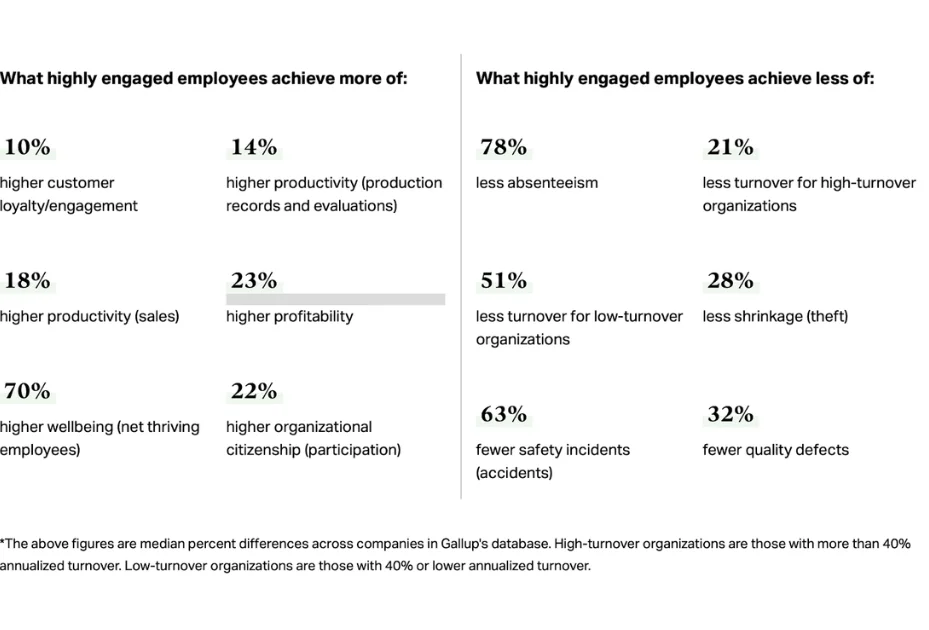
The solution is to focus on intentional recognition.
Create a structured plan that spotlights wins in public channels and during all-hands meetings. Beyond public acknowledgment, high-performing teams formalize recognition triggers. Define which business outcomes unlock milestone recognition- revenue impact, successful launches, customer retention improvements, or cross-functional collaboration wins. When recognition is tied to measurable performance criteria, it reinforces accountability rather than popularity.
If you choose to attach tangible rewards to those milestones, print-on-demand platforms like Printful or similar providers like Gelato can execute it without adding administrative overhead.
However, remember to align these key moments with business outcomes so that appreciation reinforces strategic priorities. Plus, it adds structural fairness and meaning rather than surface-level engagement.
2. Build recognition into systems
Shoutouts are great to make your employees feel good, but they don’t really scale your culture. Also, it can get inconsistent down the line. Creating structured employee rewards programs can help remote teams feel consistently appreciated while making recognition more meaningful across the organization.
That’s why you need to document your recognition program, structure it, and ensure it aligns with company goals and values. This is crucial because, according to Gallup, employees who didn’t feel “adequately recognized” are 2x more likely to leave the company.
Employee recognition programs truly work when they’re tied to clear standards and repeatable systems. So,
- Define 4 to 6 core behaviors that are directly linked to your company’s values
- Create a simple form so employees can reference specific outcomes
- Set fixed monthly and/or quarterly recognition cycles rather than ad hoc praise
- Decide your recognition tiers that are based on impact over popularity
When this runs in action, recognition becomes more performance-driven. Employees also better understand what excellence looks like. More importantly, managers have a framework to reward people fairly.
Eventually, you’ll see more proactive collaboration, higher participation in company-led initiatives, and fewer contributors slipping through the cracks.
3. Turn high-impact work into tangible rewards
Giving your employees a $50 gift card may get spent and then forgotten. You don’t want that. Milestone recognition should feel different and memorable.
Take GitLab as an example.
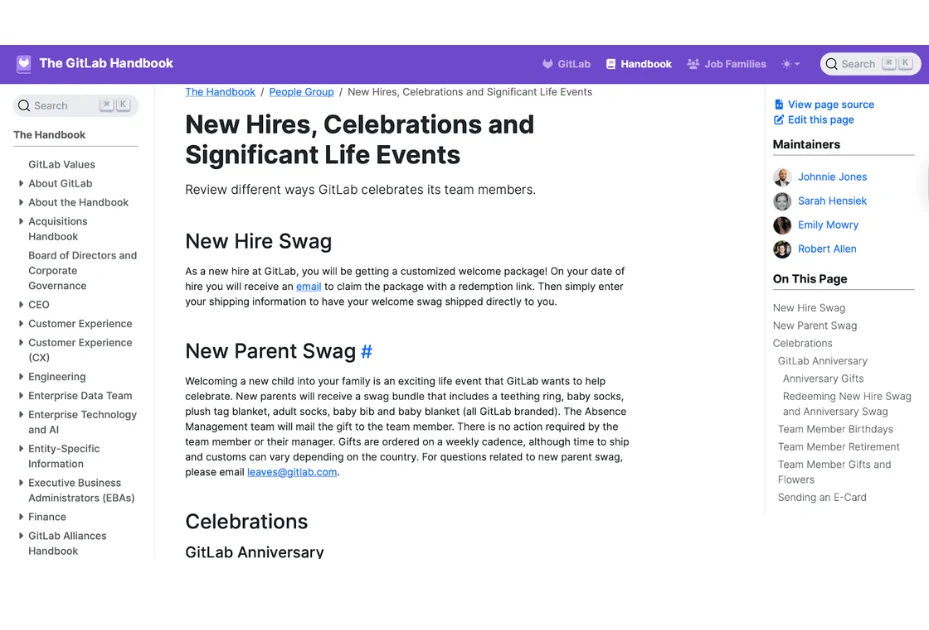
As one of the world’s largest fully remote companies, they have made celebrations part of their documented culture. Their recognition and celebration approach is publicly outlined on their website, which covers moments such as new hires, new parents, work anniversaries, and retirements. Such clarity does two things-
- It removes ambiguity around who gets recognized and when
- It signals that individual milestones matter, whether professional or personal
Recognition is not left to managerial discretion. It is systematized, noticeable, and culturally embedded.
The key is adding structure. You can map measurable milestones that make sense for your company. Identify typical career events, project achievements, advocacy contributions, or company-wide wins that deserve tangible reinforcement. Once you outline these, attach meaningful rewards to them.
In fact, a study of 25,000+ employees shows that recognition in conjunction with fairness and involvement can boost employee engagement and reduce burnout.
For example, tangible rewards can serve as reinforcement layers within this structured system. Instead of defaulting to generic gift cards, create meaningful symbols of achievement that reflect specific milestones. Many teams choose to design their own clothes on platforms like Printify, Redbubble, or similar services, adding subtle company branding or milestone markers to commemorate launches, anniversaries, or major wins.
The takeaway here is that when recognition is tied to milestones, the reward carries better context and meaning. A hoodie marking a product launch or a T-shirt celebrating a 5th anniversary signals,“You were part of this.” Or an actual award for Employee of the Month over a digital certificate or a quick shoutout could work wonders. Also, these physical markers build a positive work culture and could improve team performance.
4. Reward advocacy over output
Most recognition programs focus on internal outputs, such as projects delivered, targets hit, and deadlines met. But in distributed teams, advocacy is impact. Employees who share company content, refer strong candidates, speak at events, or build thought leadership extend your brand far beyond internal dashboards.
If you’re running employee advocacy programs, the best performers shouldn’t fade into the background. Advocacy needs initiative. So, you could start and let your employees follow suit, so their personal brand gets attached to the company. It becomes all the more important when you look at recent statistics.
- Employee-shared content receives 8x more engagement as compared to branded content.
- It influences the purchasing decisions of 78% of buyers.
- Employee advocacy positively impacts social selling by up to 400%.
Starbucks is known for its Starbucks Partners Instagram account, where its employees double as brand ambassadors.
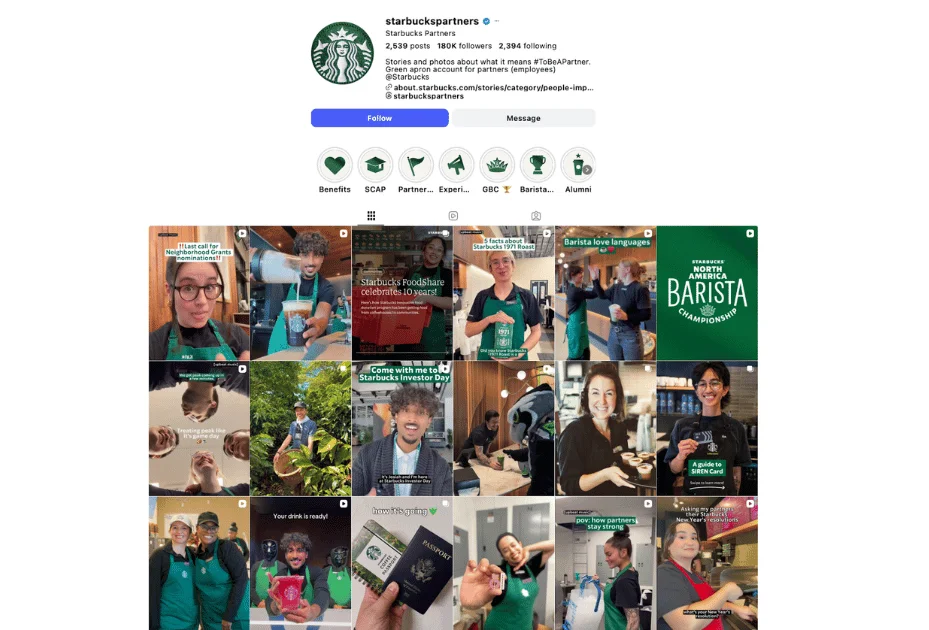
On this page, you’ll find employee content and a range of posts that are either informative or entertaining. Plus, it ties them as one unit, regardless of their branch, with a single hashtag. This way, not only does Starbucks post their people, but their people also post about the company, under the #ToBeAPartner campaign.
To run your own program, you need to first define what advocacy success looks like. It could include-
- Consistent amplification of company content across personal channels
- Qualified referral hires that convert
- Event participation or speaking opportunities
- Original thought leadership posts that drive meaningful employee engagement
Then make the recognition clear and uplifting by
- Highlighting top advocates during all-hands meetings or leadership updates
- Sharing internal performance snapshots to reinforce impact
- Offering leadership exposure or strategic involvement as a growth reward
- Pairing advocacy milestones with tangible perks tied to defined thresholds
5. Reinforce culture through repeatable rituals
Avoid one-off appreciation posts. Instead, create recurring moments your team expects, like themed appreciation days (gratitude mondays, thankful thursdays, etc.), employee of the week, quarterly spotlights, annual awards, or milestone-based shoutouts.

Predictability builds anticipation, which, in turn, fosters an emotional connection and a sense of belonging.
Finally, track what changes. Monitor employee engagement scores, retention trends, and participation in advocacy or nomination programs. If your recognition program is working, you’ll see broader involvement.