Digital ethics guides how businesses develop technology to create a better digital world. With employee monitoring software and time management tools increasingly becoming a norm in modern workplaces, ethical considerations around these applications have never been more pressing.
Everything you need to know about digital ethics, from its basics to everyday examples in the workplace. Not a hint of jargon or filler material. Just solid answers to what digital ethics means and why it matters to your organisation.
What Is Digital Ethics?
Ethics in the digital world is how individuals and companies behave in cyberspace. It is about what is legally OK but ethically not done. Should we do this, even if we can?
The digital ethics definition encompasses areas such as:
- Collecting and using personal data
- Building fair algorithms
- Showing users and employees respect
- Making transparent decisions using technology
Legal compliance is the bare minimum. Digital ethics is raising the bar nowhere near that level. It is possible for a firm to comply with all the relevant privacy laws but nevertheless be unfair. The space between the two is the space in which digital ethics operates.
Why Digital Ethics Matters in 2026
The digital world is changing fast. Decisions involving the lives of people are now being made by AI. Remote and hybrid working are now the new norms. Employee monitoring technologies are now more prevalent than ever.
Here is why the importance of digital ethics has risen:
- AI systems currently play a role in hiring processes, scheduling, and performance evaluation
- Data-driven process models additionally represent new risks for bias and discrimination.
- Productivity tracking tools have become the real deal in the age of remote work
- Employees know more about their digital rights today than they ever have before
Business organizations that shun digital ethics are in danger of trust issues, legal consequences, and high employee turnover. Conversely, organizations that respect digital ethics have stronger teams.
Core Principles of Digital Ethics
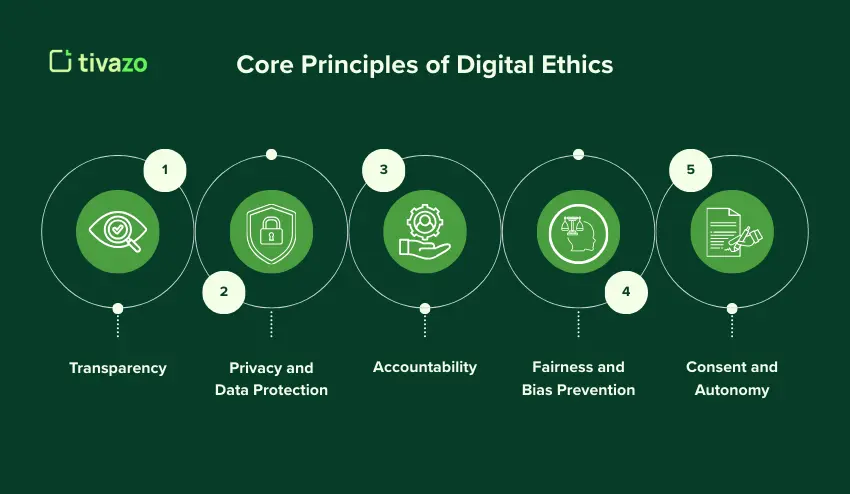
There is no single rule book for digital ethics, but all experts generally agree on several key principles that guide ethical behavior, especially as it relates to technology and employees.
1. Transparency
It is important to inform workers about the data collection practices. Workers have the right to know whether they are under monitoring or under analysis.
Transparency in technology is the key to building trust among the workers. If the workers understand the reasons behind the monitoring process, they are more likely to trust the process.
2. Privacy and Data Protection
Personal data limits must be respected, and this is non-negotiable. Good ethical data management involves collecting data only when necessary, storing data securely, and ensuring data is never used for unapproved purposes.
This relates to employee monitoring software, where data collected may be screenshots, activity recordings, and other data types, which require ethical management.
3. Accountability
When digital systems cause harm, someone must be accountable. This means that organizations own their decisions, including the decisions of the tools selected for monitoring employee time and productivity.
4. Fairness and Bias Prevention
Digitization bias occurs when technology adopts the prejudices that exist in the data used to build the system. For workplace technology, this may mean biased productivity systems that unfairly rate certain types of workers or certain time zones.
Avoiding discrimination in technology involves regularly checking in with the use of monitoring data to determine performance evaluations.
5. Consent and Autonomy
“Consent and data collection go hand-in-hand.” Employees need to be able to see what data is being collected and consent to it. “Autonomy” means that people actually have choices available to them, not buried on page 37 of the welcome pack.
Real-World Digital Ethics Examples
Digital ethics can be better understood with the help of various digital ethics examples. Ideally, these examples should be related to real-life scenarios.
Good ethical policies for data collection: An organization collects employee data on the number of working hours for a more accurate payroll system. However, the company does not share the data with others or use it to judge performance. That is ethical data management.
Algorithm bias in technology used in AI: A productivity tracking tool rates employees poorly because they work in non-linear hours while delivering good results. This is algorithm bias. This is one of the concerns in workforce analytics.
Responsible security practices: The company acknowledges that employee activity data was compromised in the hack, yet it informed employees immediately, holding them accountable.
Ethical use of digital nudges: Sending gentle reminders to track time, rather than guilt-inducing nudges that induce anxiety, is an ethical use of digital nudges. Ethical design does not use psychological manipulation.
Digital Ethics in the Workplace
This is why digital ethics becomes most personal for employees in the workplace. There has been a significant uptick in employees being monitored at work. The reason for this trend is the increased prevalence of remote and hybrid work arrangements.
There are valid business reasons for tracking employee time, measuring output, and understanding workflow, but there’s a fine line between business oversight and employee surveillance.
Ethical workplace privacy intrusion exists. But only if it is founded on honesty, proportionality, and respect.
This is what digital ethics in the workplace looks like:
- Be transparent with your monitoring. You should be open with your employees on what you are tracking, whether it is time, screenshots, applications, or activity levels. Surprise tracking creates distrust faster than anything.
- Specify monitoring policies in writing. All team members should have access to a written policy that explains the data collected, the reasons for which it is collected, and the storage period.
- Limit Intrusive Surveillance. Perfect employee surveillance involves collecting only necessary information. Excessive screenshot tracking or keyboard monitoring without any business justification is unethical.
- Personal time and devices. Ethical use of productivity tracking tools includes ceasing to track when the workday is over. Tracking employees during personal time on personal devices is a threat to employees’ digital rights.
- Give employees a voice. Employees need space to raise concerns and ask questions about how monitoring is handled.
The most effective monitoring of employees is the type that the employees will not resent. This is only achieved if an organisation takes an ethical approach from the very beginning.
Digital Ethics vs. Legal Compliance
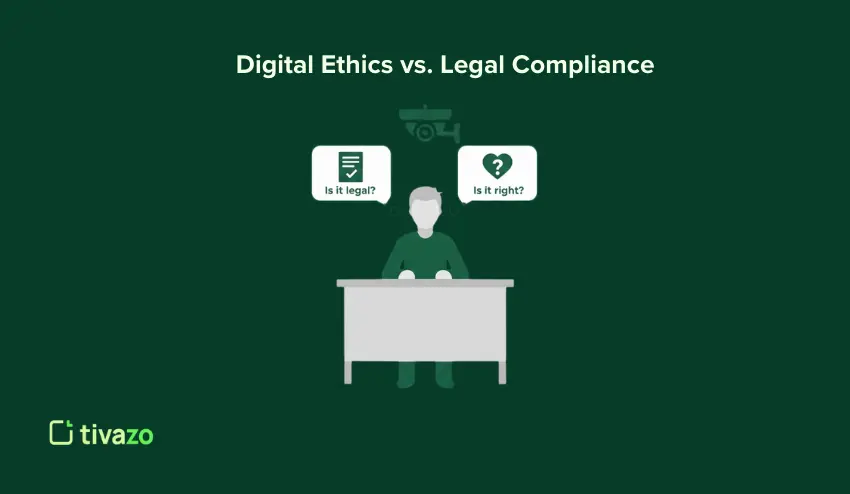
Many companies believe that abiding by the law is sufficient. It is not. While GDPR and digital ethics are related, they are not the same thing.
GDPR creates rules around data management, consent, and user rights. However, digital ethics poses an even deeper question: if all of this is permissible, is it ethical?
For example:
- It may be legal to monitor each employee’s activity during working hours. However, is it ethical to do so without giving any reason?
- It may be legal to use time-tracking information in performance evaluations. But is it necessarily ethical if employees never knew that the purpose was so intended?
We must ask ourselves these questions before problems arise, rather than after, when trust has already been broken.
Challenges in Maintaining Digital Ethics
Even well-meaning organizations face some very real challenges to acting ethically with digital tools.
Rapid technology change: Employee monitoring software is fast-changing. Policies written last year may not contain the tools in use today.
Global regulatory differences: A firm operating across countries sees conflicting laws about workplace surveillance. While necessary in the EU, these may not be standard elsewhere.
Skewed data sets: Productivity analytics, built upon incomplete or imbalanced data, will incorporate a prejudiced presumption about performance. Algorithmic bias requires relentless effort to eliminate.
Pressure for results: Teams under pressure to show productivity gains sometimes skip ethical risk assessments. The cost over the longer term in terms of lost trust and higher turnover is usually greater than any possible short-term gain.
How Organisations Can Build Ethical Digital Practices
Developing a digital ethics culture around workplace monitoring is as much a journey as it is a destination. However, the imperative steps that organisations need to follow are:
- Develop transparent monitoring policies that employees can read, understand, and ask questions about
- Ethical risk assessments should be conducted before introducing any new time tracking or monitoring solutions.
- Perform regular audits of algorithms for productivity scoring to ensure fairness across all jobs and work styles.
- Establish mechanisms for employee communication wherein employees can safely voice their concerns.
- Align data practices to ethical standards for data management, not just the minimum legal requirements.
- Regularly review the extent of the monitoring process to ensure collection is proportionate to the purpose.
“The goal is not perfection but continuous attention to do right, being transparent, and amenable to change whatever is not right.”
The Future of Digital Ethics
Digital ethics is not an ephemeral consideration, and it can become an integral feature of the operations of responsible organizations, particularly if they make use of employee monitoring and time tracking software.
What is coming next:
- AI ethics under HR technology is set to receive stricter regulation as performance automation tools become standard
- Workplace surveillance regulations are likely to become more stringent in various countries, with the EU at the forefront.
- Ethical AI certification standards will enable companies to demonstrate responsible monitoring practices to both employees and the government.
- The ever-changing norms of privacy will increasingly pressure organisations to grant employees greater autonomy over their personal information.
- Employee awareness is rising; individuals have a better understanding of their digital rights than ever before and will increasingly choose employers who respect them.
Companies that adopt ethical foundations within monitoring systems now will be much better prepared when these developments occur.
Final Thoughts
Digital ethics is not an occasional policy choice. It is an ongoing commitment to doing the right thing by the people whose lives your technology touches.
As much as employee monitoring software and time tracking tools are advancing, the ethical imperative placed on organisations is rising along with it. Transparency, consent, fairness, and accountability are not nice-to-haves; they are the starting place for a workplace people will actually want to be a part of.
Those companies will do more than avoid legal issues; they will earn the kind of trust that keeps talent, fuels culture, and withstands the test. It is far more valuable than any measure of productivity.