Remember the last time your boss looked over your shoulder while you worked? That uncomfortable feeling of being watched and second-guessed?
Most employees today are done with that kind of management. They want space to breathe, think, and do their jobs without constant interference.
Companies are finally catching on. The old command-and-control approach is dying out, replaced by something that actually respects people’s intelligence and skills.
This shift is reshaping everything about modern work. It’s changing who wants to work where, how much people produce, and whether they stick around or bail for better opportunities.
What Is Employee Autonomy in the Workplace?
Employee autonomy means giving employees the freedom to make decisions about their work. It’s trusting people to do their jobs without constant supervision from managers.
The concept of workplace autonomy goes beyond just handing out tasks and walking away. It’s about creating an environment where employees feel confident making decisions that affect their daily work. When done right, people take pride in their contributions instead of just following orders.
Think about it this way. A marketing person tests different ad designs without asking their boss first. A programmer solves bugs using whatever method works best for them.
Your organizational culture determines how much freedom people actually get. Some bosses love giving employees space. Others want to control every little thing. The leadership style at the top usually trickles down to everyone else.
Types of Employee Autonomy at Work
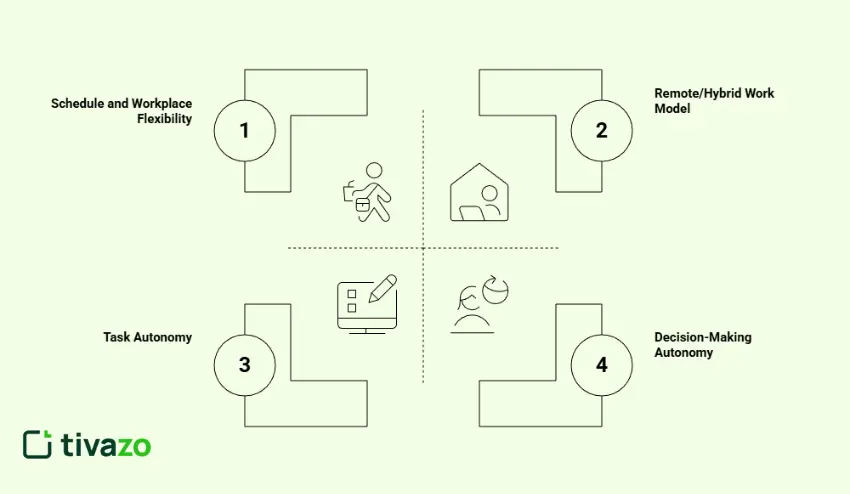
Different jobs need different kinds of freedom, and understanding these types helps managers figure out what to give their teams. Some employees might need control over their schedule but not their methods, while others might need exactly the opposite. The key is matching the right type of autonomy to both the person and the role they’re in.
Task Autonomy
Task autonomy is about choosing your method. You know what needs doing, but you figure out the how part yourself.
A designer picks fonts and colors based on their experience. A salesperson writes their own emails instead of using templates that everyone else uses.
Schedule and Workplace Flexibility
Some folks are morning people. Others hit their stride after lunch or even late at night. Workplace flexibility means working from wherever you’re most comfortable. Could be your kitchen table, a coffee shop, or the office.
Decision-Making Autonomy
This one’s about solving problems on the spot. You don’t need to run everything up the chain first.
A support agent might issue a refund right away instead of asking three managers. A team lead assigns tasks based on what makes sense, not what a handbook says.
Autonomy in the Remote / Hybrid Work Model
Remote and hybrid work models push autonomy to another level. Nobody’s watching you work, so you manage your own time.
These setups only work when there’s real trust happening. You need clear targets but loose rules on how to hit them.
Why Is Employee Autonomy Important?
It is easier to see why so many modern companies are abandoning traditional management techniques when one considers the importance of autonomy. The advantages affect everything from employees’ job satisfaction to the overall performance of the company.
It has its roots in fundamental human psychology regarding respect and motivation, not some fad in management.
Impact on Employee Engagement
When they are in charge, people are more concerned. It’s simply human nature.
When employees believe that their decisions are important, employee engagement soars. They begin to genuinely care about outcomes rather than just showing up.
Role of Trust in the Workplace
Trust is everything here. Bosses need to believe their people will make smart calls.
When trust in the workplace is real, employees feel respected. They’ll go the extra mile because they know you’ve got their back.
Connection to Psychological Safety
Psychological safety means you won’t get hammered for trying something new. Autonomy builds that safety by letting people experiment.
Employees in these environments speak up more. They toss out ideas without worrying someone will shoot them down.
Reduction of Micromanagement
Autonomy kills micromanagement naturally. If people have freedom, managers can’t nitpick every detail.
Micromanagement drives everyone crazy. It wastes time and tells employees you don’t trust them to tie their own shoes.
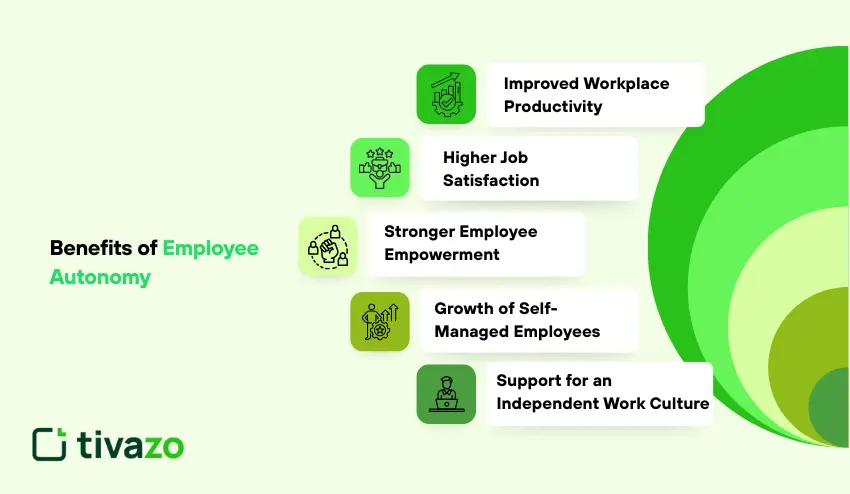
Benefits of Employee Autonomy at Work
The real-world advantages of giving employees more control extend far beyond just keeping them happy. Companies that get autonomy right see measurable improvements in their bottom line, not just in employee satisfaction surveys.
These benefits compound over time as your workforce becomes more skilled at making good decisions independently.
Improved Workplace Productivity
Employees with freedom get more done. They use methods that actually work instead of following outdated procedures.
Without managers constantly interrupting, people stay focused. Workplace productivity goes up because people work smarter, not just harder.
Higher Job Satisfaction
People who control their work are happier, plain and simple. They feel like adults instead of kindergarteners being watched at recess.
Job satisfaction keeps employees around longer. Happy employees also tell their friends to apply when jobs open up.
Stronger Employee Empowerment
Employee empowerment happens when people make real decisions that matter. They build confidence in their own judgment.
Empowered employees stop waiting for someone else to fix things. They jump on problems and opportunities themselves.
Growth of Self-Managed Employees
Self-managed employees own their performance. They set their own standards and push themselves to meet them.
These people need way less hand-holding. They figure out what skills they need and go learn them.
Support for an Independent Work Culture
Autonomy creates a culture where independence is normal. People don’t look weird for doing things their own way.
This independent work culture attracts smart people who hate being babysat. It also sparks creativity because different approaches lead to new ideas.
How Employee Autonomy Affects Performance
Many traditional managers are surprised by the relationship between flexibility and outcomes. They worry that if they watch less, their job will be worse, but that is not the case. When no one is breathing down their necks, employees actually take greater responsibility and work harder.
Relationship with Performance Management
Performance management flips when you give people autonomy. Hours worked stop mattering. What got done starts mattering.
Set the goal, then get out of the way. Employees chart their own course to the finish line.
Accountability and Ownership Outcomes
Here’s something funny about autonomy. It actually makes people more accountable, not less.
When you’re the one making decisions, you can’t point fingers later. You own the win or the loss. That ownership lights a fire under people in a way orders from above never will.
Autonomy vs Control-Driven Environments
Control-heavy workplaces watch everything. Every email needs approval. Every decision runs up three levels of management.
Autonomous places set the destination but not the route. Employees pivot when plans aren’t working. They adapt instead of waiting for new orders.
Comparison: Autonomous vs Control-Driven Workplaces
| Aspect | Autonomous Workplace | Control-Driven Workplace |
| Who decides methods | Employees pick their own | Managers approve everything |
| How much supervision | Light touch | Constant checking |
| What matters most | Getting results | Following rules |
| New ideas | Welcome and tested | Usually shut down |
| How people feel | Generally satisfied | Often frustrated |
| Getting work done | Usually faster | Can drag on |
How Managers Can Support Employee Autonomy
Switching from control freak to coach isn’t easy. Most managers learned to manage by watching other managers who also controlled everything. Breaking that cycle takes guts and practice. You’ll feel weird at first, like you’re not really managing anymore, but that’s actually when you’re managing best.
Shifting Leadership Style from Control to Coaching
Stop telling people what to do. Start asking them what they think should happen.
Good coaches ask questions that help employees solve their own problems. Those employees then know how to handle similar situations next time without calling you.
Setting Clear Goals Without Micromanaging
Tell people where they need to end up. Skip the part where you describe every turn along the way.
Paint a picture of success. Let them paint the picture of how to get there.
Building Trust and Accountability
Trust builds slowly. One good interaction at a time. One project where you didn’t check their work every hour.
People need to know what you expect. They also need regular check-ins on how they’re tracking. Just make those check-ins about support, not surveillance.
Supporting Autonomy in Flexible and Remote Teams
Remote work requires autonomy by default. You literally can’t watch people work from home.
Here’s what works:
- Give weekly goals, not daily task lists
- Measure what shipped, not what hours were logged
- Clear roadblocks when asked
- Check in to help, not to hover
- Assume people are working unless proven otherwise
Challenges and Risks of Employee Autonomy
Autonomy can blow up in your face if you do it wrong. Some managers give freedom without any guardrails and then wonder why everyone’s confused. Others say they want autonomy, but still hover constantly. Both approaches fail spectacularly, just in different ways.
Over-Autonomy and Lack of Direction
Give someone total freedom with zero guidance and watch them flounder. They won’t know what matters or where to start.
People need different amounts of structure. New employees need more. Veterans need less. Your job is figuring out who needs what.
Balancing Independence with Collaboration
Autonomous employees sometimes become lone wolves. They stop talking to teammates. They miss out on help and good ideas.
Force some collaboration into the schedule. Regular team meetings. Shared projects. Times when working alone isn’t an option.
Maintaining Alignment with Company Goals
Employees chasing their own interests can drift away from company priorities. They get excited about pet projects that don’t move the needle.
Talk about big-picture goals constantly. Connect individual work back to organizational objectives. Make sure everyone sees how their piece fits the puzzle.
Best Practices for Building Workplace Autonomy
Building real autonomy takes more than a memo saying “everyone has freedom now.” You need systems, policies, and daily habits that support independence. Start small, watch what works, then expand. Trying to flip everything overnight usually crashes and burns.
Creating Autonomy-Friendly Policies
Policies should open doors, not close them. Write rules about outcomes, not processes.
Let people choose their hours if deadlines are met. Let them work remotely when it makes sense. Stop requiring permission for things that don’t actually need permission.
Encouraging Feedback and Open Communication
Build real channels for employees to speak up. Then actually listen when they do.
Feedback shouldn’t be a once-a-year thing. Make it normal, constant, and two-way. Employees tell you what’s broken. You tell them how they’re doing.
Measuring Success Without Excessive Monitoring
Count what matters. Ignore what doesn’t.
Don’t track these:
- Time at desk
- Emails sent
- Meetings attended
- Activity reports
Focus on tracking:
- Finished projects
- Quality of work
- Happy customers
- Team collaboration
- Fresh ideas contributed
Conclusion
Employee autonomy changes everything about work. People with control over their jobs perform better and stay longer.
Building an independent work culture takes real commitment. But the results speak loud higher employee engagement, better workplace productivity, and stronger trust in the workplace.
Start small. Give employees control over their methods. Judge outcomes, not activity. Companies that respect employee independence will win the future. That future starts with the decisions you make right now.