Working hybrid is not an experiment anymore. It has been sneaking into the default mode of how many teams are run, although the regulations surrounding it remain incomplete. There are those employees who work at home on most of the days, and there are those who alternate their time, and the managers are the ones who are left to sew policies together as they come.
It is not whether hybrid work will survive or not, but how it will develop. The policies of hybrid work, productivity expectations, and leadership habits will evolve over the next five years in a way that values clarity, trust, and results more than visibility.
To both managers and employees, the future of hybrid work is not about making predictions but about getting ready to do what will be most significant: how to measure work, how to keep teams on track, and how to make flexibility sustainable instead of chaotic.
What Hybrid Work Looks Like Today (Baseline for the Future)
Hybrid work is comfortable, yet not permanent. The majority of teams are operating on a hybrid arrangement, but most of them are yet to know whether they are doing it correctly. The organization is present, but the trust is lacking.
Hybrid work policies in most companies are not clearly defined. There are teams that have to report to the office on designated days. There are those who are left to be flexible with minimal guidance. Some companies refer to themselves as remote-first, although they require regular office attendance.
These installations perform on the surface, but cracks are revealed rapidly. Meetings multiply. Expectations blur. Employees ask themselves what it means to be available and the managers are concerned about who is doing what.
It is not the location of work that is a challenge. It is the coordination and measurement of work. The question of productivity, visibility, and fairness is still open in most hybrid environments.
This is important since the current hybrid work models are not long-term. They were hastily constructed in order to adapt rather than to endure. It is these gaps that will define the next stage of working hybrid.
Why the Future of Hybrid Work Will Be Different
The hybrid work is on the verge of increasing. What is here today was constructed as a necessity, rather than as a design. In five years, firms will have to reconsider the way hybrid work actually works.
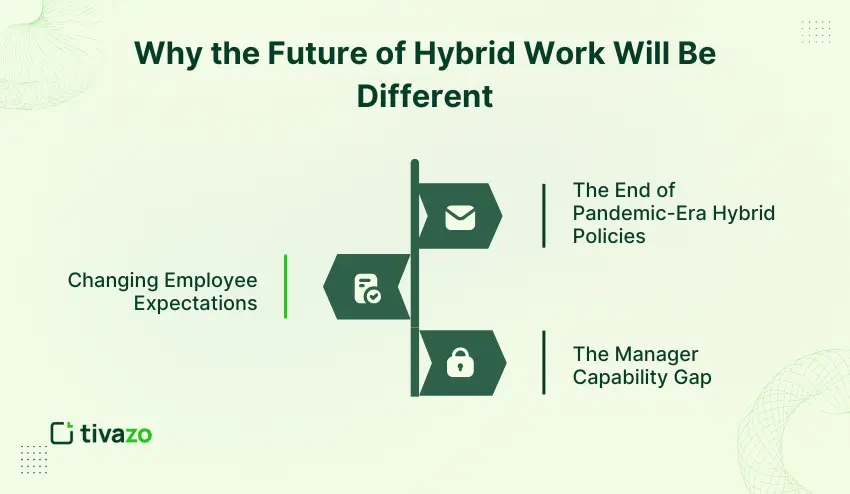
1. The End of Pandemic-Era Hybrid Policies
The majority of the hybrid work policies were developed in haste. They were to sustain teams, rather than establish a permanent pattern of operation. Consequently, a lot of the policies are based on attendance instead of results.
These stopgap rules will disintegrate in the future. The teams will also require more precise expectations, performance frameworks, and policies that seem just rather than responsive.
2. Changing Employee Expectations
Flexibility is no longer a luxury to employees. For many, it is part of the deal. Hybrid work has redefined what individuals expect of their work and particularly about autonomy and trust.
Companies that stick to the stiff hybrid models will not perform well as talent markets are competitive. Employees will be attracted to organizations that value focus, flexibility and results.
3. The Manager Capability Gap
The skills gap in leadership has been revealed through hybrid work. Several managers were conditioned to be present leaders rather than results leaders. Once teams are not visible, there is uncertainty.
This gap will not be able to be ignored in the next five years. Adaptable managers will succeed. Individuals who like to control and check in frequently will retard their teams.
7 Things That Will Matter Most in Hybrid Work Over the Next 5 Years
Office days or remote perks will not determine the future of hybrid work. It will be influenced by the clarity of the teams in defining success, trusting each other, and shaping work based on results rather than attendance.
1. Outcome-Based Performance Over Time Tracking
The time spent at work will not be the key factor compared to the outcomes. Visibility is no longer equal to productivity in a hybrid environment, and the leaders are starting to realize that.
The successful hybrid teams will be work-oriented, outcome-oriented, and quality-oriented. No longer will there be assumptions on who is online or in the office as clear goals and deliverables will substitute.
This change enables employees to operate in the most efficient time possible, and managers have a better understanding of actual performance.
2. Trust as a Core Leadership Skill
Trust will cease to be a conceptual value but a quantifiable leadership quality. Trust has a direct relationship with engagement, retention, and output in hybrid work.
Managers who trust their teams will not waste much time in surveillance, but instead eliminate barriers. In their turn, employees will become more responsible of their work.
In the long-term, the trust-based hybrid work policies will be more effective than the control-based policies.
3. Smarter Use of Office Space
The office will cease to be the default place of work. It will become a tool. It will be used by the teams deliberately in collaboration, planning, and relationship building.
Companies will no longer say, Are people coming in enough, but they will say, Are we using office time well? Such a transformation will alter the design and scheduling of space.
Hybrid work works when the office is not a necessity but a value addition.
4. Asynchronous-First Communication
Meetings will lose their supremacy. Real-time communication is becoming more challenging to organize and tiresome as the number of hybrid teams increases.
Hybrid work is more of a future that will prefer documenting, update writing, and sharing knowledge. This minimizes meeting overload and enables individuals to work in schedules without straining.
Asynchronous communication also leaves superior records, clarity and accountability.
5. Visibility Without Surveillance
Managers require intuition, rather than control. In the next five years, the hybrid teams will use tools that will demonstrate work patterns without encroaching on privacy.
Ethical productivity monitoring will concentrate on trends, focus time as well as balance of workload. It will assist teams to enhance processes rather than police behavior.
This equilibrium will be essential to sustainable hybrid work.
6. Fair Career Growth in Hybrid Teams
Proximity bias is a new risk that has been introduced by hybrid work. Even in cases where performance is equal, employees who are more visible in the office may seem more engaged.
This will be actively taken care of in future-ready hybrid work policies. The promotions, feedback, and opportunities will be outcome-based rather than present-based.
This will make hybrid work enhance growth rather than restrict it.
7. Continuous Policy Evolution
The policies on hybrid work will cease to be paperwork. Policies have to change with the change of teams.
The most successful organizations will also revisit their hybrid approach on a regular basis, based on feedback and data to streamline the expectations. This elasticity makes policies up-to-date and reliable.
The hybrid work is successful in the long term when the policies are updated according to the individuals who use them.
How Managers Should Prepare for the Future of Hybrid Work
The key to successful hybrid teams in the next five years will be managers. Being a leader of hybrid teams goes beyond organizing office days, it involves being clear, trusting, and flexible. The managers should pay attention to the following key actions:
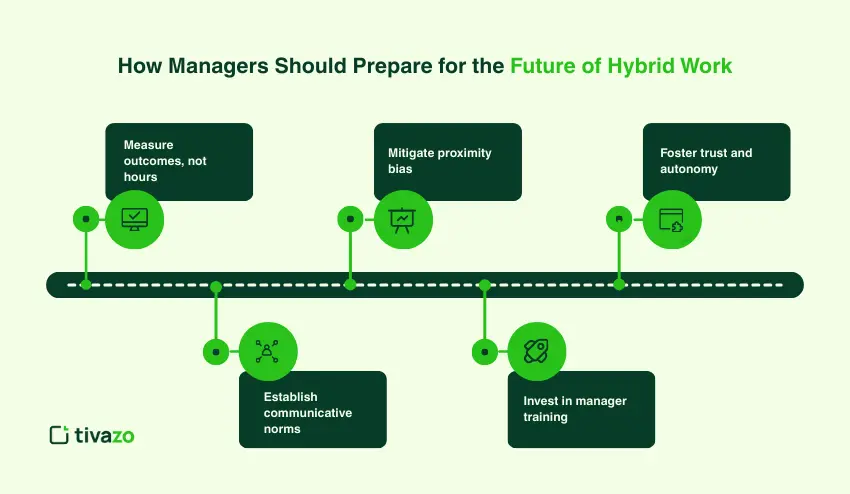
- Measure outcomes, not hours
Change tracking time to result orientation. Establish specific goals and KPIs to facilitate performance discussions and minimize micromanagement. - Establish communicative norms
Introduce policies of asynchronous updates, meetings, and teamwork. Make decisions on documents and communicate progress to ensure distributed teams are on track. - Mitigate proximity bias
Make promotions, visibility, and opportunities equal to remote employees. Change the chairs of the meeting and reward success. - Invest in manager training
Always acquire hybrid leadership skills, such as being able to use collaboration tools and coaching employees remotely. Frequent training improves involvement and retention. - Foster trust and autonomy
Promote a sense of ownership in teams. Trust eliminates unneeded supervision and enhances productivity in the long term.
How Employees Can Thrive in the Future Hybrid Workplace
The employees should also have a plan to thrive in the hybrid environment within the next five years. It will not be success by mere appearance but by concentration, publicity, and flexibility. Some of the important means through which employees can thrive are:
- Focus on outcomes, not hours
It is better to finish meaningful work than just spending time on the internet. Self-monitor to show impact. - Communicate proactively
Provide frequent share updates, capture decisions and explain expectations. Asynchronous communication minimizes misinterpretations and maintains the knowledge of managers and colleagues. - Set boundaries
It is recommended that one should avoid burnout by distinguishing between work and personal time. Control notifications and deep-focus intervals using tools. - Be seen but not too exposed
Make sure that your success is felt. Win shares during team updates, contribute to meetings and work on cross-functional projects. - Invest in skill growth
On-going learning and upskilling are essential. Hybrid teams compensate those employees that are capable of working on their own and at the same time achieving shared objectives. - Build strong relationships
Human relationships are important even in a hybrid arrangement. Arrange periodic visits with peers and managers and attend office collaboration days as much as possible. - Use the power of hybrid tools
Take advantage of productivity, scheduling, and collaboration tools to be organized and on track. The awareness of such tools as Tivazo can be used to monitor the work patterns and ensure transparency.
How Tivazo Supports the Future of Hybrid Work
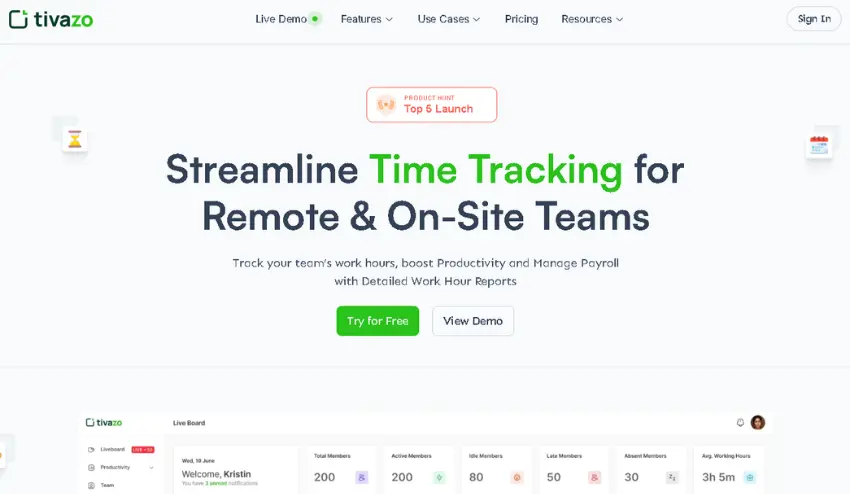
- Offers transparency without micromanaging
Tivazo makes work patterns visible to managers and employees and does not interfere with autonomy. - Makes hybrid work visible
Gives information on the time usage and flow of tasks on remote and office days. Helps managers identify trends and bottlenecks without necessarily requiring supervision. - Endorses productivity that is result-oriented
Emphasizes productivity trends rather than time. The teams are able to recognize overloads, reallocate the workflows, and ensure equitable workloads. - Fosters confidence and positive health
Recognizes the risk of burnout and promotes healthy work hours. Employees feel trusted, managers feel confident, and engagement is enhanced. - Bridges transparency and responsibility
Brings in alignment between the hybrid teams and the future trends balanced between autonomy and insight, rendering the policies sustainable and result-oriented.
Conclusion
Office days and remote flexibility will not be the defining features of hybrid work in the future. It will be influenced by clear policies, trust, and performance outcome-oriented. Managers who quantify their outcomes, promote independence, and adjust constantly will experience increased engagement and retention. Effective communication, ownership, and use of tools such as Tivazo will make employees successful.
Hybrid work is a challenge of leadership, culture, and systems, but not a question of where people sit. It is this attitude that will make the companies adopt it today that will be the one that will be successful in the next five years and able to provide productive, fair, and sustainable working environments to all.