The speed of websites influences the experiences of users as well as search results. Visitors
want pages to be loaded in a few seconds, and faster sites are given more visibility by search engines. To the website owners who are no longer interested in shared hosting but are not ready to spend on dedicated servers, the explanation of the impact of VPS web hosting on the speed of the websites explains the reason why this solution has become the choice of web hosting in performance-focused businesses.
VPS hosting has its benefits in speed due to its basic architecture. Virtual private servers overcome the lack of performance that plagued shared hosting because they offer dedicated resources in a separate environment, and the customization options that can be used to achieve peak performance with maximum speed.

Dedicated Resources That Guarantee Performance
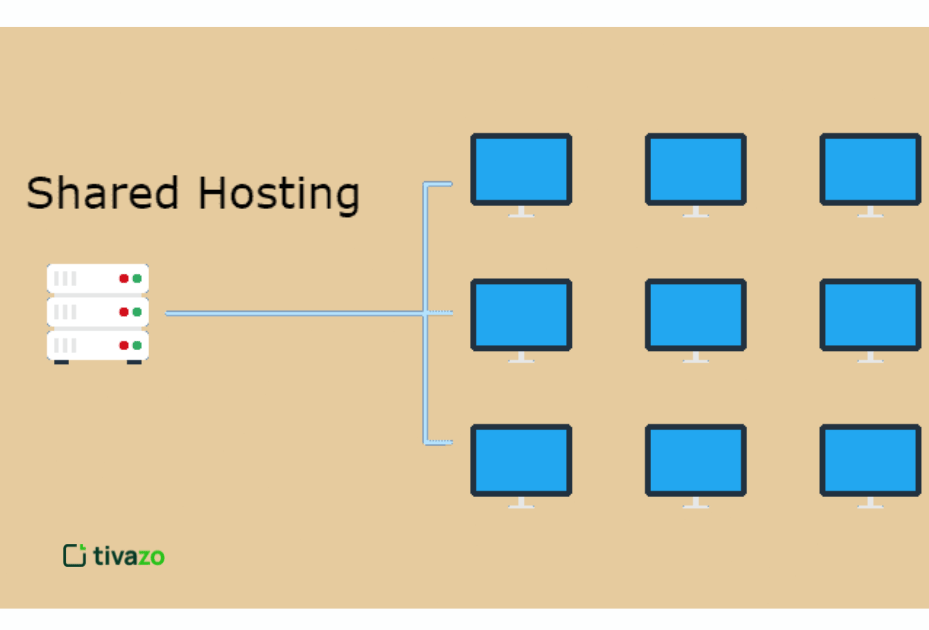
Shared hosting uses server resources on dozens or even hundreds of web hosting. If one of the sites experiences an influx of traffic, other sites on the same server will be slowed down. This unpredictable allocation of resources makes it impossible to have a consistent speed.
VPS hosting works differently, ensuring that each virtual server is guaranteed resources:
- Dedicated CPU cores where requests are processed without competing with each other.
- Reserved RAM allocation that makes memory-intensive tasks run well.
- Guaranteed bandwidth to ensure that there is no network congestion, which can affect the load times.
- Allocated storage capacity with predictable read/write performance.
These dedicated resources are directly converted into faster page load times. The visitor requests your site, and the server will respond instantly with complete access to the designated processing power instead of waiting in line with other sites.
Isolated Environment Eliminates The Noisy Neighbor Effect
The problem of the “noisy neighbor” relates to the situation when a single site on a shared server uses too many resources, sacrificing the performance of all other sites. Some neighboring sites can also cause your site to crawl due to no fault of your own, as they run poorly optimized code, have a traffic spike, or are victims of a security attack.
VPS architecture addresses this by using virtualization technology, which builds truly isolated environments. The virtual servers are completely autonomous, having their own instance of an operating system. The spikes in the traffic of other VPS instances do not impact the resources allocated to you since the hypervisor places strict boundaries on the virtual machines.
This isolation also means that your site will not be affected by other processes on the physical server, and therefore, the performance of your site will remain the same. This predictability proves invaluable to business ventures that value reliable performance.
Customization Options That Maximize Speed
The total control one has over server configuration is one of the greatest benefits of selecting VPS web hosting. Root access ensures that the owners of a web hosting can install and configure performance-enhancing software that cannot be installed in a shared hosting environment. This ability to customize will make any regular server an optimized, high-speed one that fits your requirements.
VPS has performance optimization options, which are:
- Web server selection: Use Nginx or LiteSpeed in place of default settings to deliver static files faster.
- Advanced caching systems: Install Redis or Memcached to keep regularly accessed data in memory.
- Database optimization: Set MySQL or MariaDB parameters to execute queries faster.
- PHP optimization: Set up OPcache and configure PHP-FPM configurations to run scripts faster.
- Content delivery: Set up a compression rule at the server level and a browser caching rule.
These optimizations are added up to produce dramatic speed improvements. With a correctly set up VPS, the pages could be served several times quicker than the very same site on shared hosting, just because the server setup corresponded to the needs of the applications.
SSD Storage Accelerates Data Retrieval
Storage speed has a direct influence on the speed of your server in retrieving and delivering files on the web hosting. Traditional hard disk drives are based on rotating platters and moving read heads that introduce mechanical latencies to slow down data access. The Solid State Drives do away with these mechanical limitations completely.
VPS packages normally come with SSD storage, which is much faster in performance:
- Reduced latency: The process of data retrieval starts nearly at once and does not involve mechanical seek time.
- Faster read/write speeds: Database operations and file processes are faster.
- Improved IOPS: More input/output operations per second serve with more simultaneous requests.
- Better reliability: No moving parts means high performance through time.
In the case of database-driven web hosting such as WordPress, Magento, or bespoke e-commerce systems, SSD storage saves a lot of time in querying databases and reading content. This is improved on each page load, so SSD storage is one of the most impactful speed upgrades available.
Scalability That Prevents Performance Degradation
Website traffic does not always stay the same. Traffic can be boosted by seasonal variations, marketing efforts, viral content, or gradual increases. When the volume of traffic surpasses the resources, page loads are longer, and visitors have frustrating delays.
VPS hosting deals with this challenge by means of vertical scalability. When your existing resource allocation nears its capacity, there is an option to add more CPU cores, RAM, or storage without moving to a new server. Your settings, software installed, and optimizations are not lost as the capacity increases.
Such scalability allows you to begin with resources that suit the current workload and also upgrade them as the workload increases. The other option on shared hosting is striking against the hard limits, causing a disruptive migration to a new hosting environment.
Key Performance Benefits For Complex Websites
Speed is the improvement offered by VPS hosting and is most noticeable with dynamic web hosting that are intricate. Simple static sites may be placed on a shared server; however, content management systems, online stores, and other applications requiring individual web development may exploit a VPS.
- Shorter Time-To-First-Byte (TTFB) is the time that the server begins to serve responses. TTFB records that VPS hosting usually logs are significantly lower than those of shared hosting, as the dedicated resources answer the calls immediately without any queue-up delays.
- Traffic spikes will be managed to ensure that slowness is not experienced during shared hosting when there is high demand. The load can be managed by VPS resources, whether it is a flash sale, generating viral content, or organic growth.
- A set of specific resources, SSD storage, and specific caching options result in a quicker load of the CMS platforms, including WordPress or Magento. The querying of the database and PHP processes are done in the platforms on every page load, and hence are particularly sensitive to server performance.
Conclusion
VPS hosting is a middle ground between shared hosting, which does not offer high-performance and reliability to the websites, and VPS hosting. With the development of more dynamic and intricate websites, the resource-intensive nature of such web hosting is gaining more significance. VPS hosting takes care of this by assigning user-specific CPU, RAM, and storage resources, which means that the performance of the web hosting is not influenced by the activity of other websites on the same server.
A reduced Time-To-First-Byte (TTFB) and better handling of traffic spikes, together with better support of resource-intensive platforms such as WordPress or Magenta all make the user experience smoother. Moreover, SSD storage and high-order caching facilities are useful to maximize the database search and the server operations that are important to modern use.
Altogether, VPS hosting offers the performance, reliability, and scalability required by companies and programmers who would like their websites to be fast and stable, capable of managing growth and providing users with a faster load.