In the modern world where business is highly regulated, the organization is under constant pressure to make sure that it adheres to different laws and regulations. The nonconformity to compliance standards might lead to expensive fines, legal issues, and loss of reputation. Although most companies concentrate on compliance audits, updating policies, time tracking is one of the tools that are usually ignored. Time tracking does not simply involve tracking the productivity of the employees, but this aspect is vital in regulatory compliance and reporting.
Understanding Compliance and Regulatory Reporting
It is necessary to have an idea of what regulatory reporting is prior to delving into the role of time tracking in promoting compliance and Regulatory Reporting. There are various regulations that organizations in various industries are required to adhere to such as labor laws, financial reporting standards and data protection laws as well as health and safety laws. Regulatory reporting is the proper documentation and reporting of the information prescribed by the authorities. Sanctions, audits, or legal investigation may be the reasons of errors or omissions in reporting.
Here, the orderly and precise time monitoring is necessary. Having accurate documentation of employee work hours, work, and project participation, organizations can ensure compliance to the standards of quality in a clear and verifiable way.
Time Tracking as a Compliance Tool
The major advantage of time tracking is that the employees and their working hours can be audited. This applies especially in a sector where working hours, overtime and rest hours are highly required to be documented under labor laws. Indicatively, healthcare, finance or manufacturing organizations may be forced to comply with strict labor standards. With an elaborate time tracking system in place, there is an assurance that all working hours are captured correctly and hence there is less chances of violations.
Besides, time tracking will assist in the process of transparency in the process of auditing. Regulatory agencies usually demand evidence of working hours, project distribution and attendance of employees. Time tracking systems are a stable, automated means of providing this information, reducing the error that might be caused by manual reporting.
Integration with Employee Background Check and HR Processes
Time tracking is not independent as it is usually combined with other wider human resources systems, such as employee background checks on employees. As an example, employees recruited by companies to work in sensitive or regulated positions are supposed to be compliant to all the requirements of the company. The HR software can be connected with time tracking systems to ensure that only qualified and verified employees are assigned to certain tasks or projects.
It is most essential in organizations that carry out activities in sectors such as finance, law firm, or even healthcare whereby the compliance is not merely about attendance. Connecting data on time tracking with verification of employees will be used to provide consistency to the regulatory norms and to make sure that the reports will contain the correct personnel information.
The Role of Time Tracking in Strengthening Audit Readiness
Audit preparedness is paramount to organizations so that they do not violate different regulations and standards. Time tracking is important in ensuring that the businesses are ready whenever there is an audit and they are ready to supply the required documentation and transparency whenever required. The following is why time tracking is important in preparing the audit:
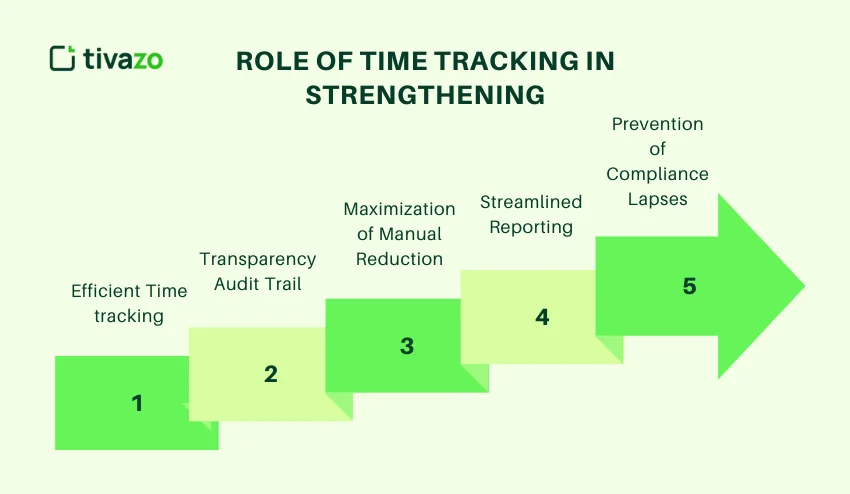
- Efficient Time tracking: Time tracking systems offer an accurate and up-to-date account of employee hours, attendance and project participation. It is also easy to provide correct information in the audits and avoids the chances of misaligning and loss of information.
- Transparency Audit Trail: Under automated time tracking, organizations produce an easily traceable audit trail that is detailed and provides auditors with an easy track of work hours, overtime, and even labor law compliance. This openness can contribute towards confidence with auditors and regulators.
- Maximization of Manual Reduction: By automating the time tracking system, the businesses minimize the possibility of human error in reporting on working hours which may be crucial in case of an audit. The presence of accurate and consistent records will be necessary to pass audits without any complications.
- Streamlined Reporting: Time tracking systems allow businesses to produce pre-configured and customized reports that meet the requirements of the regulations. These reports can be readily availed to auditors and this saves time and efforts in the audit process.
- Early Prevention of Compliance Lapses: The routine review of time tracking information will make sure that businesses know the risks of compliance at all times, and they can deal with the possible problems until an audit. Creative consideration of potential areas of compliance weakness enhances audit preparedness and reduces the likelihood of regulatory breaches.
Benefits for Financial and Legal Compliance
In addition to the compliance with labor law, time tracking can be valuable to financial and legal reporting. Hours worked by employees should be properly registered in order to process payroll, bill and allocate costs properly. In the case of companies, which are subject to audit or need to submit the labor costs to the authorities, time tracking offers a traceable record, which can prove the compliance with the accounting principles.
Furthermore, time tracking can assist the organization to detect differences or abnormal patterns that can reveal compliance risks. Among the examples of this is the use of repetitive overtime which goes unreported or improperly allocated hours, which can be identified before they become a problem leading to a regulatory breach by the management.
Enhancing Organizational Accountability
The second main benefit that time tracking brings with it is the accountability of the organization. Having employees understand that their working hours and duties are correctly documented will make them follow the company policies and standards of compliance. Transparent reports have been provided to managers and compliance officers, which makes monitoring of performance easier, compliance of the regulations, and planning the audit.
In addition, tracking time assists organizations adopt a culture of responsibility whereby compliance is not a procedural obligation but a way of doing things. This is a proactive strategy that reduces the risk levels that may be related to regulatory examination and enhances general corporate governance.
Time Tracking’s Role in Enhancing Regulatory Reporting Accuracy
Time tracking systems provide efficient and proper data in regard to regulatory reporting, reducing errors and observing labor laws. Here’s how:
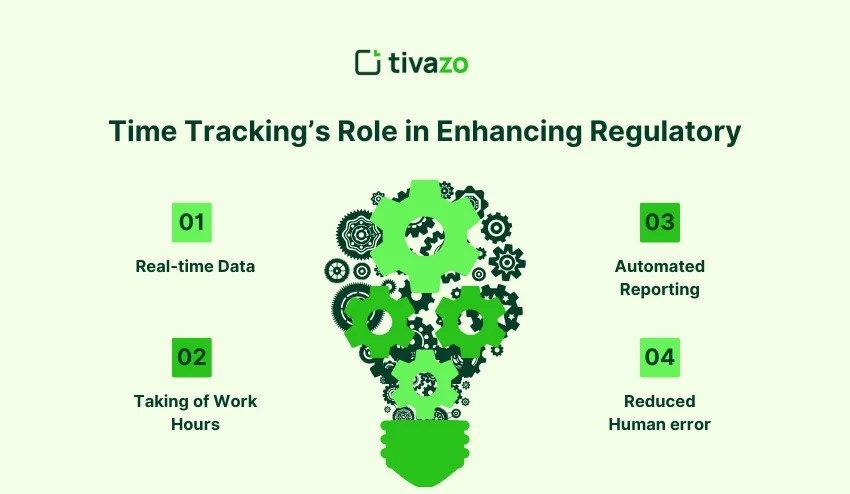
- Real-time Data: Timely reporting is possible through real-time data to generate reports in response to regulatory requests.
- Taking of Work Hours: overtime and breaks: Accurately documenting the work hours, overtime and breaks, as required by the regulations.
- Automated Reporting: Produces reports that comply without the necessity of manual errors.
- Reduced Human error: Fully automated tracking provides error-free information to be submitted to regulators.
Best Practices for Compliance-Oriented Time Tracking
In order to optimize the value of time tracking as a compliance and regulatory reporting tool, there are some best practices that organizations need to adhere. To begin with, a trustworthy and safe time tracking solution should be selected, which would enable the capture of data and audit trails. Automation minimises the possibility of human error and offers auditable records to the auditors.
Second, time tracking should be incorporated in organizations by being linked to HR, payroll, and employee checking system. This forms a comprehensive compliance model, which connects the activity of employees and regulatory compliance.
Lastly, time tracking data should be reviewed on a regular basis. The trends, records validity and detection of anomalies can assist the organization to stay compliant and avoid the last minute rush during the preparation of regulatory reporting.
Reducing Risk of Compliance Violations with Time Tracking
Using a proper time tracking system may help to greatly minimize the chances of compliance breach as far as it makes proper documentation and compliance with regulations. Here’s how:
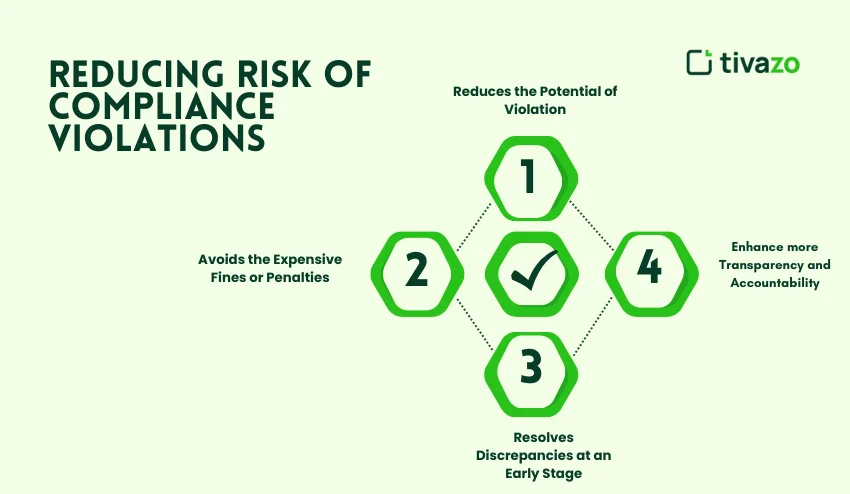
- Reduces the Potential of Violation: Time tracking systems assist to keep a substantial account of the working hours of the employees, and ensure that overtime regulations, minimum wage laws, and other industry standards are observed.
- Avoids the Expensive Fines or Penalties: Time tracking can also aid the organizations in preventing the costs of fines or legal punishments caused by failure to keep the labor regulations.
- Resolves Discrepancies at an Early Stage: A discrepancy in the working hours recorded can be easily spotted and rectified before it turns into a major violation of the compliance.
- Enhance more Transparency and Accountability: Time tracking fosters a culture of capturing the working hours of all employees, which will promote transparency and accountability.
Conclusion
Time tracking is not a productivity management tool at all, but a crucial part of regulatory compliance and reporting. In verifying employee hours as well as in integration with HR processes such as employee background checks, precise time tracking helps the organization achieve transparency and accountability that would enable the organization to meet compliance requirements. With the help of the modern time tracking systems, not only compliance and regulations may be ensured, but also operational risks may be mitigated, audit readiness may be enhanced, and corporate governance may be strengthened.
When tighter regulation is increasingly becoming a reality, it is no longer a choice to have solid time tracking practices. It is a tactical philosophy that assists companies to conduct business effectively and at the same time, be within the law and regulations which govern their sector.