Trying to manage a workforce without understanding what they’re working on is like driving a car with your eyes closed. You can only hope everything goes smoothly, but you’re not really in control. That’s where workforce visibility comes into play.
Workforce visibility allows managers to understand what their workforce is doing in real-time. It’s not about spying on them. It’s about understanding work patterns, spotting issues early, and making informed decisions.
In this article, you’ll learn what workforce visibility is, why it’s important, and how to implement it without invading workforce privacy.
What Is Workforce Visibility?
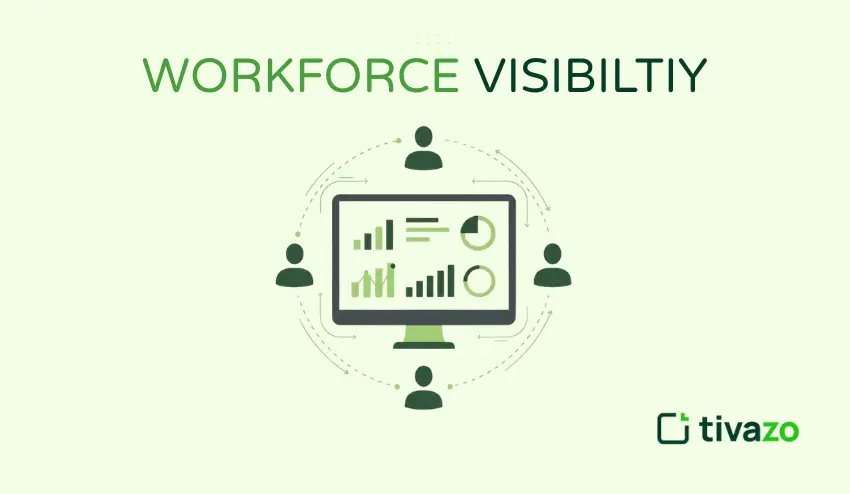
Workforce visibility refers to the ability to see and understand what workers are working on at any given time. It provides managers with clear visibility into productivity, progress, and resource utilization.
Workforce visibility is more than just tracking employee attendance. It involves awareness of which projects are in progress, how time is spent, and where the bottlenecks are. The aim is to have clarity, not control.
Key aspects of workforce visibility include:
- Real-time monitoring of work activities
- Task completion rates and workflow efficiency
- Time spent on projects
- Work hours and attendance
- Performance metrics and productivity analysis
Workforce visibility is essential in remote and hybrid work settings. In a situation where employees work from different locations, the use of traditional methods of oversight is not feasible. Workforce visibility tools fill the gap.
It is like turning on the lights in a dark room. You are not changing what is in the room. You are simply able to see it clearly.
Why Workforce Visibility Is a Business Imperative
Without visibility, managers make decisions based on guesses. They wonder who is overworked, who is underworked, and where the bottlenecks are. Guesswork leads to poor decision-making and inefficient work processes.
Visibility fixes all these issues. It provides a starting point for making the workforce better.
Improves Workforce Performance and Productivity Tracking
With visibility, you can track wasted hours. Perhaps a two-hour task takes five hours. Visibility enables you to determine why this is the case.
You can detect inefficiencies such as too many meetings, poor priorities, or poor workflows. These problems can be addressed to optimize the workforce.
Reduces Blind Spots in Real-Time Workforce Management
Remote work eliminates visibility. You can’t walk by someone’s desk to see their progress. Without technology, managers become disconnected from the workforce and the modern workplace.
Workforce visibility software bridges this gap. It provides visibility into active work, downtime, and task completion without needing frequent updates. This enhances visibility in remote teams.
Improves Accountability
With everyone knowing that their work is visible, accountability becomes a natural process. Team members remain on track since they know that their expectations are clear.
It is not about monitoring. It is about transparency. Employees know what is expected of them, and managers know what is delivered through real-time data.
Supports Better Decision-Making
Data always wins over assumptions. Attaining workforce visibility gives you the data necessary to make informed decisions about staffing, resource allocation, and project timelines.
For instance, if the data indicates overtime in one of the departments, you know that it is time to hire or reallocate work. This informed decision-making saves money and boosts business performance.
Prevents Burnout & Hidden Workload
Some employees are struggling in silence. They work long hours but never complain. Real-time data indicates these trends before burnout occurs and impacts employee engagement.
Managers can act early to reallocate work and prevent costly turnover. Improved workforce visibility helps protect your employees while ensuring productivity.
Workforce Visibility vs Workplace Visibility
These are similar-sounding concepts but have distinct meanings. Recognizing the distinction can help prevent confusion in workforce planning.
| Aspect | Workforce Visibility | Workplace Visibility |
| Focus | Employee productivity and work habits | Physical office space and culture |
| Scope | Task management, time management, and productivity | Office design, collaboration areas, and company culture |
| Tools | Time management software, tracking tools | Communication tools, feedback mechanisms |
| Goal | Improve work performance measurement | Improve collaboration and employee experience |
Job visibility is another area of interest. Job visibility is the extent to which an employee’s work is visible to management. This can result in career advancement opportunities.
These are interrelated but distinct concepts. Real workforce visibility is strictly about work output and productivity of the entire workforce.
What Data Creates Visibility Across Your Total Workforce?
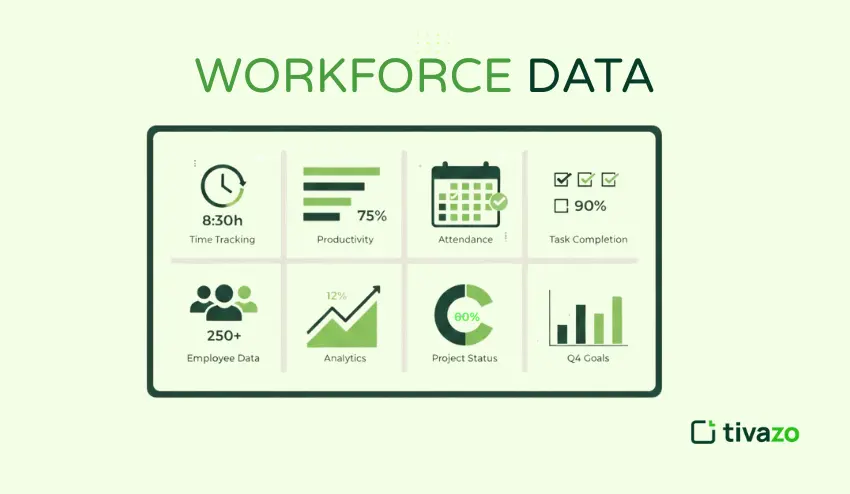
The type of data that provides workforce visibility is important. Not all data is created equal. Prioritize data that is directly connected to productivity and performance.
The following data points are necessary:
- Time tracking data: Hours worked, breaks taken, and overtime
- Active vs. idle time: Computer activity vs. inactivity
- Task completion rates: Time it takes to complete assignments
- Screenshot verification: Visual confirmation of work activity (use with caution)
- Attendance and leave data: Absences, sick days, and vacation patterns
- Project timelines: Deadlines and milestones
- Employee skills: Capabilities and experience levels
Each data point answers a question. Time tracking data indicates when people are working. Task completion rates indicate productivity. Attendance data indicates potential problems.
The trick is finding a balance. Collect enough data to see what is happening. Collect too much data, and it becomes intrusive and overwhelming.
A management tool, such as a dashboard, can be used as a source of truth. Rather than trying to keep track of multiple spreadsheets, all data is in one place with workforce analytics.
How to Improve Workforce Visibility and Streamline Operations
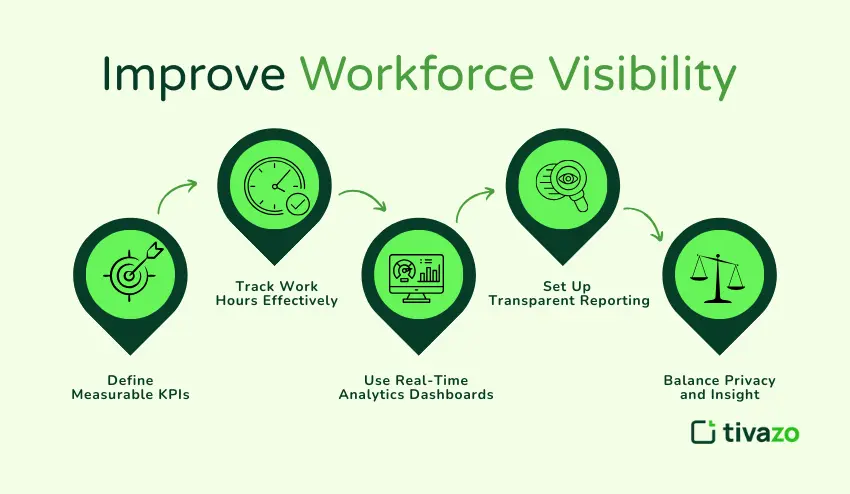
Visibility requires effort. You can’t just install software and hope for the best. Follow these steps to ensure effective workforce visibility.
Define Measurable KPIs
Begin by identifying what’s important to your business. Different departments require different sets of data. Sales teams may require the number of calls made. Development teams may require the number of code commits.
Identify 3-5 key performance indicators that accurately measure productivity. Ensure they are specific and measurable to ensure effective workforce visibility that provides business intelligence.
Track Work Hours Effectively
The most primitive method of time tracking is a must. You must know the punch-in and punch-out times of your employees, as well as their break times. This will enable you to analyze trends and pinpoint issues with employee schedules.
Automate time tracking to reduce manual entry. This not only saves time but also boosts accuracy for your contingent workforce and full-time employees.
Use Real-Time Analytics Dashboards
Dashboards are tools for analyzing workforce data. Instead of analyzing spreadsheets, managers can analyze charts and graphs.
Good dashboards show trends over time with real-time alerts. They highlight problems right away, make reporting easier, and give visibility into the entire workforce ecosystem.
Set Up Transparent Reporting
Reports should be accessible to everyone. Weekly reports are best for most teams. Personal and team data should be included to boost compliance and accountability.
It’s a two-way street for transparency. Employees should be able to see their own data and see how they are being measured. This will help build trust in the management system.
Balance Privacy and Insight
This is the hardest part. You have to find a balance between having enough visibility to manage effectively and respecting employee privacy and engagement.
Steer clear of Big Brother monitoring, such as keystroke logging or constant screen captures. Emphasize output metrics instead. Measure people on outcomes, not on mouse clicks.
Explain clearly what is being measured and why. When employees understand the reason, they are more willing to accept visibility and control measures.
Challenges in Achieving Workforce Visibility
However, the process of installing visibility systems is not always seamless. There are a few issues that might jeopardize your efforts to increase workforce visibility.
Privacy Issues
Employees feel as though they are under constant surveillance. They are concerned that information will be used against them. These are legitimate issues that must be addressed.
Be open about what you are tracking. Let employees know how information will be used and who will have access to it. You should never surprise employees with monitoring software or real-time monitoring capabilities.
Micromanaging Issues
Managers might be tempted to use visibility information to micromanage. This will undermine trust and morale. The purpose of visibility information is to gain insight, not to interfere.
Managers must be trained to use visibility information for support, not punishment. They should be looking at trends and action items, not specific instances of low activity.
Data Overload
Too much data is just noise. When a dashboard has 50 metrics, it confuses more than it informs. Keep only the key metrics that inform strategic decisions.
Look at your metrics. Cut what is irrelevant. Add what is relevant to keep the data accurate.
Employee Trust Issues
When employees feel they are being unfairly monitored, they will resist. Employees need to be communicated with in an open and honest way. They need to be involved in decisions about what is measured and how.
When people feel heard, they will comply. When they feel they are being spied on, they will revolt. Better visibility means better relationships.
Workforce Visibility in Remote & Hybrid Teams
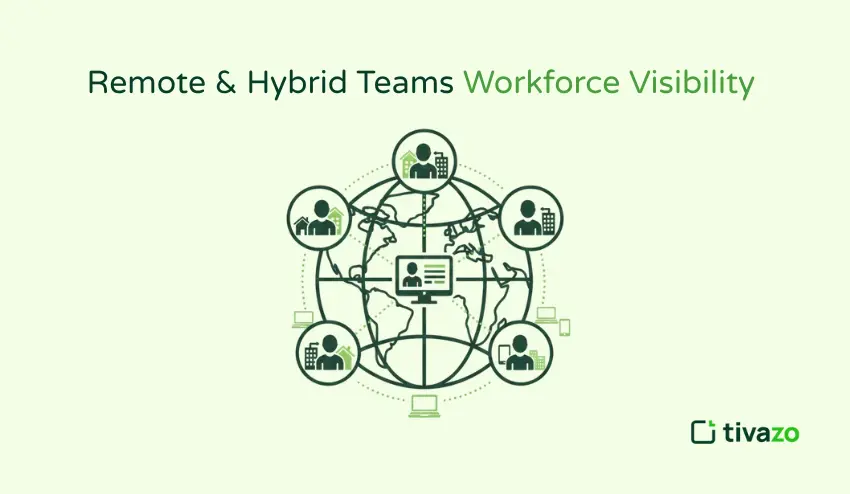
Remote work has turned everything upside down. The traditional approach to workforce management simply didn’t work anymore. Visibility became both harder to achieve and more important as a business need.
You can see who’s working in the office. But you can’t be in the home office. This leads to confusion for managers and questions about freedom for employees in hybrid work environments.
Remote teams require workforce visibility because:
- You can’t observe them physically
- They work in different time zones, making coordination difficult.
- Asynchronous work requires status updates.
- Measuring performance requires objective data.
- A dispersed workforce requires centralized management.
Hybrid teams introduce complexity. Some employees work from the office, and some work from home. Without visibility, hybrid teams create two-tiered company cultures.
Visibility balances the playing field. Remote employees receive the same recognition as office employees. Their contributions are visible regardless of location when you have a complete view of the workforce.
The most effective way to achieve visibility is to strike a balance between trust and transparency. Give employees freedom while setting clear expectations. Leverage real-time data to support and empower teams, not monitor them.
Benefits of Visibility for Business Outcomes
The benefits of workforce visibility go beyond simple tracking. When done right, workforce visibility translates to tangible business outcomes.
Companies that have workforce visibility enjoy lower costs as a result of optimized resource allocation. They easily identify areas of waste and automate processes that are repetitive. They also make informed procurement decisions based on actual workforce data, as opposed to estimates.
Visibility within teams also enhances workforce planning. You can better predict business requirements. You are aware of the skills of your employees and where the gaps are.
For contingent workforce management, visibility is critical for visibility. You monitor your external workforce together with your internal workforce, giving you a single source of truth for all your talent.
The Future of Workforce Visibility and Analytics
The future workforce requires improved tools and improved workforce planning. As hybrid work continues, workforce visibility will become even more critical.
New technology will make visibility less obtrusive and more beneficial. Artificial intelligence will offer more insights into workforce analysis. Real-time information will be available in every management system.
The companies that prioritize workforce visibility today will have workforce agility tomorrow. They will be more adaptable, more effective, and better at retaining employees.
Final Thoughts
Workforce visibility is no longer a choice. Remote work, distributed workforces, and complex projects require a better understanding of work patterns.
The trick is to leverage visibility correctly. Prioritize outcomes over observations. Leverage data to empower employees, not manage them. Be open about what you’re tracking and why.
Begin small. Identify a few key metrics. Master the fundamentals before scaling. Take feedback from employees and refine your approach.
When done correctly, workforce visibility drives better decisions, happier employees, and improved business outcomes. It converts uncertainty into clarity and assumptions into facts.
The challenge is no longer whether to implement visibility. It’s how to implement it fairly, efficiently, and with respect.
FAQs
What is the difference between workforce visibility and employee monitoring?
Workforce visibility is more about understanding work patterns to make improvements. Employee monitoring has a negative connotation of constant observation, whereas workforce visibility is more about transparency and improvement.
How to demonstrate visibility in the workplace?
You need to demonstrate your progress to others, keep a record of your accomplishments, be actively involved in meetings, and make your outcomes available to your team.
Can workforce visibility be applied to remote teams?
Yes. The application of workforce visibility is particularly useful for remote teams because you cannot see them physically.