In the contemporary, competitive, and data-driven business world, there is no longer room in organizations for guesswork to drive people, productivity, and performance. The increasing labor expenses, working remotely, shortage of skilled labor, and burnout have positioned workforce optimization as a strategic consideration, not a post-operations consideration.
Workforce optimization is the ability to have the right people with the right skills doing the right work at the right time. Done properly, it enhances efficiency and experience among employees and promotes sustainable growth.
This guide covers it all with enlightenment on the meaning of and examples of strategies, advantages, and how Tivazo assists businesses in optimizing their workforce intelligently.
Definition of Workforce Optimization
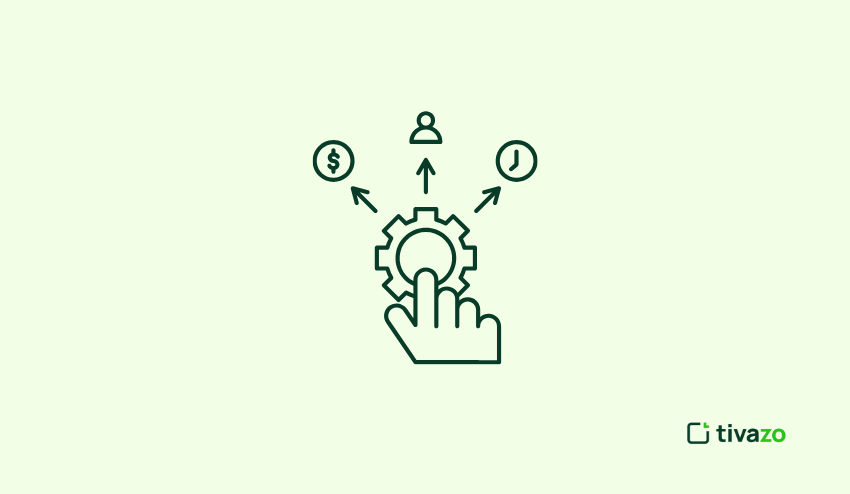
Workforce optimization is the act of ensuring a strategic alignment of employees, skills, schedules, and workloads to the business objectives so as to achieve maximum productivity and efficiency without affecting the well-being of the employees.
Contrary to the old-fashioned management of a workforce, the optimization is concerned with performance, output, and decisions based on data, and not only attendance or the number of people.
Critical Elements of Workforce Optimization
- Workforce planning
- Performance tracking
- Time analysis and productivity analysis.
- Skill alignment
- Process optimization
- Employee engagement
- Sources of Workforce Optimization.
Workforce optimization is applicable in all industries and team designs, where it assists organizations to become efficient without necessarily increasing the number of people.
Real-World Examples
| Scenario Optimization | Approach |
| Remote groups | Productivity and activity monitoring |
| Customer Services | Smart scheduling according to demand |
| Marketing teams | Campaign and ROI time analysis |
| IT departments | Workload balancing to curb burnout |
| HR departments | Performance appraisal based on facts. |
Example:
A maturing firm finds out that almost 30 percent of the time employees remain at work does not add value or value repetitions. Through Tivazo, the analysis of time and activity data can offer the leadership insight into where the effort is being squandered. They allocate workloads differently, automate repetitive processes, and repivot the organization on high-impact activities. Consequently, the organization becomes more productive, has better deadlines, and the employees get more satisfaction without necessarily employing more people or having higher operating expenses.
Value of Workforce Optimization
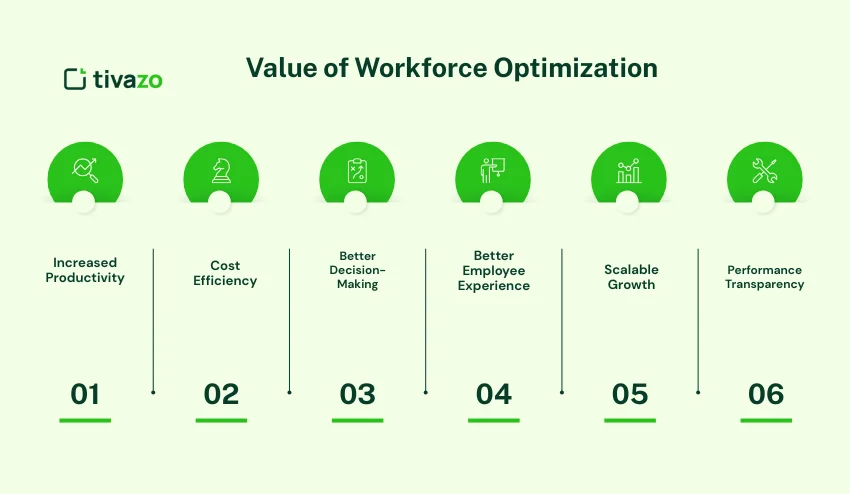
1. Increased Productivity
Employees work on high-impact and meaningful work rather than working without a purpose, lessening downtime and enhancing the general quality of output.
2. Cost Efficiency
Businesses manage to streamline the existing resources without having to lay off workers or unnecessarily hire staff by detecting inefficiencies and time wastage.
3. Better Decision-Making
Based on data, one will be empowered to make better predictions of their workforce needs and to plan capacity and resource allocation more accurately.
4. Better Employee Experience
Reduction of micromanagement, balanced workloads, and fair performance assessment will reduce burnout and enhance engagement and retention.
5. Scalable Growth
Organizations are able to streamline the processes and performance before the increase in headcount, and this will guarantee controlled and sustainable expansion.
6. Performance Transparency
The ability to see output, productivity, and contribution clearly enhances accountability and trust within teams and, at the same time, keeps efforts in line with the business goals.
Layoffs? Does Workforce Optimization?
No, workforce optimization is not layoffs.
It is a fallacy that tends to generate undue fear among the employees.
- What It Actually Means
- Smarter task distribution
- Identifying inefficiencies
- Upskilling employees
- Improving processes
Layoffs are a strategy, not a last resort. Workforce optimization aims at extracting the best out of available talent through better workflow, minimizing unused efforts, and matching skills with business requirements. It results in increased productivity, better morale, and long-term growth when implemented properly without reducing the workforce.
What is workforce optimization software?
Definition
The workforce optimization software is a computer-based program that assists companies in monitoring time, analyzing output, managing assignments, and enhancing workforce output based on real-time information. It allows organizations to make effective choices, align the efforts of the employees to the purpose of the business, and eradicate inefficiencies within teams.
Core Functions
- Time tracking
- Productivity monitoring
- Performance analytics
- Workforce insights
- Reporting and dashboards
These are tools that will offer leaders a working visibility to maximize output, promote accountability, and facilitate sustainable growth without micromanagement.
Why Tivazo Is the Perfect Workforce Optimization Software. Tivazo is designed to support the work of modern teams, which attach importance to performance, transparency, and intelligent development.
Tivazo Workforce Optimization Enablers
- Real-time time tracking
- Task and project productivity.
- Activity-based performance measures.
- Manager reports are automated.
- Remote team support and hybrid team support.
- Evidence-based workforce transparency.
How Tivazo makes the most out of your workforce
| Challenge | Tivazo Solution |
| Poor productivity | Activity-level information |
| Employees who work too much | Visibility of workload. |
| Remote management of teams | Monitoring in real-time |
| Ineffective tracking performance | Back-end reporting. |
| Unproductive planning | Analytics of time and effort. |
Tivazo does not micromanage leaders but enables them to make intelligent decisions.
Workforce Optimization Strategy
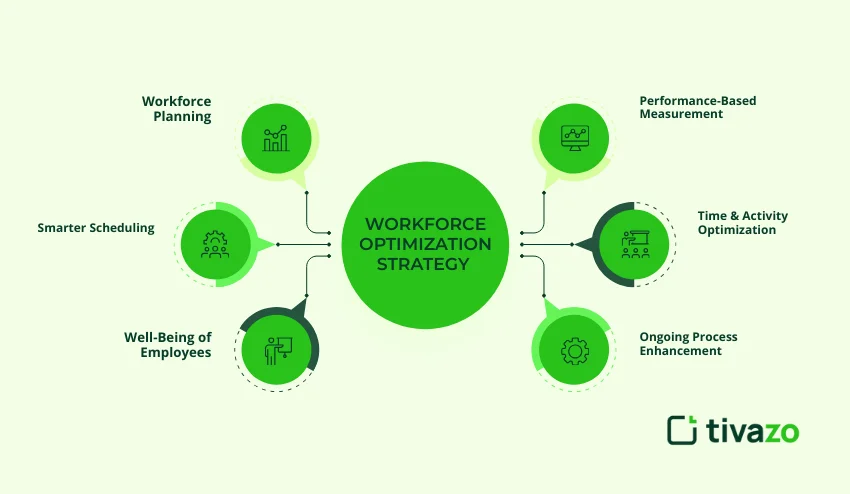
Accomplished strategies of workforce optimization based on industry best practices are listed below. These are strategies that aim at bringing people, processes, and technology into line to enhance efficiency, increase the visibility of performance, and promote business growth in the long term. When implemented regularly, they assist organizations in ensuring that they maximize output whilst preserving the well-being of the employees and their engagement.
1. Workforce Planning
The workforce planning is used to make sure that the right talent is available at the required time.
Focus areas:
- Skill demand forecasting
- Capacity planning
- Succession planning
2. Performance-Based Measurement
Replacement of the number of hours worked with outcomes achieved.
Best practice:
Resort to productivity and task-level data rather than manual reviews.
3. Time & Activity Optimization
Know the use of time by teams.
With Tivazo:
- Identify time leaks
- Minimize the nonproductive operations.
- Enhance prioritization of tasks.
4. Smarter Scheduling
Match the demand of the workforce with the demand of the workload.
Benefits:
- Reduced idle time
- Better coverage
- Better working satisfaction
5. Ongoing Process Enhancement
Workflow optimization, not people.
- Remove repetitive tasks
- Automate low-value work
- Standardize processes
6. Engagement and Well-Being of Employees.
Employees must feel supported to perform optimally.
- Prevent burnout
- Balance workloads
- Enhance responsibility without monitoring.
What are the four steps of workforce planning?
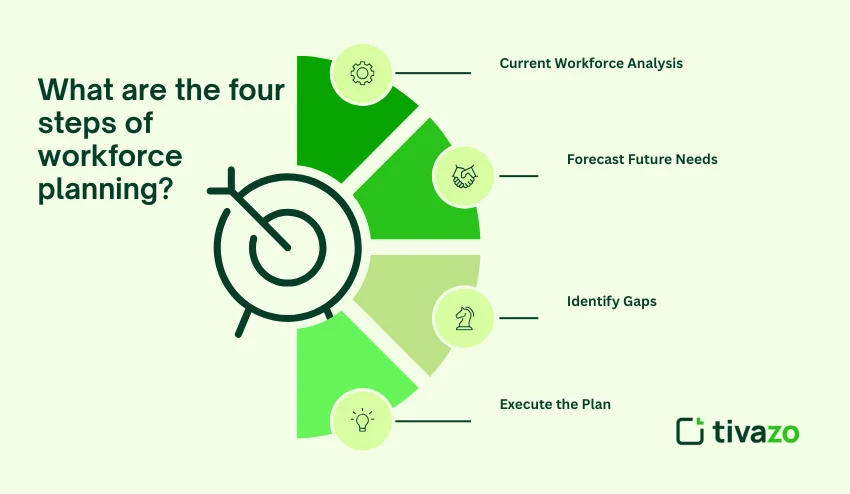
Workforce optimization is based on workforce planning. It makes sure that the organizations possess the right people, possess the appropriate skills, and are at the right time to fulfill the business goals.
Step 1: Current Workforce Analysis
Evaluate current skills, job positions, the level of productivity, and performance rates to determine the strengths, inefficiencies, and capability gaps among teams.
Step 2: Forecast Future Needs
Anticipate future talent needs using business objectives, business plans, seasonal demand, and changes in technology.
Step 3: Identify Gaps
Determine the current workforce capacity against future requirements to find out the skills gaps, excessive staffing, or imbalanced workload.
Step 4: Execute the Plan
Do it by recruiting and staffing wisely, developing staff, and streamlining.
What is staff optimization?
Optimization of staffing is a practice of having the right number of employees with the right skills to do the right job at the right time.
Workforce Optimization vs Staffing Optimization
| Aspect | Staffing Optimization | Workforce Optimization |
| Priorities | Headcount and scheduling | Performance and efficiency |
| Scope | Narrow Strategic | holistic |
| Application of data | Minimal | Complex analytics |
| Resulting coverage | Fraudulent outcome | Growth and productivity |
Workforce optimization is a subdivision of the concept of staffing optimization
The Metrics of Making Workforce Optimal
To rank and scale, it is effective to follow these KPIs:
- Productivity per employee
- Utilization rate
- Task completion time
- Idle vs productive hours
- Burnout indicators
- Output quality
The control of these metrics is automated, monitored, and visualized by Tivazo.
The Reason Why Workforce Optimization Will Be Important in 2026
- Remote and hybrid employment is here to stay.
- Labor costs continue rising
- Flexibility is anticipated of employees.
- The companies require effectiveness rather than growth.
The current organizations that invest in workforce optimization will do better than the upcoming competitors tomorrow.
The Faster Workforce Optimization with Tivazo
Tivazo is also unlike generic tools, as it is created to address real-world workforce issues.
What Sets Tivazo Apart
- Easy implementation
- No intrusive micromanagement.
- Definitive productivity understanding.
- Scales with your business
- Practices evidence-based leadership.
Tivazo is the tool you want in case you want to grow smarter, but not bigger.
Conclusion
Workforce optimization is a strategic solution to achieve better productivity, efficiency, and employee experience without necessarily adding more heads. With intelligent workforce planning, evidence-based decision making, and appropriate technology, companies can kill inefficiencies and grow sustainably. Workforce optimization can become a practical idea with the help of such tools as Tivazo, and receive real-time information on time, performance, and workload, which will help organizations become smarter, not bigger.