Managing employee payroll has become more complex than ever in 2026. To handle remote employees, tax laws, overtime regulations, attendance tracking problems, and evolving employee expectations, businesses all over the United States are facing these challenges.
Payroll is more than simply paying salaries on time. It’s not just a question of compliance anymore, but also employee satisfaction, productivity, and workforce management.
Businesses don’t want to be plagued by even a minor payroll error. Employees trust their employers when they receive their pay on time, the correct tax deductions, and accurate work hour calculations, their confidence can be lost, and they may be subjected to legal penalties as well.
Employers are required by the official U.S. Department of Labor to keep accurate records of the number of hours worked, wages paid, and overtime compensation earned by their employees to remain compliant with labor laws.
For this reason, most businesses these days are using payroll systems in conjunction with attendance tracking software, productivity monitoring, and workforce management solutions.
Fewer payroll disputes and smoother HR operations are what companies can expect to enjoy with accurate time tracking and employee productivity systems.
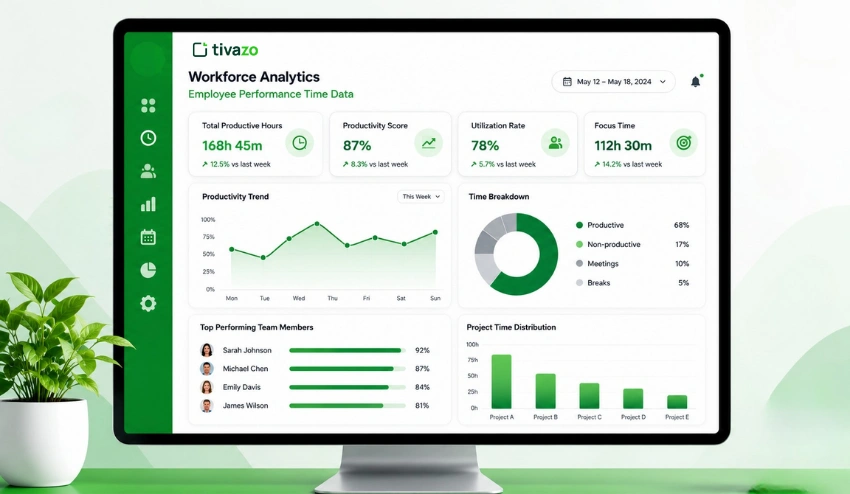
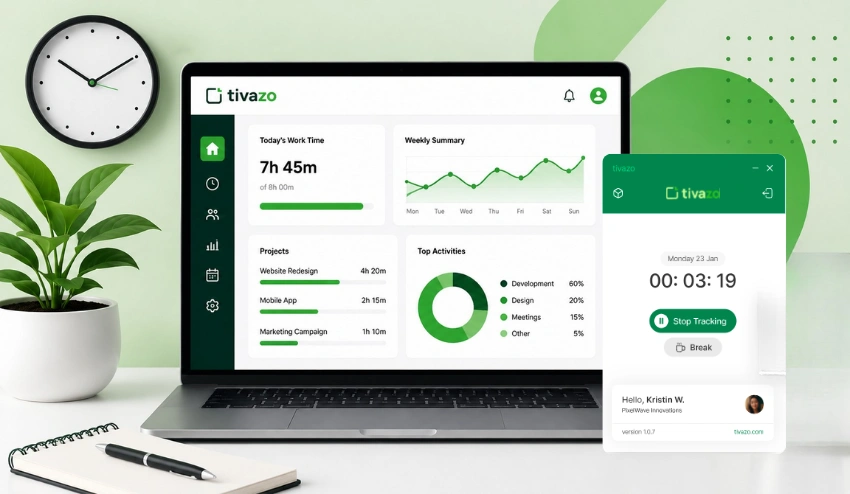
Tools such as Tivazo can give teams real-time visibility into attendance, productivity, and produce timesheet reports, streamlining accurate payroll processing for organizations seeking to optimize their workforce visibility and time management.
This comprehensive guide will give you insights into the world of employee payroll management, processes, typical challenges, the benefits of payroll automation, compliance requirements, and best practices for modern businesses in 2026.
What Is Employee Payroll Management?
Employee payroll management involves the calculation, handling, and distribution of employee wages and salaries, while ensuring that the tax laws and labor regulations are adhered to.
It covers anything from logging hours worked by employees to handling payments and keeping payroll records.
The basic components of a payroll management system usually include:
- Employee salary calculations
- Overtime payments
- Tax deductions
- For this classification, benefits and insurance deductions are included.
- Paid leave tracking
- Attendance management
- Payroll reporting
- Compliance documentation
Modern payroll systems rely heavily on accurate work-hour tracking. If attendance records are incomplete or inconsistent, payroll calculations become unreliable.
Businesses that improve workforce visibility usually reduce payroll errors because managers can verify attendance patterns, overtime hours, and employee activity more efficiently.
Organizations focused on operational transparency often strengthen workforce coordination through centralized productivity and reporting systems integrated into daily operations through team productivity management workflows
Why Employee Payroll Management Is Important?

Payroll management has an impact on almost all aspects of a business. As an employer, you need to ensure you are compliant with the law and paying your employees the right amount, on time.
The following are some of the greatest reasons why payroll management is essential in 2026.
1. Builds Employee Trust
Accurate salaries and timely payments are crucial to employees. A payroll error can cause a major morale and trust issue in a company.
Reliable payroll operations help businesses:
- Improve employee satisfaction
- Reduce payroll disputes
- Increase transparency
- Build workplace trust
2. Supports Legal Compliance
The federal and state labor laws in the USA must be followed by businesses regarding wages, taxes, and overtime. Improper payroll bookkeeping can result in fines and penalties.
Businesses must have good payroll tax records and file employee taxes correctly with the Internal Revenue Service (IRS).
3. Improves Financial Planning
Payroll is often one of the largest business expenses. Accurate payroll reporting helps businesses:
- Forecast labor costs
- Monitor overtime spending
- Improve workforce scheduling
- Manage budgets more effectively
Companies that maintain accurate operational reporting often make stronger workforce planning decisions because labor data becomes easier to analyze.
Businesses that improve operational clarity through centralized reporting and workforce analytics often streamline payroll coordination using team management.
4. Reduces Payroll Disputes
One of the top reasons for payroll conflicts is attendance errors. Accurate attendance management systems can help businesses minimize disputes about overtime, late working, or missed time.
Manufacturers of tools that create automated timesheet reports and employee work-hour summary reports are useful for companies that want to ensure their payroll is accurate for improved productivity in the workplace.
The category of Business productivity offers workplace productivity strategies that are explored by businesses that want to make their operations more visible.
6 Common Payroll Mistakes Businesses Should Avoid
Some of the most common payroll errors are easy to make, even for experienced businesses, which can result in employee dissatisfaction, compliance problems, and financial penalties. This article will help organizations avoid those common mistakes, create payroll accuracy, and keep employees happy.
1. Misclassifying Employees
Mistakes with payroll often include misclassification of employees as contractors. Misclassification may impact overtime, benefits eligibility, and tax implications.
2. Inaccurate Overtime Calculations
Manual timesheets or varying attendance records can lead to overtime mistakes. Overpaying and underpaying overtime can lead to wage disputes and legal penalties.
3. Missing Payroll Tax Deadlines
Late filing of tax returns can result in penalties and interest. It is crucial for businesses to keep a payroll calendar and utilize automated reminders to help make sure that taxes are filed on time.
4. Poor Record Keeping
Audits and compliance reviews are more difficult due to incomplete payroll records. Overtime and attendance, benefits, and tax records for businesses should be kept securely.
5. Common data entry mistakes. Typical data entry errors
Manual entry of payroll info is prone to payroll discrepancies, incorrect wage calculations, and duplicate payments. Automated payroll systems are the ones that make it very easy to minimize these risks.
6. Ignoring Attendance Inconsistencies
The accuracy of payroll is reliant on accurate attendance figures. Businesses should routinely audit attendance records to spot any missing entries, incorrect work hours, or any overtime claims that have been unauthorized.
Employee Payroll Management Process Step by Step
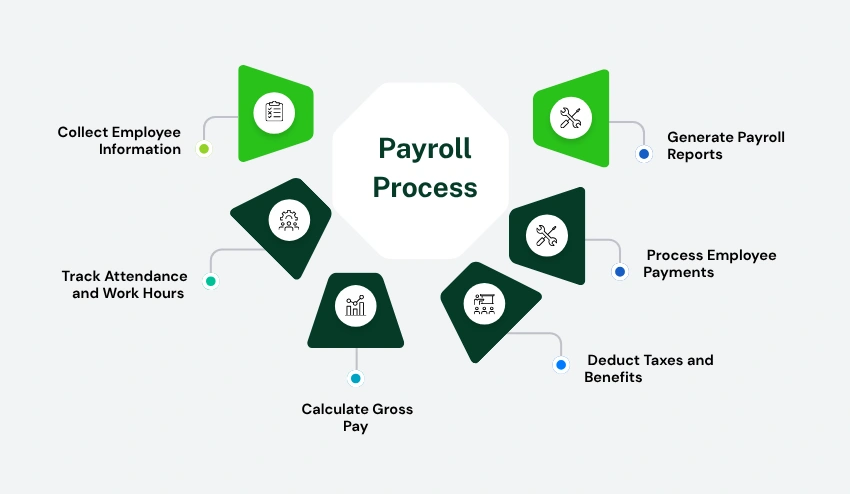
A modern payroll system is a combination of several processes interconnected. Each step needs to be executed correctly to prevent compliance issues and payroll issues.
1. Collect Employee Information
The first step in payroll is to collect employee data, such as:
- Tax forms
- Salary agreements
- Benefits enrollment
- Bank account details
- Work schedules
- Employment classification
Businesses can have well-documented payroll records with proper documentation.
2. Track Attendance and Work Hours
Tracking attendance is an essential aspect of payroll management.
Businesses must monitor:
- Work hours
- Overtime
- Paid leave
- Breaks
- Shift schedules
- Remote work activity
Spreadsheet-based and manual attendance methods can lead to payroll inaccuracies.
The modern workforce management solutions enhance the accuracy of payroll by automatically handling attendance records, tracking work sessions, and creating timesheet information.
For example, organizations using detailed timesheet reporting systems can monitor employee work patterns more effectively while improving payroll transparency. Businesses interested in improving work-hour reporting can explore how detailed reporting works through the tivazo Timesheet Report Guide
3. Calculate Gross Pay
Once attendance has been verified, businesses can determine employees’ pay by:
- Hourly wages
- Fixed salaries
- Bonuses
- Incentives
- Overtime rates
- Commissions
For hourly workers, accuracy of attendance is directly related to consistency in payroll.
4. Deduct Taxes and Benefits
The payroll systems determine the deductions for:
- Federal taxes
- State taxes
- Medicare
- Social Security
- Insurance premiums
- Retirement contributions
Managing employees who work across various states makes payroll much more complicated.
5. Process Employee Payments
After calculations are finalized, salaries are distributed through:
- Direct deposits
- Payroll cards
- Checks
Most businesses now rely on automated payroll systems to reduce delays and administrative work.
6. Generate Payroll Reports
Payroll reports help businesses:
- Monitor labor expenses
- Maintain compliance
- Review overtime
- Audit attendance records
- Track payroll trends
Businesses that improve reporting accuracy often gain better visibility into workforce efficiency and operational performance.
Organizations that prioritize workforce analytics frequently improve payroll accuracy through timesheets and reports, and productivity insights that connect attendance data with operational visibility.
Typical issues faced by payroll in 2026
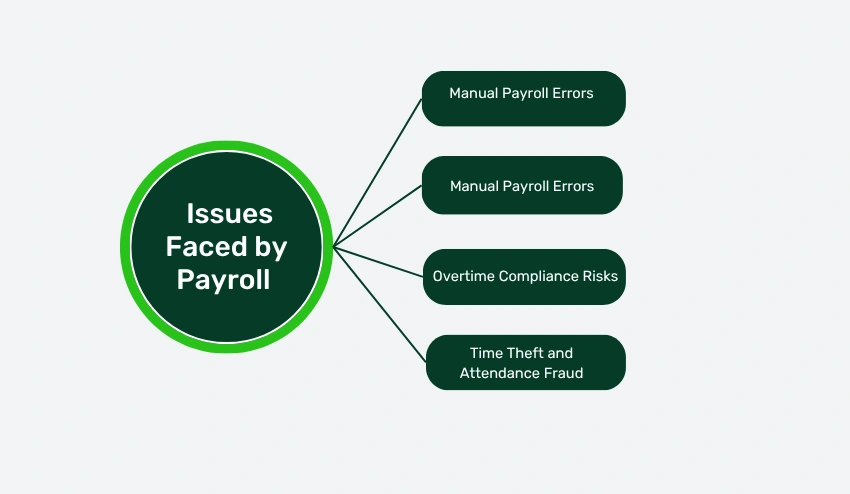
As the world transitions to remote and hybrid workplaces, payroll management keeps growing more complex.
1. Manual Payroll Errors
Even today, many companies are still using spreadsheets to work out payroll calculations.
Manually running systems makes mistakes in two ways:
- Incorrect overtime calculations
- Missing attendance records
- Duplicate entries
- Payroll inconsistencies
- Human error
Any payroll error can lead to significant issues.
2. Managing Remote Employees
Businesses are now tracking employee attendance and productivity in a different way, thanks to remote work.
Businesses can find themselves in a situation where they cannot:
- Verify work hours
- Manage overtime
- Track attendance consistency
- Monitor productivity trends
Companies that boost the productivity of remote workers tend to use a connected system that integrates workforce analytics, employee monitoring, and attendance visibility into a unified business workflow powered by business software.
3. Overtime Compliance Risks
One of the largest issues for U.S. businesses is overtime disputes in the payroll world.
There are risks to miscalculating overtime because it can result in:
- Wage disputes
- Employee dissatisfaction
- Compliance penalties
- Legal action
Businesses can significantly cut down on overtime inconsistencies with automated work-hour tracking systems.
4. Time Theft and Attendance Fraud
It’s still occurring in businesses in various sectors.
Common examples include:
- Buddy punching
- Fake overtime claims
- Inflated work hours
- Unauthorized breaks
Businesses with real-time activity monitoring and attendance reporting are able to detect inconsistencies in the workforce sooner and enhance payroll transparency.
Payroll Compliance Requirements in 2026
One of the key duties of employers is payroll compliance. Federal, state, and local laws are still changing, and businesses need to keep up to date and ensure they are in compliance with the rules.
Fair Labor Standards Act (FLSA)
The FLSA provides guidelines on:
- Minimum wage requirements
- Overtime eligibility
- Employee classification
- Recordkeeping obligations
To avoid penalties for flouting FLSA rules, employers need to ensure payroll practices comply with these rules.
Payroll Tax Compliance
The employee’s employer must properly withhold and report payroll taxes, such as:
- Federal income tax
- Social Security tax
- Medicare tax
- If relevant, State income taxes (where applicable)
Penalties and audits can be imposed if payroll tax obligations are not met.
Employee Record Retention
Federal and State laws require that employers keep payroll records for certain periods. Good record keeping allows you to back up audits, tax reporting, and dispute resolution.
Multi-State Payroll Challenges
Payroll challenges are another issue that can occur with remote and hybrid teams, as they may work in different states. There are differences in state tax laws, wage requirements, and reporting requirements that employers need to be aware of.
This document outlines the elements of compliance monitoring best practices.
To boost payroll compliance, businesses can:
- Regularly auditing the payroll process
- Automating payroll calculations
- Keeping up-to-date attendance records
- Monitoring overtime activity
- Maintaining well-structured payroll records
How Does Attendance Tracking Improve Payroll Accuracy?
Checking attendance is now a vital part of payroll accuracy. If there are no accurate attendance logs, it becomes difficult for businesses to accurately determine salaries.
Modern attendance systems can assist companies:
- Monitor work sessions
- Track overtime
- Verify attendance
- Manage remote work
- Generate payroll-ready reports
- Reduce payroll disputes
Operational visibility of employee productivity and scheduling patterns is also available on today’s workforce platforms.
Companies that enhance the transparency of attendance are better equipped to ensure payroll consistency, as managers are better able to verify the work activity of their staff.
Distributed teams can be more easily tracked and reportable employees, with companies that manage them often improving their workforce accountability and payroll reporting with features integrated into employee monitoring and live screenshots.
Employee Payroll Management Checklist
A structured payroll process can minimize errors and keep businesses compliant. The following checklist can be useful to payroll teams.
Payroll Processing Checklist
- Collect employee tax forms
- Verify attendance and work-hour records
- Review overtime hours
- Confirm paid leave balances
- Calculate gross pay
- Apply tax withholdings and deductions
- Process employee payments
- Generate payslips
- Submit payroll taxes
- Store payroll records securely
- Review payroll reports
- Conduct payroll audits regularly
Following a standardized payroll checklist helps improve payroll accuracy while reducing administrative risks.
4 Benefits of Payroll Automation
The benefit of payroll automation is that it helps businesses to eliminate the administrative hassle and increase payroll consistency.
Businesses are now turning to automated payroll and workforce management systems, avoiding the reliance on spreadsheets and manual calculations.
1. Reduced Administrative Work
With automation, repetitive payroll processes such as:
- Salary calculations
- Attendance tracking
- Payslip generation
- Overtime reporting
- Payroll documentation
This enables HR to be more engaged in the management of their workforce and employee development.
2. Better Payroll Accuracy
Automated systems minimise human errors with instant synchronization of attendance information to the payroll systems.
Organizations that implement business attendance management systems typically have fewer payroll conflicts.
3. Faster Payroll Processing
Automation saves payroll processing time for:
- Hybrid teams
- Remote employees
- Hourly workers
- Contractors
- Multi-location businesses
4. Stronger Workforce Visibility
Current workforce platforms offer:
- Productivity analytics
- Attendance reports
- Team activity insights
- Operational dashboards
- Work-hour summaries
For companies that prioritize efficiency in their day-to-day operations, this can be achieved by integrating attendance tracking, workforce visibility, and scheduling transparency into a unified system within the enterprise WFM ecosystem.
Organizations focused on workforce optimization frequently combine payroll automation with productivity tracking systems. Businesses exploring workplace performance strategies can gain additional insights from the workplace productivity resources.
5 Best Practices for Employee Payroll Management
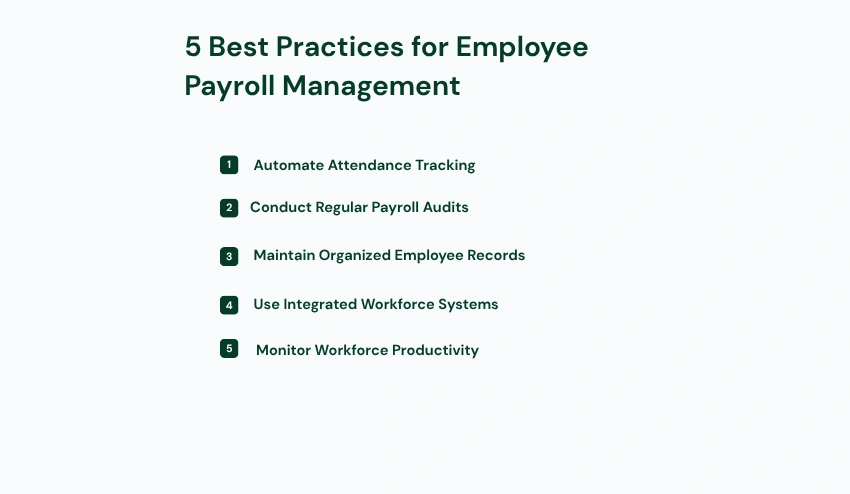
These are best practices that businesses should follow to ensure that they have efficient payroll operations.
1. Automate Attendance Tracking
Manual attendance systems pose payroll risks. Digital attendance tracking enhances payroll accuracy and decreases disagreements.
2. Conduct Regular Payroll Audits
Payroll audits assist businesses in the following ways to identify:
- Attendance inconsistencies
- Tax errors
- Overtime mistakes
- Duplicate payments
Frequent audits enhance business performance and adherence.
3. Maintain Organized Employee Records
Securely store business:
- Payroll reports
- Tax documentation
- Attendance records
- Wage history
- Overtime data
Compliance Reviews and Audits are simplified by organized records.
4. Use Integrated Workforce Systems
Systems that integrate:
- Team management
- Attendance tracking
- Productivity monitoring
- Reporting tools
- Workforce analytics
Businesses with unique payroll workflows or industry-specific compliance requirements may also benefit from HR software development services that create custom payroll, attendance, and workforce management solutions tailored to their operational needs. Custom-built HR platforms can integrate seamlessly with existing business systems while improving payroll accuracy and workforce efficiency.
5. Monitor Workforce Productivity
Productivity tracking can help businesses understand work patterns and improve operational planning.
Companies focused on workforce optimization often use employee evaluation systems to improve team performance and payroll transparency. Businesses interested in employee development strategies can explore the Employee Evaluation Guide by Tivazo
Why Tivazo Is a Smart Solution for Payroll-Related Workforce Management
Businesses need to have dependable workforce management systems that assist with accurate payroll running, while payroll software manages salary calculations and tax processing.
This is where Tivazo comes in handy for contemporary teams.
Tivazo enables businesses to increase the visibility of their workforce by providing:
- Employee time tracking
- Productivity monitoring
- Attendance reporting
- Team activity insights
- Timesheet management
- Workforce analytics
Workforce management tools are a key component when it comes to minimizing payroll errors, as they help ensure the accuracy of work hours, attendance transparency, and productivity visibility.
The visibility into attendance that clear data allows can be especially beneficial for remote and hybrid workforces, ensuring payroll consistency and assisting businesses in tracking their workforce’s efficiency.
For those who wish to delve further into reporting information, the timesheet report guide is available for the organization to use to enhance operational management with workforce reporting.
Also, when companies are interested in improving their people systems over the long-term, they might investigate productivity optimization methods in the workplace productivity assortment.
Future of Employee Payroll Management
Payroll systems are expected to keep improving with the introduction of more automated workforce operations.
The following is a list of features that are likely to be part of future payroll management:
- AI-powered payroll processing
- Predictive workforce analytics
- Automated compliance monitoring
- Real-time payroll calculations
- Advanced attendance intelligence
- Integrated productivity reporting
Over time, organizations that adopt the latest in payroll technology will gain benefits in terms of enhanced efficiencies and scalability for their workforce.
Employee Payroll Management for Small Businesses
Payroll issues can be distinct for small businesses, as they have fewer administrative resources and sometimes have to deal with an expanding workforce.
Efficient payroll management plays a pivotal role in complying with legal obligations, regulating employee costs, and fostering satisfaction.
Common Small Business Payroll Challenges
Small businesses often face the following challenges:
- Limited payroll expertise
- Manual payroll calculations
- Attendance tracking issues
- Overtime management
- Tax compliance requirements
- Employee classification concerns
Benefits of Payroll Automation for Small Businesses
Payroll automation helps small businesses:
- Save administrative time
- Improve payroll accuracy
- Reduce compliance risks
- Eliminate manual calculations
- Improve reporting visibility
Building a Scalable Payroll Process
As companies expand, so does the complexity of payroll. By adopting integrated payroll and workforce management solutions, businesses can grow without compromising on accuracy.
With attendance tracking, visibility of the workforce, insights into productivity, and payment reporting, small businesses can build a better base for sustainable growth.
Conclusion
Employee payroll management is no longer just about paying employees; it’s a major business process.
To ensure the success of their payroll operations, businesses will need to navigate the challenges of accurate payroll, compliance with tax regulations, transparency of the workforce, monitoring attendance, and optimizing efficiency in 2026.
In today’s remote and hybrid work landscape, the need for accurate attendance, workforce reporting, and current employee data has increased with payroll processes. Manual payroll systems are more prone to inaccuracies, compliance issues, and inefficiencies.
Conclusion: Implementing modern payroll management, automating payroll processes, regularly auditing payroll systems, and using trustworthy software for workforce management can lead to a more harmonious payroll environment, minimize payroll disputes, enhance compliance, and foster a more transparent employee experience.
There are solutions, like Tivazo, that can help organizations achieve greater visibility into attendance, productivity, and workforce reporting, supporting payroll-related operations with accurate timesheet reporting, employee activity insights, and workforce analytics to help guide better payroll decisions.