
Time zones are extremely important to communication, travel, remote work, and business. Time zones are important to know and understand; whether you need to schedule a global meeting, plan a trip, or communicate with colleagues across the world, they can help avoid confusion and missed appointments.
Central European Daylight Time (CEDT) is one of the most popular daylight-saving time zones in Europe. In most countries in Europe, the clock does go forward during the summer months by one hour, to take better advantage of daylight hours.
This seasonal adjustment will give people longer evenings and allow them to make the most of daylight hours and come to make CEDT.
This guide explains what Central European Daylight Time (CEST) is, how it relates to standard time, the countries that recognize it, its UTC offset, how it’s similar to Central Daylight Time (CDT) in North America, and its significance for international communication and business.
What Is Central European Daylight Time (CEDT)?
The daylight saving time of many European nations during the summer months is Central European Daylight Time, also known as Central European Summer Time (CEST).
CEDT is 2 hours ahead of Coordinated Universal Time (UTC). This is used instead of Central European Time (CET), which is UTC+1 in the winter months.
The main reason for CEDT is to take better advantage of the natural daylight by advancing the clock one hour in the spring.
This can help to extend evening daylight hours and promote energy efficiency, outdoor activities, and business productivity.
It is about time we discussed two variations used in the Central Time Zone, including Central Standard Time (CST) and Central Daylight Time (CDT).
| Feature | Details |
| Full Name | Central European Daylight Time |
| Alternate Name | Central European Summer Time (CEST) |
| UTC Offset | UTC+2 |
| Standard Time Equivalent | CET (UTC+1) |
| Starts | Last Sunday in March |
| Ends | Last Sunday in October |
| Used In | Most Central and Western European Countries |
How Does Central European Daylight Time Work?
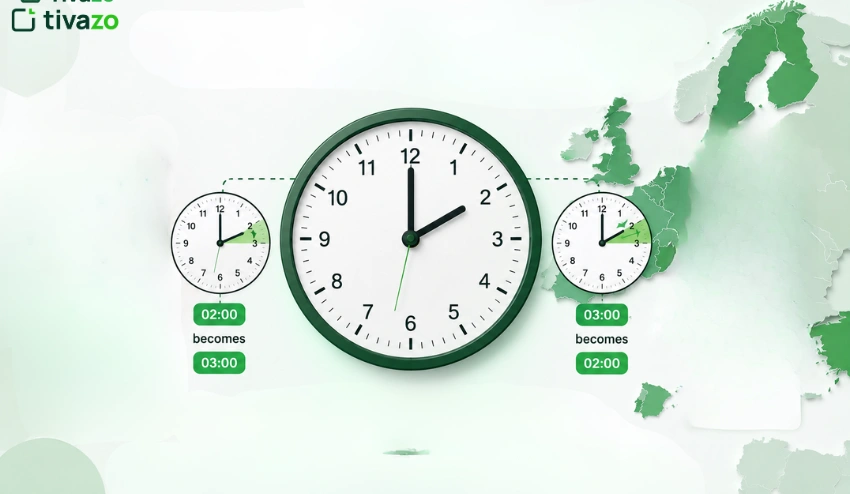
Central European Time (CET) is part of the daylight-saving time system observed in most of Europe. Clocks are set an hour faster each year on the last Sunday in March.
The beginning of CEDT. The extra daylight means people and businesses can benefit from longer daylight hours in the Spring and Summer.
One hour later, at the end of October, the clocks change back to Central European Time (CET). It is crucial for multinational companies to know about these seasonal time changes.
To keep employees on schedule, even through a time change, many companies are employing Time Tracking Software and Employee Monitoring Software.
What Is CEDT in UTC and GMT?
Time in Central European Daylight Time is UTC+2 or GMT+2. That is, CEDT is 2 hours ahead of Coordinated Universal Time (UTC) and Greenwich Mean Time (GMT).
Example Time Conversions
| GMT Time | CEDT Time |
| 8:00 AM GMT | 10:00 AM CEDT |
| 12:00 PM GMT | 2:00 PM CEDT |
| 6:00 PM GMT | 8:00 PM CEDT |
For accurate and up-to-date global time-zone standards, readers can consult the IANA Time Zone Database and the guide on Coordinated Universal Time (UTC).
Which Countries Use Central European Daylight Time?
Many European countries observe Central European Daylight Time during daylight saving months.
These countries include:
- Germany
- France
- Italy
- Spain
- Austria
- Belgium
- Netherlands
- Luxembourg
- Switzerland
- Poland
- Czech Republic
- Slovakia
- Hungary
- Croatia
- Slovenia
- Denmark
- Norway
- Sweden
Although local regulations may vary, these countries generally follow the same daylight-saving schedule and switch between CET and CEDT at the same time each year.
Major Cities That Follow CEDT
Several major European cities operate on Central European Daylight Time during the summer months.
Some of the most notable cities include:
- Berlin
- Paris
- Rome
- Madrid
- Amsterdam
- Brussels
- Vienna
- Prague
- Warsaw
- Zurich
The widespread adoption of CEDT across Europe makes it easier for businesses and travelers to coordinate activities across different countries.
When Does CEDT Start and End?
Central European Daylight Time begins on the last Sunday in March.
At 2:00 AM local time, clocks move forward by one hour to 3:00 AM.
CEDT ends on the last Sunday in October.
At 3:00 AM local time, clocks move back by one hour to 2:00 AM, returning to Central European Time (CET).
These dates are governed by European daylight-saving time rules, ensuring consistency across participating countries.
Why Do European Countries Use Daylight Saving Time?
Daylight saving time aims to optimize daylight by making more efficient use of it when the days are longer in spring and summer.
Some of the better-known advantages are:
- More daylight during evening hours
- Reduced need for artificial lighting
- Increased opportunities for outdoor activities
- Better alignment between daylight and working hours
- Improved coordination of business activities
For businesses with staff working at several locations, time changes can affect employee attendance and work hours. Attendance Tracking Software is used by many organizations to keep track of attendance for the whole year.
CEDT vs CDT: What’s the Difference?

It is common for people to mix up Central European Daylight Time (CEDT) with Central Daylight Time (CDT), which are in entirely different areas of the world.
| Feature | CEDT | CDT |
| Full Name | Central European Daylight Time | Central Daylight Time |
| UTC Offset | UTC+2 | UTC−5 |
| Region | Europe | North America |
| Daylight Saving Time | Yes | Yes |
CEDT is typically seven hours ahead of CDT.
For example:
| CEDT | CDT |
| 9:00 AM | 2:00 AM |
| 12:00 PM | 5:00 AM |
| 6:00 PM | 11:00 AM |
Understanding these differences is especially important for international businesses, customer support teams, and remote workers collaborating across continents.
How CEDT Affects Remote Work and Global Teams?

Time-zone awareness is a greater challenge than ever since people started working remotely. When staff members are working in different time zones around the globe, it can be challenging to arrange meetings, deadlines, and project timelines.
To avoid scheduling errors, it is important to know the current status of Europe (either CET or CEDT). Several companies utilize a Work Hours Calculator to identify overlapping work hours and use an Employee Time Clock App to ensure that employee hours are accurately recorded.
Payroll and Time Management During Daylight Saving Time
Changes in daylight saving time could present problems for payroll processing, particularly for those workers on nighttime shifts.
Many companies use an Overtime Calculator and Payroll Software to keep them accurate, especially when there are transitions in time.
With accurate payroll management, there is a reduction in disputes, compliance with legal regulations, and fair compensation for employees.
Conclusion
The daylight-saving time used by a large number of European nations in the spring and summer is called Central European Daylight Time (CEDT).
It works at UTC+2 to increase daylight hours, promotes business productivity, and makes international communication easier.
The understanding of the differences between CEDT and CET, the times of when DST starts and ends, and the comparison of CEDT with other time zones around the world can help travelers, remote workers, and businesses to stay organized and productive.
From international meetings to distributed teams or travel arrangements, knowing what is and isn’t covered by the CEDT will help you communicate accurately and manage time effectively.