Managing payroll manually is one of the fastest ways for businesses to lose time, money, and employee trust. From inaccurate timesheets to payroll compliance errors and delayed salary processing, companies often struggle to keep workforce operations efficient as teams grow.
Remote work, flexible schedules, and multi-location teams have made payroll even more complex.
This is where Payroll and Time Tracking Software becomes essential.
Modern payroll and timekeeping platforms help businesses automate attendance tracking, calculate wages accurately, monitor employee productivity, and stay compliant with labor laws.
Instead of relying on spreadsheets and disconnected systems, organizations can use integrated software to manage payroll and workforce operations in real time.
According to research from ADP, manual payroll processes increase the risk of inaccurate records, overtime mistakes, and tax filing issues.
Additionally, a 2024 study by Remote found that 53% of employees have experienced payroll errors during their careers.
Businesses are now shifting toward automation-focused solutions that combine:
- Employee attendance tracking
- Payroll automation
- Real-time reporting
- Productivity management
- Workforce analytics
- Remote employee monitoring
- Payroll compliance management
You’ll learn everything about Payroll and Time Tracking Software, including key features, benefits, top solutions, implementation strategies, and how tools like Tivazo help businesses simplify payroll workflows.
What Is Payroll and Time Tracking Software?
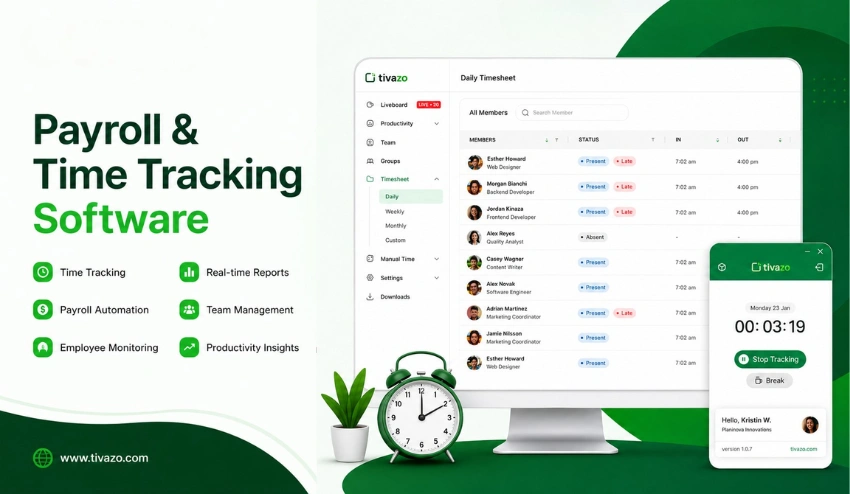
Payroll and Time Tracking Software is a digital solution that combines employee time monitoring with payroll processing. It records employee work hours, attendance, overtime, breaks, and leave data while automatically calculating salaries, taxes, and compensation.
Instead of manually transferring attendance records into payroll systems, the software syncs everything automatically.
A modern payroll tracking software solution usually includes:
- Time clock functionality
- Automated payroll calculations
- Attendance management
- Overtime tracking
- Employee scheduling
- Tax compliance tools
- Real-time reporting dashboards
- Workforce analytics
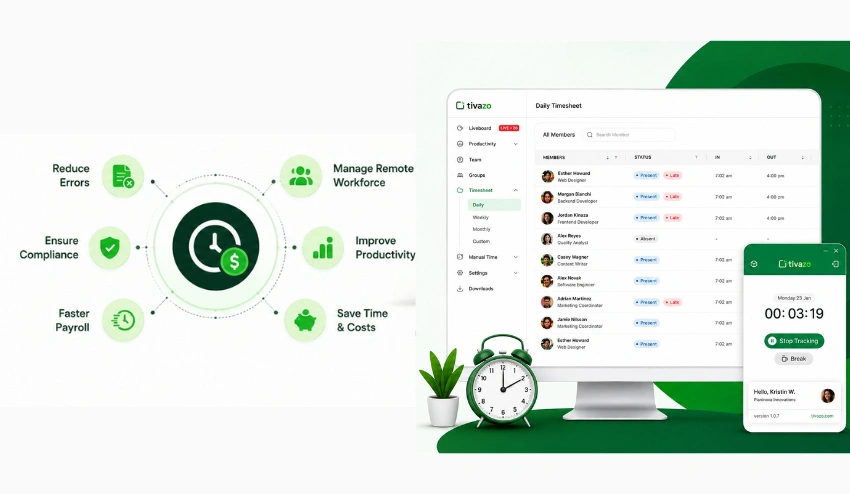
The biggest advantage is accuracy. Businesses eliminate duplicate entries, reduce payroll disputes, and improve operational efficiency.
Why Businesses Need Payroll and Time Tracking Software?
Payroll mistakes are expensive.
Research from ADP highlights that inaccurate payroll records, missed tax deadlines, and overtime miscalculations are among the most common payroll issues businesses face.
Here are some of the biggest challenges organizations encounter without payroll and timekeeping software:
1. Manual Data Entry Errors
Spreadsheets and paper timesheets often lead to:
- Incorrect work hours
- Duplicate records
- Missing overtime calculations
- Human input mistakes
Manual systems slow payroll processing and increase compliance risks.
2. Payroll Compliance Issues
Labor laws constantly change. Businesses must accurately manage:
- Overtime calculations
- Employee classifications
- Tax deductions
- Leave compliance
- Wage regulations
A payroll monitoring tool automates compliance tracking and reduces legal exposure.
3. Remote Workforce Management Problems
Hybrid and remote teams make traditional attendance systems ineffective.
Companies now need:
- GPS attendance
- Real-time work tracking
- Productivity monitoring
- Remote employee management
- Automated timesheets
4. Delayed Payroll Processing
Disconnected systems create bottlenecks between HR, finance, and payroll teams.
Integrated payroll tracker systems help businesses:
- Approve timesheets faster
- Automate payroll calculations
- Reduce processing delays
- Improve employee satisfaction
6 Key Features of Payroll and Time Tracking Software
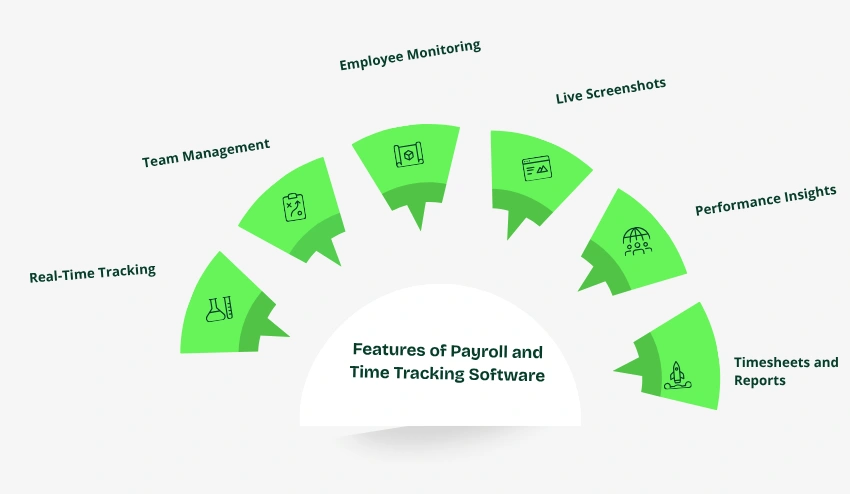
Not all platforms are built equally. The best payroll tracking software solutions include features that support payroll automation, workforce management, and employee productivity.
1. Real-Time Tracking
Real-time payroll software automatically tracks employee hours as they work.
This helps businesses:
- Monitor attendance instantly
- Prevent time theft
- Reduce buddy punching
- Track overtime accurately
- Improve payroll accuracy
Real-time updates are especially valuable for remote and field-based teams.
2. Team Management
Integrated team management features help businesses coordinate employees more effectively.
Managers can:
- Assign shifts
- Monitor workloads
- Manage schedules
- Track attendance trends
- Improve workforce planning
Centralized team management improves operational efficiency and reduces scheduling conflicts.
3. Employee Monitoring
Modern payroll and time management software often includes employee monitoring capabilities.
These features help businesses:
- Monitor employee activity
- Track productivity trends
- Improve accountability
- Manage remote teams effectively
Employee monitoring is especially useful for hybrid and distributed work environments.
4. Live Screenshots
Some advanced payroll monitoring tools provide live screenshots to improve workforce transparency.
This feature allows businesses to:
- Verify active work sessions
- Improve accountability
- Reduce time theft
- Monitor remote employee engagement
Remote teams and service-based businesses commonly use live screenshots.
5. Performance Insights
Data-driven businesses rely on performance insights to optimize workforce operations.
Advanced analytics help managers track:
- Employee productivity
- Attendance trends
- Labor utilization
- Workforce efficiency
- Project performance
These insights support smarter payroll and workforce decisions.
6. Timesheets and Reports
Automated timesheets and reports simplify payroll approvals and workforce reporting.
Businesses can instantly generate:
- Payroll summaries
- Attendance reports
- Overtime reports
- Productivity analytics
- Employee work-hour reports
Automated reporting significantly reduces payroll processing time.
6 Benefits of Payroll and Time Tracking Software
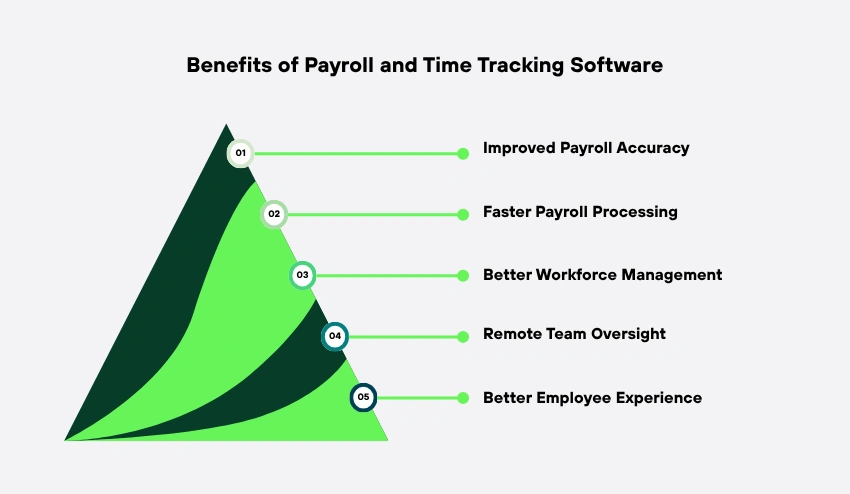
Implementing payroll and time tracking software delivers measurable business benefits.
1. Improved Payroll Accuracy
Automated systems eliminate many human errors caused by manual entry.
Businesses can reduce:
- Incorrect payments
- Payroll disputes
- Overtime mistakes
- Missing work hours
Accurate payroll builds employee trust and improves retention.
2. Faster Payroll Processing
Automation dramatically reduces payroll processing time.
Instead of manually calculating employee hours, businesses can:
- Sync attendance instantly
- Generate payroll reports automatically
- Approve payroll faster
- Process payments efficiently
3. Better Workforce Management
Integrated workforce management systems provide complete visibility into employee operations.
Managers gain insights into:
- Attendance trends
- Productivity metrics
- Labor costs
- Scheduling efficiency
- Workforce utilization
4. Enhanced Remote Team Oversight
Remote employee monitoring tools help organizations maintain accountability without micromanagement.
Businesses can:
- Track work hours remotely
- Monitor activity levels
- Manage distributed teams
- Improve productivity transparency
5. Cost Savings
Payroll automation reduces administrative overhead and costly payroll errors.
Businesses save money by:
- Reducing compliance penalties
- Minimizing payroll disputes
- Eliminating manual tasks
- Improving labor cost visibility
6. Better Employee Experience
Employees benefit from:
- Accurate salaries
- Faster payments
- Transparent attendance records
- Self-service payroll access
Satisfied employees are more productive and engaged.
Payroll and Time Tracking Software vs Manual Payroll Systems
| Feature | Manual Payroll Systems | Payroll and Time Tracking Software |
| Payroll Accuracy | Manual Payroll Systems | Automated calculations |
| Time Tracking | Paper or spreadsheets | Real-time digital tracking |
| Compliance Management | Manual monitoring | Automated compliance alerts |
| Remote Workforce Support | Limited | Full remote tracking |
| Payroll Processing Speed | Slow | Fast and automated |
| Productivity Insights | Minimal | Advanced analytics |
| Attendance Management | Manual | Automated attendance tracking |
| Reporting | Time-consuming | Instant reporting dashboards |
| Scalability | Difficult | Easily scalable |
| Labor Cost Visibility | Limited | Real-time analytics |
4 Best Payroll and Time Tracking Software Solutions
Here are some of the top payroll and timekeeping software solutions businesses use today.
1. Tivazo
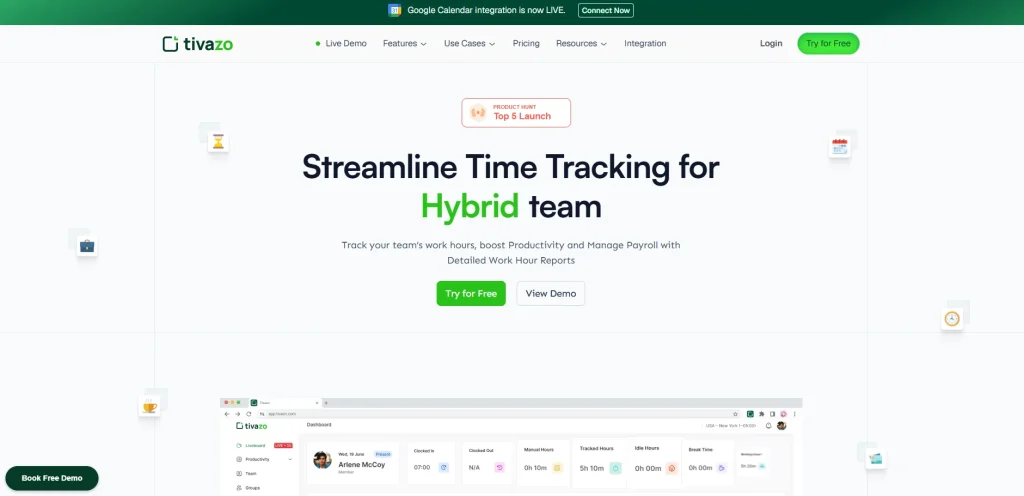
Tivazo combines employee time tracking, workforce analytics, productivity monitoring, and payroll workflow management into one platform.
Key features include:
- Real-time employee tracking
- Productivity monitoring
- Attendance management
- Payroll workflow optimization
- Remote workforce oversight
- Project-based time tracking
- Workforce reporting dashboards
Tivazo is especially useful for businesses managing hybrid and remote teams because it provides visibility into both attendance and productivity.
How Tivazo Helps Businesses Manage Payroll Workflows
Tivazo simplifies payroll operations by ensuring accurate time data flows directly into payroll processes.
Businesses can:
- Track employee work hours automatically
- Reduce payroll discrepancies
- Monitor attendance in real time
- Generate accurate payroll reports
- Analyze labor productivity
- Improve workforce efficiency
For companies seeking stronger payroll and time management processes, Tivazo helps reduce manual work while improving accountability across teams.
2. ADP
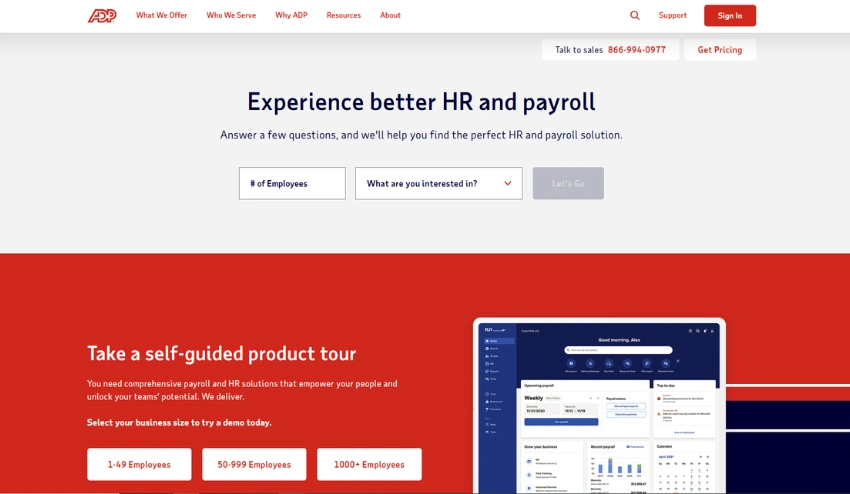
ADP Workforce Now is one of the most recognized payroll tracking software platforms for mid-sized and enterprise businesses.
Features include:
- Payroll automation
- HR management
- Compliance support
- Time and attendance tracking
- Workforce analytics
ADP is ideal for organizations needing enterprise-grade payroll processing.
3. QuickBooks Time
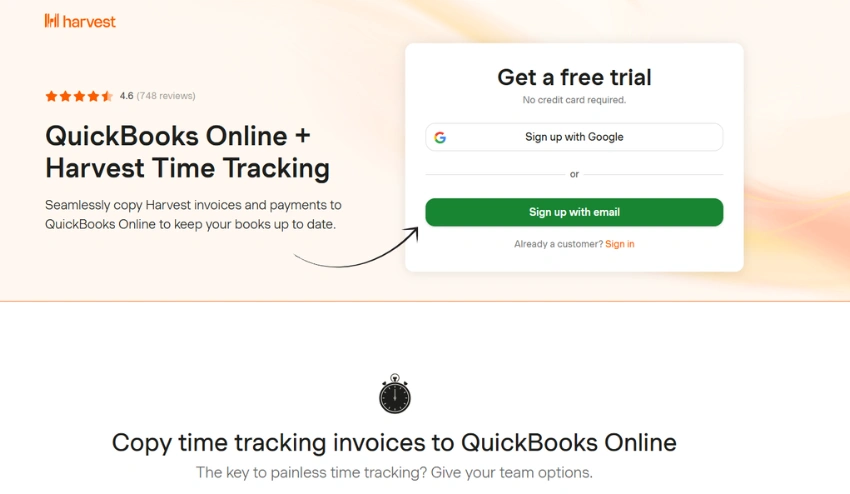
QuickBooks Time focuses heavily on employee time tracking and payroll integration.
It supports:
- GPS tracking
- Mobile attendance
- Timesheet approvals
- Payroll syncing
- Project tracking
This platform works well for service businesses and field teams.
4. Rippling
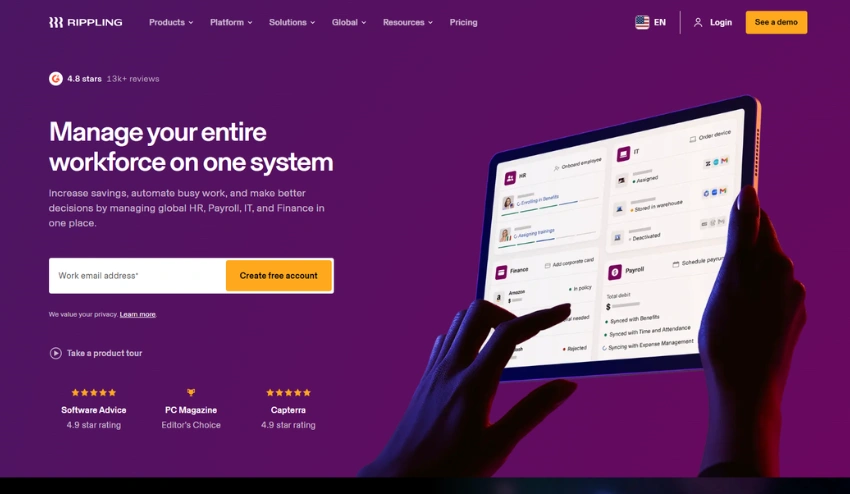
Rippling combines payroll, HR, IT, and workforce management in one platform.
Its strengths include:
- Employee onboarding automation
- Payroll compliance
- Benefits management
- Attendance tracking
- Device management
How Real-Time Payroll Software Improves Business Operations?
Real-time payroll software gives businesses instant visibility into workforce and compensation data.
This creates several operational advantages.
Faster Decision-Making
Managers can instantly view:
- Labor costs
- Attendance trends
- Overtime usage
- Team productivity
This improves workforce planning and budgeting.
Reduced Payroll Disputes
Employees can access real-time records of:
- Hours worked
- Overtime
- Attendance
- Compensation history
Transparency minimizes payroll conflicts.
Better Financial Forecasting
Real-time payroll data helps finance teams forecast:
- Staffing costs
- Payroll expenses
- Project labor budgets
- Hiring needs
4 Common Use Cases for Payroll and Time Tracking Software
1. Small Businesses
Small businesses use payroll tracker systems to:
- Automate payroll
- Track employee attendance
- Reduce HR workload
- Simplify tax calculations
2. Remote Teams
Distributed teams rely on time tracking and payroll tools to:
- Track remote work hours
- Monitor productivity
- Manage flexible schedules
- Improve accountability
3. Construction and Field Service Companies
These industries need:
- GPS attendance tracking
- Job site time logging
- Project-based payroll allocation
- Overtime management
4. Agencies and Consulting Firms
Professional service businesses benefit from:
- Billable hour tracking
- Client project reporting
- Employee productivity monitoring
- Automated payroll calculations
How to Choose the Best Payroll and Timekeeping Software?
Choosing the right solution depends on your business size, workforce structure, and operational needs.
Here are the most important factors to evaluate.
1. Ease of Use
The platform should be intuitive for both employees and administrators.
Complicated systems reduce adoption and increase training costs.
2. Integration Capabilities
Choose software that integrates with:
- Accounting tools
- HR systems
- Project management platforms
- Productivity tools
Integrated systems improve operational efficiency.
3. Scalability
Your payroll software should grow with your business.
Look for platforms that support:
- Multiple locations
- Remote teams
- Workforce expansion
- Advanced reporting needs
4. Compliance Features
Ensure the software supports:
- Tax filing
- Labor law compliance
- Overtime regulations
- Employee classifications
5. Reporting and Analytics
Advanced reporting helps businesses improve workforce decisions.
Look for dashboards that provide:
- Attendance insights
- Payroll summaries
- Productivity analytics
- Labor cost reports
6. Payroll and Productivity Tools
Many businesses also use specialized payroll and productivity tools to improve workforce operations.
Useful tools include:
- Overtime Calculator for overtime wage estimation
- Time Card Calculator for employee shift calculations
- Hourly Salary Calculator for payroll forecasting
- Pomodoro Timer for productivity management
- Online Timer for work session tracking
- Military Time Converter for attendance and scheduling accuracy
These tools support better payroll and time management across teams.
The Future of Payroll and Time Management

Payroll technology is evolving rapidly.
Modern platforms now incorporate:
- AI-powered workforce analytics
- Automated compliance monitoring
- Predictive labor forecasting
- Remote productivity tracking
- Cloud-based payroll automation
Businesses are moving away from disconnected systems and adopting unified workforce management solutions that combine payroll, attendance, productivity, and employee monitoring in one platform.
This shift is especially important for hybrid and remote work environments where real-time visibility is essential.
Conclusion
Efficient payroll management is no longer optional for growing businesses. Manual payroll systems create costly errors, compliance risks, delayed salary processing, and operational inefficiencies that negatively impact both employees and management.
Implementing the right Payroll and Time Tracking Software helps businesses automate attendance tracking, improve payroll accuracy, monitor workforce productivity, and streamline compliance management.
Whether you manage a small business, remote workforce, field team, or enterprise organization, modern payroll tracking software provides the visibility and automation needed to scale operations confidently.
Solutions like Tivazo help companies simplify employee time tracking and payroll workflows while improving workforce accountability and productivity.
As payroll complexity continues to increase, businesses that invest in automation, real-time tracking, and integrated workforce management tools will gain a major competitive advantage.
Now is the time to modernize your payroll and timekeeping processes, reduce manual workload, and build a more efficient workforce management system for the future.