It can be hard to see where their time goes. In the modern software engineering environment, productivity isn’t measured by the number of hours spent in front of a computer; it’s measured by results, efficiency, and speed of delivery.
But in order to be able to understand outcomes clearly, it is necessary for teams to have visibility into how time is being used. This is where the importance of time tracking to software developers comes in.
Distributed engineering teams, Agile work, and DevOps-inspired delivery pipelines require an organized understanding of development time.
When deadlines are near, every minute counts – from coding and debugging to code reviews and deployments.
Trustworthy industry research, such as Harvard Business Review, has shown that teams that have visible, structured time are more likely to be more successful than teams without a system of tracking workload.
Likewise, according to Forbes, insights help to increase the accuracy of forecasts and minimize project delays due to productivity transparency.
Let’s dive into the 10 most recommended time tracking software tools for software developers and IT teams in 2026, the features they offer, and real-world applications, and decide what to choose for your workflow.
Time tracking is essential for software development teams. The importance of time tracking in software development teams.
Developing software is a complex, fast-moving, and collaborative process. Developers frequently have to jump between different tasks, and it can be hard to see where their time goes.
Why Time Tracking Matters for Software Development Teams?
Developing software is a complex, fast-moving, and collaborative process. Developers frequently have to jump between different tasks, and
There are several reasons why time tracking is crucial:
1. Accurate Sprint Planning
Historical time data allows teams to better predict the time to perform the work.
2. Better Resource Allocation
Managers can hand out jobs evenly among the engineers.
3. Improved Project Delivery
An understanding of bottlenecks enables teams to get things done more quickly.
4. Transparent Billing for clients.
Agencies will be able to bill with valid tracked hours.
5. Data-Driven Performance Analysis
Teams can use the tools, such as Tivazo Performance Insights, for analysis of productivity trends.
Common Productivity Challenges in IT Teams
Even the best engineering teams have problems with productivity, including the following:
- Regularly switching between tools and tasks. Switching context between tools and tasks often.
- A lack of visibility into remote developer activity. Lack of visibility of remote developer activity.
- Manual reporting of working hours is not accurate.
- Non-uniform work distribution in Agile sprints
- No visibility of non-coding work (meeting, review, etc.)
These problems make it crucial for modern IT organizations to have time tracking for software developers.
Benefits of Time Tracking for Developers
If properly done, time tracking offers quantifiable benefits:
- Improved sprint accuracy
- Better workload visibility
- Better coordination between remote teams. Improved collaboration between distributed teams.
- Proper payroll and compensation tracking.
- Increased accountability without micromanagement
For instance, an organization that employs a structured tracking system with a system such as Tivazo may integrate the payroll workflows by using a system such as Hourly Salary Calculator to make sure that they are compensated in a fair way.
Features to Look for in Time Tracking Tools
In choosing a tool, software teams should consider:
Automatic Time Tracking: Minimizes human mistakes and enhances accuracy.
Project-Based Tracking: Supports the mapping of time to sprints, features, and/or epics.
Integrated support for Developer Tools: Supports GitHub, Jira, GitLab, and CI/CD systems.
Reporting & Analytics: Offers information about productivity patterns.
Team Visibility Features: The engineering coordination can be scaled with tools such as Team Management.
Monitoring Capabilities: Some tools also have Employee Monitoring capabilities for remote teams that require accountability.
10 Best Time Tracking Tools for Software Developers in 2026
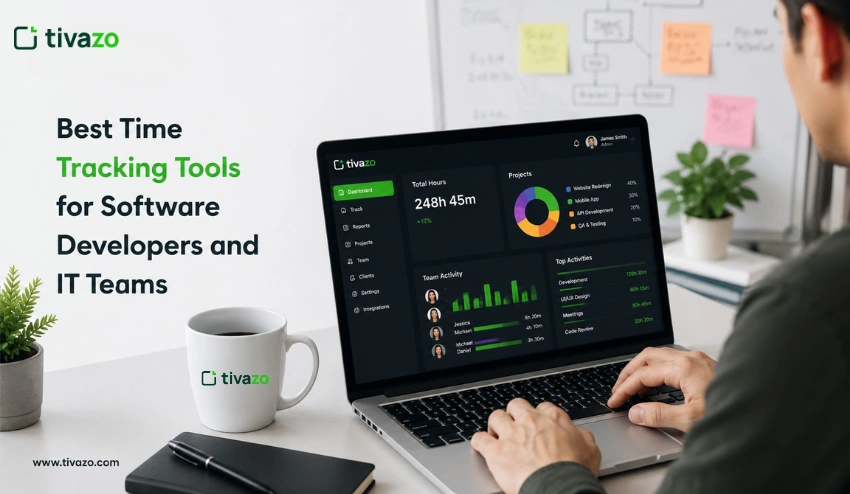
1. Tivazo
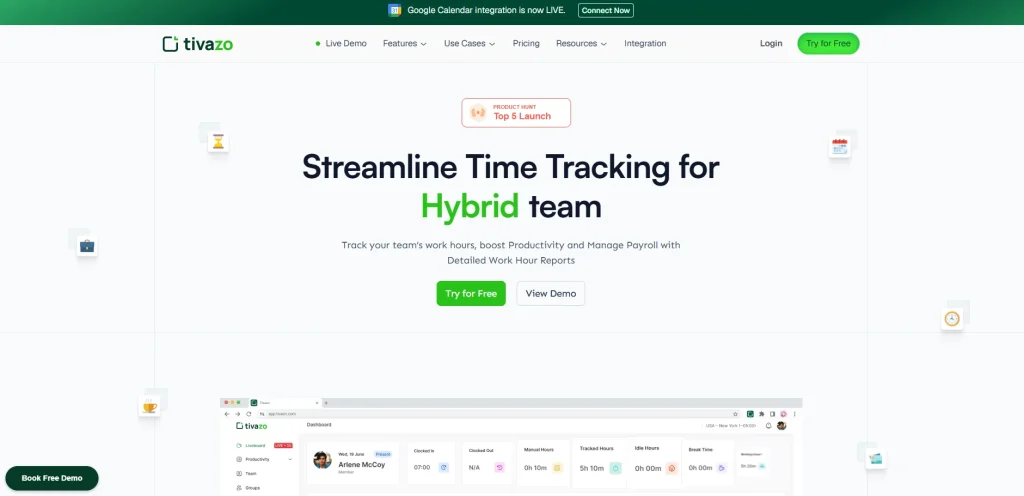
It’s designed for today’s teams of software developers and IT workers who require a time tracking solution that goes beyond simple time tracking.
It integrates tracking, analytics, and workforce intelligence in a single system. Unlike conventional tools, Tivazo is not about clocking hours, it is about performance visibility and productivity intelligence.
Key strengths:
- Automated and manual time tracking for designers.
- Productivity dashboards with a real-time view of sprints.
- Advanced analytics with Performance Insights to gauge team performance.
- Sprint and client reporting with a built-in timesheet and Report system.
- Smart workload balancing, through Team Management features
- Distributed Team Employee Monitoring tools (optional)
Perfect for startups, SaaS businesses, and remote engineering teams looking for complete visibility, but no chaos.
2. Toggl Track
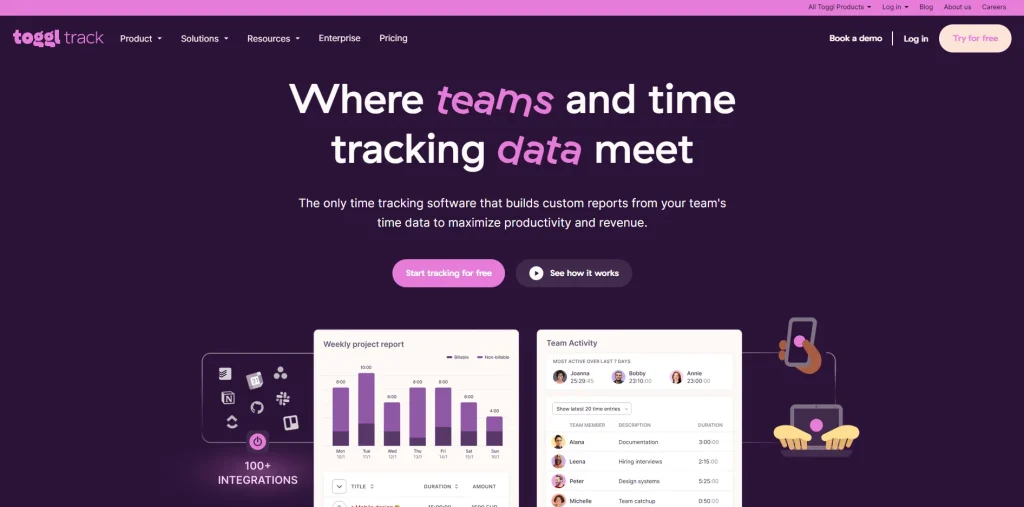
One of Toggl Track’s strengths is its simplicity and clean UI. It doesn’t get in the way of the developer, making it a favorite.
It works well for:
- Freelancers with numerous clients
- When teams are small and lightweight, tracking is needed.
- Manual time entry in the coding session (time wasted)
However, it is not as advanced as other platforms, such as Tivazo, in terms of engineering-specific analytics.
3. Clockify
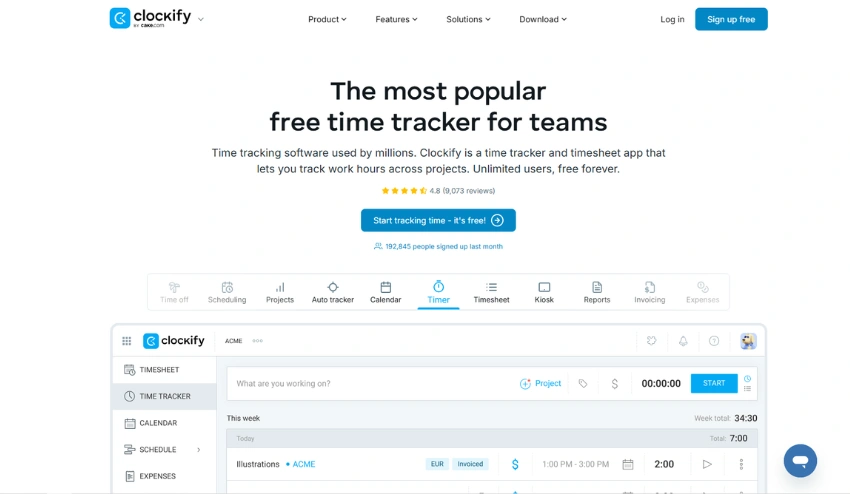
One of the most popular free tools in the industry is Clockify. It can handle an unlimited number of users, making it popular for startups.
Key strengths:
- Have a great free everlasting plan with powerful characteristics.
- Use project and task-based tracking. Track through the use of projects and tasks.
- Managers Reporting Dashboards.
- Ideal for the early stages of engineering teams.
Great at being affordable, but not so good with productivity intelligence.
4. Harvest
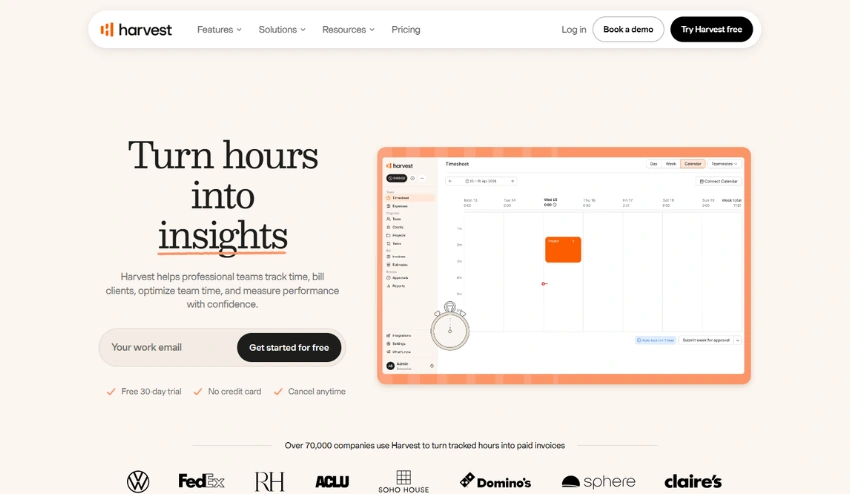
Agencies and client-based software development tend to do particularly well in harvest.
It combines:
- Time tracking
- Expense tracking
- Automated invoicing
This allows IT service providers with hourly billing to use it.
5. Jira + Tempo Timesheets
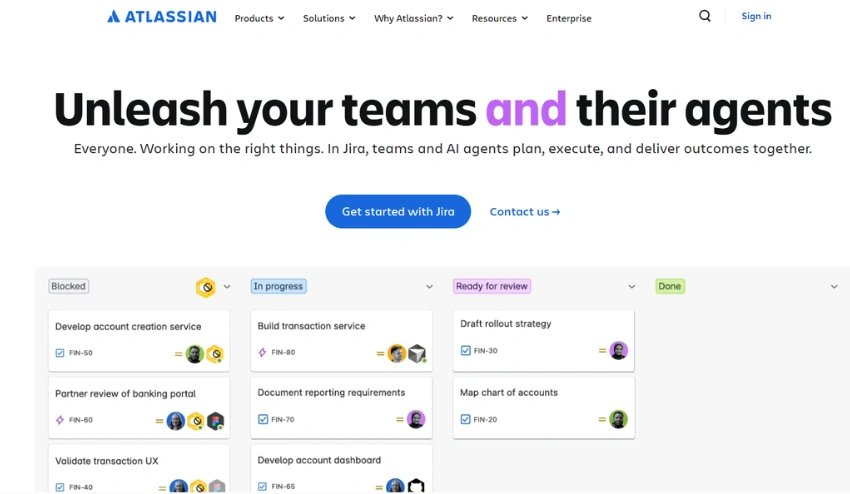
Jira is a popular solution to be combined with Tempo Timesheets in enterprise Agile environments.
The reason for its usage by the developer:
- Natively integrates with sprint workflows.
- Excellent issue-level time tracking
- Detailed reporting for Scrum teams
It’s strong but might be complicated for smaller teams.
6. Hubstaff
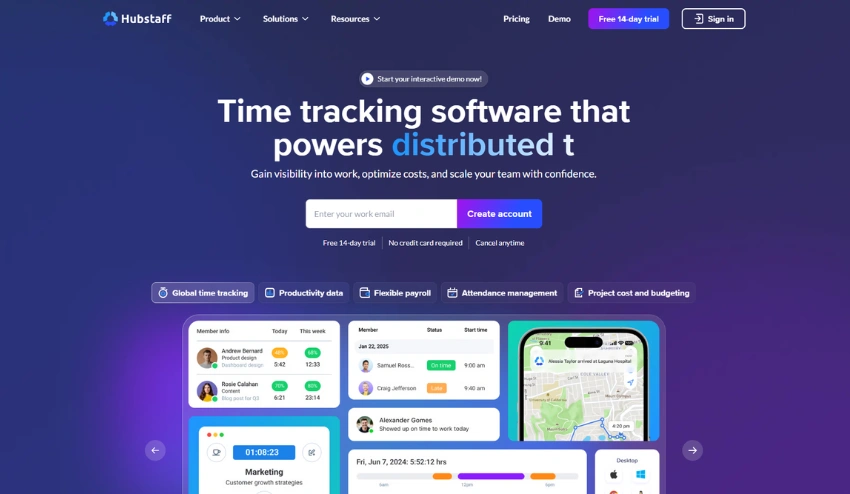
Hubstaff is dedicated to tracking and accountability for their remote team.
Key features:
- Activity level monitoring
- Optional screenshots
- GPS tracking of field teams.
Ideal for companies that outsource and have distributed IT teams.
7. RescueTime
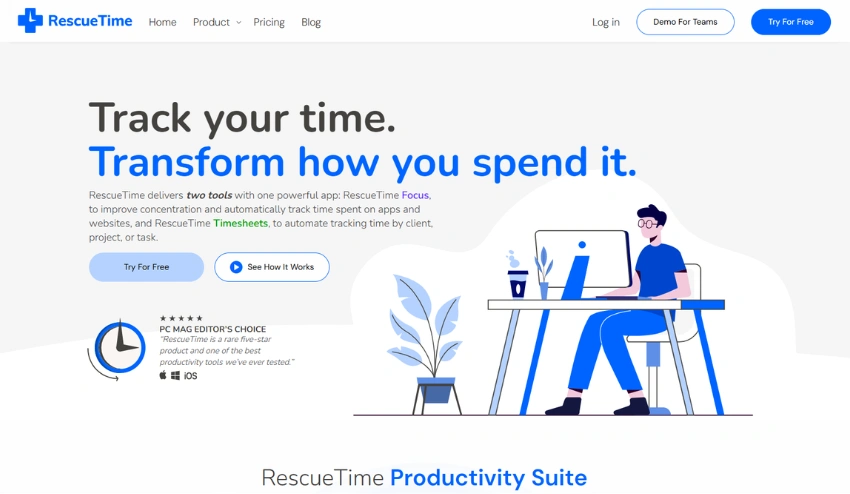
RescueTime is quietly working in the background and tracking developers’ digital time.
It can help you answer questions such as:
- How much time is spent coding vs meetings?
- What Apps are interfering with productivity?
- When is the best time for focused time?
Useful for developer productivity, self-improvement, and awareness.
8. Everhour
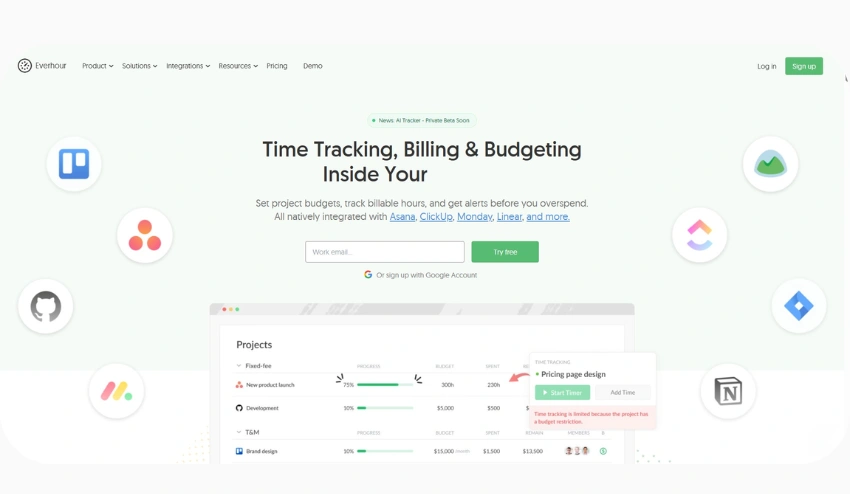
Everhour connects seamlessly with other project tools such as Asana and Trello.
It is best for:
- Agile teams
- The Product Manager is responsible for tracking the progress of each sprint.
- Premiered teams that are already using project management platforms.
It’s not about tracking, but it’s about seamless workflow integration.
9. Time Doctor
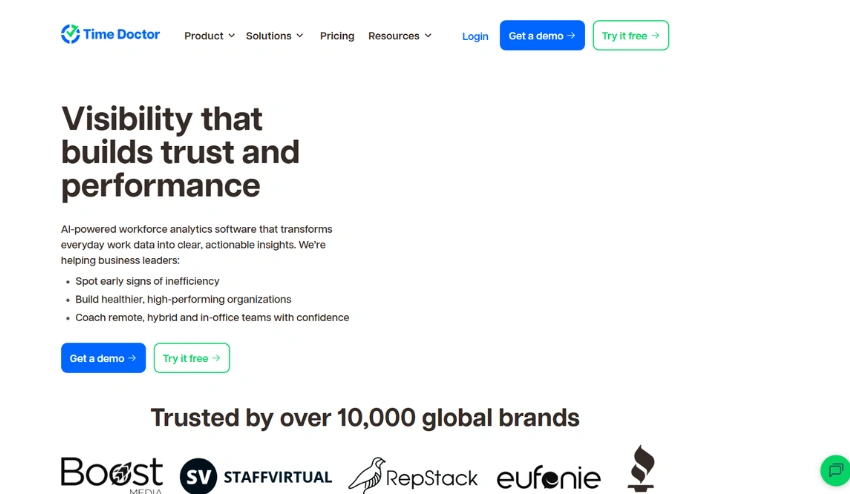
The main use cases for Time Doctor involve productivity enforcement and remote team accountability.
Features include:
- Screen monitoring
- Productivity scoring
- Detailed activity logs
It is commonly found in development teams, outsourcing, or BPO teams.
10. ClickUp Time Tracking
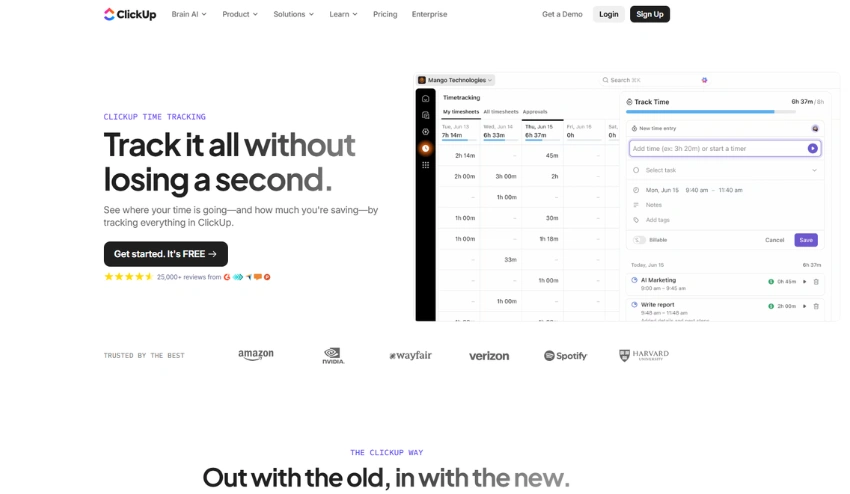
ClickUp is an integrated part of the larger productivity ecosystem.
It is used by developers because:
- Here, tasks, docs, and time tracking are all in one platform.
- Tasks and sprints can be easily seen.
- Built-in reporting for managers.
It’s best for teams that need an integrated workspace.
How Tivazo Helps Software Development Teams
Tivazo is designed differently from generic tools, with IT workflows in mind. It unifies productivity tracking, workforce analytics, and performance optimization in a single platform.
Here’s why it can help engineering teams:
1. Centralized Time Tracking
Using the Tivazo Time Tracking feature, developers can log hours without interruption, as it happens automatically or manually.
2. Better Team Coordination
Project leads can manage their sprint capacity and balance loads using Team Management, as well as assign tasks and track team workload.
3. Transparent Work Monitoring
Employee Monitoring module aids the accountability of remote employees without over-managing.
4. Visual Activity Insights
Live screenshots enable managers to approve concurrent working periods while maintaining controlled working periods.
5. Data-Driven Performance Reviews
With the Performance Insights dashboard, leaders can review developer efficiency by tracking actual data, not assumptions.
6. Accurate Reporting
Teams can utilize timesheets and reports to get detailed sprint hours, billable hours, and productivity trends.
7. Salary & Payroll Calculations
Tivazo includes a variety of tools, such as:
- Hourly Salary Calculator
- Time Card Calculator
- Overtime Calculator
Payroll is processed transparently for both full-time and contract developers, thanks to these.
5 Best Practices for Implementing Time Tracking in Dev Teams
Here are the best practices to adhere to when tracking time for software developers to maximize benefits:
1. Start with Transparency
Outline the rationale behind implementing time tracking and how it is beneficial to developers.
2. Avoid Over-Monitoring
Ensure focus is on productivity insights, not surveillance.
3. Integrate with Existing Tools
Make sure it is compatible with Jira, Git workflows, and CI/CD pipelines.
4. Keep It Simple
Too complicated, and user adoption decreases.
5. Encourage Self-Tracking
Allow developers to self-manage their own time log.
Common Mistakes to Avoid
The best tools can also go wrong if they are not used properly:
- Having to track all the little work manually
- Utilizing tracking information for disciplinary response.
- Not accounting for the qualitative work of the developer
- Failure to regularly review time data
- The danger of having too many metrics on a dashboard
Conclusion
Time tracking, meaning for software programmers, has developed a great deal from simple logging of hours. By 2026, it will have become a critical component of engineering productivity, project forecasting, and workforce intelligence.
Modern software teams must be evaluated by more than just output – they are evaluated by efficiency, predictability, and quality of collaboration.
This is why time tracking tools have become part of the development environment, such as Agile, DevOps, and remote work models.
Tools like Tivazo are the next generation of time tracking: Not only tracking time, but also how development time affects performance, delivery speed, and team health.
With proper usage, time tracking can be used to aid teams:
- Increase the accuracy of sprint planning. Refine sprint planning skills.
- Manage workloads to avoid burnout.
- Create more visibility among distributed teams.
- Enhance accountability, but not micromanagement.
- Leverage tools such as the hourly to salary converter and the timecard calculator to optimize payroll and billing accuracy.
The key to success, however, is not the tool itself, but how it is thoughtfully applied. When time tracking is used as a productivity tool and not as a monitoring tool, teams get better results.
In the end, the ideal time tracking software is the one that seamlessly integrates with the developer’s workflow, connects with other tools, and offers valuable information instead of simply data.
Time tracking will continue to be crucial for efficient, scalable, and high-performing engineering teams, as software development advances.