It is not as easy as it may sound to bring employees back to work after a long absence. It could be post maternity leave, medical leave, furlough, or personal time off – the HR managers and business owners have to balance between empathy and policy and productivity. That is where a return to work letter comes in.
A return to work letter is a document that is written in a formal manner, which informs the employee of the time and manner in which he or she will resume work after an absence. It puts the employer and employee on the same page regarding expectations, duties, and schedules. In its absence, misunderstanding will be a common occurrence, which results in compliance problems or tension at work.
This letter is not administrative to HR leaders. It is a chance to predetermine the successful reintegration, reestablish the company culture, and demonstrate that the returning employee is really supported. Written properly, it displays professionalism, empathy, and consistency, and traits that enhance trust in your workforce.
Within this guide, we will discuss all the details to write a professional, compliant, and considerate return to work letter. You will know what it is, why it is important, the key elements, and a simple step-by-step guideline to make one.
What Is a Return to Work Letter?

A return to work letter is a formal letter that is written by an employee or employer to show that he or she is willing and intends to resume work after an absence.
In less complicated words, it is the communication bridge that reconnects the employee with the workplace. It specifies the date of returning the employee, the terms of returning them, and any special accommodations that must be addressed, like a modified workload or work schedules.
To the HR managers and business owners, the letter is a formal document of the employee returning on agreed terms. This is particularly necessary after long leaves like medical leave, maternity leave, or furloughs, when schedules, tasks, or policies might have changed.
This letter also assists in making sure that internal HR processes are followed, and in certain instances, so are the legal requirements. In addition to the logistics, it is an indication of empathy – demonstrating that the organization cares about effective communication and the employee reentering the team.
A well-written return to work letter will keep everyone on track and establish a positive mood for the employee returning to work.
Why It Matters
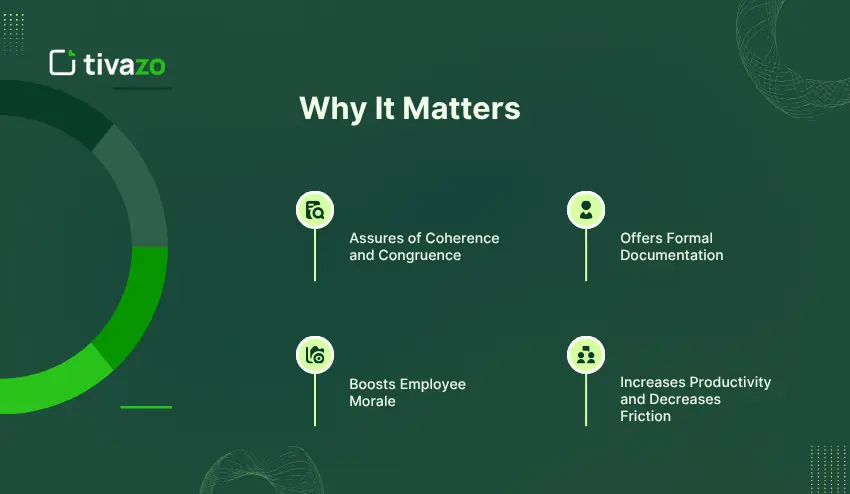
1. Assures of Coherence and Congruence.
A return to work letter is an effective way of stating that the employee will be back and what he or she will do. It also notifies them about any changes in the policies or schedules at the workplace.
Clear expectations minimize the confusion and misunderstanding that can interfere with the work processes of HR managers. When employees know what is expected of them, they become more confident.
2. Offers Formal Documentation.
Return letters are official documents of a reintegration plan for an employee. This documentation will be essential to the HR and the business owners in terms of compliance and legal safeguarding.
In case the absence was medical leave, maternity leav,e or a furlough, a documented plan will assist the company to prove that it is following the policies and labour laws.
3. Boosts Employee Morale
It may be stressful to come back after a long absence. An organized and sensitive letter indicates that the organization appreciates the input of the employee.
This proactive communication will assure the employees, make them adapt easily, and create a positive work atmosphere.
4. Increases Productivity and Decreases Friction.
When employees understand their responsibilities and what is expected of them, they will be able to get back to work more quickly. Managers don’t need to occupy time explaining how to do things or correcting misunderstandings.
In general, the letter minimizes the friction and facilitates the process of reintegration, which is advantageous to the business and employees.
Types / Variations of Return to Work Letters
Absences are not all equal, and the nature of the leave usually defines the manner in which a return to work letter is to be written. HR managers and business owners should be able to customize the letters to the situation of the employee, be clear, compliant, and reintegrate smoothly. Each type has been broken down below.
1. Medical Leave Return Letter
Workers who have been on medical leave are usually required to be formally reassured that they are fit to resume work. A medical leave return letter normally contains:
- Confirmation of medical clearance to resume work.
- Any special needs, e.g., modified workloads or limited tasks.
- Expected work schedule and return date.
- Contact HR or occupational health services in case of further assistance is required.
Example: An employee who is undergoing surgery may work half-time during the initial two weeks. The letter would explain the hours, duties, and who to address to make changes.
2. Maternity/Caregiving Leave Return Letter.
To the employees who have been on parental or caregiving leave, the letter has a logistical and supportive purpose:
- Check the date of returning and any flexible working.
- Develop changes in policies or benefits that took place during leave.
- Reassure and reintegrate into the team.
HR Tip: A positive company culture can be supported with the help of a warm and empathetic tone without losing professionalism.
3. Furlough or Layoff Return Letter.
Employees who have been laid off or furloughed and are re-employed should be provided with a letter that reflects on changes in the organization:
- Establish the role and the responsibilities of the employee.
- Note any payment, time, or personnel changes.
- Give reports on new processes or policies.
4. Sabbatical/Extended Personal Leave Return Letter.
Prolonged sabbaticals or personal leave need more information to re-acclimatise the employee:
- Check the date of start and the manager of the report.
- Describe team structure, project, or responsibility changes.
- Make orientation materials, refresher training, or company policy updates available.
5. Phased or Gradual Return Letter.
Not all the time is a full-time turnover possible at once. A gradual or phased back letter must contain:
- Modified working schedule and fewer hours or part-time work.
- Gradual reintegration schedule into full responsibilities.
- Check in to track the progress and overcome difficulties.
Example: An employee may be away due to a long-term illness and resume three days a week initially.
Comparison Table: Return to Work Letter Types
| Leave Type | Key Inclusions | HR / Business Focus | Tone / Approach | When to Use |
|---|---|---|---|---|
| Medical Leave | After a long personal leave or sabbatical | Medical clearance, accommodations, and return date | Professional, supportive | After illness, injury, or surgery |
| Maternity / Caregiving | Return date, flexible schedule, benefits updates | Employee well-being, retention | Empathetic, encouraging | After parental or caregiving leave |
| Furlough / Layoff | Role reinstatement, policy updates, reporting structure | Clarity, productivity, team alignment | Formal, informative | After temporary layoffs or furloughs |
| Sabbatical / Personal | Orientation, role updates, project info | Smooth reintegration, team alignment | Professional, welcoming | Monitoring, support, and accommodation |
| Phased / Gradual Return | Reduced hours, gradual ramp-up, check-ins | Monitoring, support, accommodation | Supportive, flexible | After long-term leave, medical recovery |
Key Elements of an Effective Return to Work Letter
A well-written return to work letter ensures clarity, compliance, and an employee’s seamless transition back to work. Each letter will read differently based on the leave type. However, every effective letter will have the following components.
1. Employee and Leave Information
The letter should start by stating the employee’s full name, job title, and leave dates. This serves to acknowledge both the identification of the employee and the tenure of leave.
Example:
“This letter serves to confirm that Jane Doe, Marketing Manager, has been on medical leave from March 1st to April 15th of 2025.”
As it pertains to employee leave, this section serves as the official record to make sure both HR and the employee are on the same page.
2. Return Date and Schedule
In the next section, you want to include details such as the employee’s return to work date, and just as importantly if there were any changed hours from their pre-leave schedule.
Tip for HR: for any employee who may still require some form of planning accommodation, it may be prudent to put a flexible or phased schedule. If everyone is clear on the timeline, there shouldn’t be confusion that could impact the operational aspect of the office.
3. Role Expectations and Responsibilities
Similar to the first point within the return to work letter, it is imperative to lay out what the employee can expect upon their return to work if their duties will remain the same.
It is valuable to lay out any changes of work responsibilities or changes of reporting line. It is also valuable to provide an expectation of the employee’s responsibilities or any projects they will be working on.
Example:
“Upon return to work, Jane will continue her role as Marketing Manager, reporting to the Director of Marketing and be leading the upcoming product launch campaign.”
Laying out clear expectations can also ease the employee’s anxieties or worries upon returning back.
4. Policy or Structural Changes.
In case the organization policies, team structures, or workflow had changed during the absence of the employee, note it down briefly in the return-to-work letter.
HR Tip: Do not be too overwhelming! Provide the offer to refer to the company handbook or internal resources, which provide more guidelines.
5. Recognition of Employee Effort.
Even a brief, positive word of praise to the employee as a way of recognizing their effort goes a long way in supporting the employee.
Example:
We appreciate your hard work when you have been away, and we anticipate your contributions when you come back to your team.
Appreciation of their hard work reduces the morale burden and helps in a healthy workplace.
6. Support Resources
Describe HR contacts, benefits, or employee assistance programs (EAPs), as necessary.
HR Tip: Assist the employees in understanding where to go in case of questions or in case they need assistance. This supports the caring aspect in the organization and reintegration becomes less stressful.
7. Next Steps / Confirmation Section
Close the return to work letter with a section where the employee is asked to send a signed or acknowledged receipt of the letter. This drives the process forward and leads to documentation that they were given the letter.
Example:
Please sign and send me the bottom of the letter as an acknowledgment that you are acquainted with the plan.
7-Step Approach for Creating The Return To Work Letter
Writing a ‘return to work’ letter is a fairly straightforward process. The 7-step approach ensures HR managers and employers check all the boxes and include the essential elements, while also ensuring clear, compliant, and empathetic written communication.
Step 1: Collect Employee Information and Leave Information
Collect all the information related to the employee’s leave type, length, and any corresponding medical or HR documentation.
- Confirm that you are aware of the dates of absence.
- Consider any needs for accommodation as well as any phased return.
Tip: If you have collected the correct information, you can minimize the miscommunication on your letter, which will ensure it can accurately reflect current policy.
Step 2: Understand the Nature of the Return
Availability of whether the employee’s leave was medical, maternity, furlough, sabbatical, or phased will be helpful in creating the tone and written communication.
You may need to consider any flexible hours, accommodations, or updated responsibilities.
For example, if an employee is returning from a medical leave, it may be necessary to receive a more formal letter that focuses on compliance, while employees returning from maternity leave will receive a letter that can be a bit warmer.
Step 3: Create Short and Concise Statements
Create short and professional sentences.
Create written communication that consists of key information including the return date, schedule, workplace role, and responsibilities.
HR Tip: Clarity in your statements will eliminate most, if not all, follow-up questions and miscommunication.
Step 4: Incorporate Language to Support and Comply
Reference links/pictures of available resources (HR contacts, benefits, employee assistance program).
- Incorporate any references to compliance with applicable laws or policies.
- Consider any accommodation needs, and rephrase compliance language with company policies and laws.
Step 5: Include Any Changes to Roles or Policies
Make any references to changes in the employee’s letter of appointment in context of:
- Job Duties
- Reporting Structure
- Changes to workplace policies and procedures.
Tip: Use links to internal resources and/or handbook to avoid over-editing and enhance the letter!
Step 6: Add a Positive Tone and Recognition
Recognize the end of service to a practice from the employee and express interest and concern
Recognize their employee’s time away from the workplace and express appreciation for their return.
While maintaining professionalism, do not sound like a robot or a machine when writing. The workplace benefits from a little warmth in HR correspondence.
Step 7: Review and Send
Before sending, be sure to:
- Review the letter again to ensure accuracy and clarity, and logical flow of the correspondence.
- Review a second time for compliance with all Company Policy and HR Standards.
- Make sure to save a copy in the official file.
HR Tip: Standardize letters across departments to maintain consistency and reduce errors.
Sample Return to Work Letter
A complete text of a letter of return to work after a medical leave is shown below. It can be used as a guide to write your own.
[Company Letterhead]
Date: April 18, 2025
To: Jane Doe
Position: Marketing Manager
Department: Marketing
Subject: Confirmation of Return to Work – April 28, 2025
Dear Jane,
It is our pleasure to confirm that you will return to work on Monday, April 28, 2025, after taking a medical leave from March 1 to April 15, 2025. Hopefully, your recovery has proceeded well, and we would like to ensure that you make your re-entry into the world as smoothly as possible.
On your return, you will resume the Marketing Manager role under the Director of Marketing, Sarah Hill. You will first be involved in the Q3 product launch campaign and will be involved in the weekly team sync on Tuesday at 10:00 AM.
To help you fit back into the company, we have developed a gradual plan for the first two weeks: you will report on Monday to Thursday between 9:00 AM and 3:00 PM, but will then resume your regular workdays on May 12, 2025.
It should be noted that the company revised the remote work policy when you were out of the office. This letter has been attached to a copy of the updated policy, and the complete copy can be found in the employee handbook on the internal portal.
You can always call our HR team at so that they can assist you with any of your questions in advance of your coming back date or any other accommodations you may need. To contact them at the following address: that is at the companyname.com/hr with the contact being (555) 123-4567. We have an Employee Assistance Program (EAP) at no cost to you, which is also enclosed.
We are very happy to take you back to the team and expect you to contribute more in the future.
To ensure that you recognize this letter and the provided plan of the return, you must sign it below and send a copy of it to HR before April 23, 2025.
Warm regards,
[HR Manager Name]
HR Manager [Company Name]
Employee Acknowledgment:
I, _________________________, confirm that I have read and understood the contents of this return to work letter.
Signature: _________________________ Date: _____________
Templates for Welcome Back to Work Letters
The templates below will be adapted to the most widespread types of leaves. Before sending, substitute each bracketed placeholder with the appropriate employee and company information.
Template 1: Medical Leave Return
Subject: Return to Work Confirmation – [Return Date]
Dear [Employee Name],
It is our pleasure to confirm that you will resume a working position on [Return Date] after a medical leave from [Start Date] to [End Date].
You are to resume your position as [Job Title] under the manager of [Manager Name]. [Where relevant: Within the first [X] weeks, you will stick to an adjusted schedule of [hours/days] to assist you in transitioning.
Note [any applicable changes in policies or teams]. In case you need any workplace accommodations, please contact [HR Contact Name] at [email/phone].
You may use our Employee Assistance Program at no cost. They are available at [link or internal resource].
To acknowledge this, a copy of this letter should be signed and returned by [Date] to confirm receipt.
We are pleased to see you again.
In good faith, [Name of HR Manager]
[Name of Company].
Template 2: Maternity or Caregiving Leave Return
Subject: Welcome Back – Return to Work on [Return Date]
Dear [Employee Name],
Welcome back! We are very pleased that you will be back in the team on [Return Date] after your parental/caregiving leave from [Start Date] to [End Date].
The [Job Title] position will not change, and you will still report to [Manager Name]. [Where applicable: We have planned a flexible working schedule of [details] of your first [X] weeks to enable you to get used to things.
When you are on leave, [record any applicable new policies or changes in the team]. The materials are contained in enclosed materials or you can visit [internal link] to get the complete details.
If you have any questions or would like to discuss flexible arrangements, contact [HR Contact Name] at [email/phone].
We are also excited to see you again, and we will be happy to help you during this transition.
This letter is in confirmation of which we request that you please sign and send to us by [Date].
And sincere regards, [HR Manager Name]
[Company Name].
Template 3: Furlough or Layoff Return
Subject: Official Notice of Reinstatement – [Return Date]
Dear [Employee Name],
This is to inform you that you are being reinstated to your position as [Job Title] as of [Return Date] following a furlough from [Start Date] to [End Date].
You will be under the supervision of [Manager Name], and your main duties will be [brief description]. Additionally, below are a number of changes that have taken place during your absence: [list any major changes in policies, team, or processes].
Your salary will be [list pay details in case of change or confirm no change]. For any queries regarding your benefits or employment terms, kindly contact [HR Contact Name] at [email/phone].
The team briefing will take place on October 14, 2025 to update you on any new developments. Your first day at work is soon, and we would like you to familiarize yourself with the new employee handbook at [internal link].
The attached letter is pending acceptance by [Date] as a confirmation of your acceptance of your reinstatement.
You can be sure we are glad to have you back with the team.
In good faith,
[Name of HR Manager]
[Name of Company].
Tips for Easing an Employee’s Return to Work
A well-written letter is a great starting point, but the real work of reintegration occurs in the field. These are some tips for HR managers and business owners who want to make the return to work process as smooth as possible for the employee.
- Schedule a welcome-back check-in before the employee returns to work to minimize first-day anxiety.
- Minimize the employee’s workload during the first week of return to work.
- Brief the staff before the employee returns to work to ensure he/she is welcomed, not surprised by organizational changes.
- Designate a person who the returning employee can approach for clarification of issues during the first few weeks of return.
- Schedule a follow-up after the first two weeks of return to work to ensure that issues are identified early.
Common Mistakes & How to Avoid Them
Crafting a return to work letter may cause misunderstanding, compliance problems, or reduced morale even in experienced HR managers, resulting in a poor letter. These are some of the most common mistakes that you should understand to make your letters effective and professional.
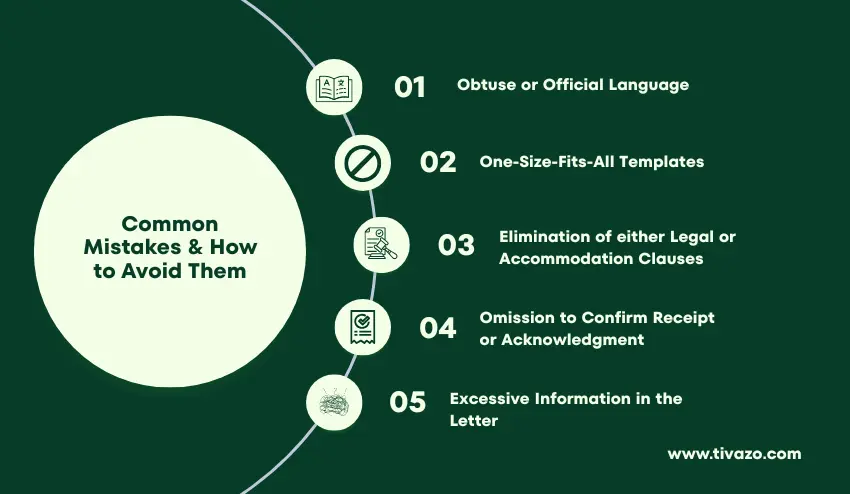
Obtuse or Official Language
Such statements as come back later on, or as necessary, may leave the employees with an obscure view of the task and when they should come back. It is also always important to add definite dates and times and a job description to avoid misunderstanding and ambiguity.
One-Size-Fits-All Templates
Generic templates that do not reflect the nature of leave or the needs of individual employees can be perceived to be impersonal, and they can disregard the legal requirements. Create medical leave, maternity leave, furloughs or phased returns letters with the same basic format throughout the organization.
Elimination of either Legal or Accommodation Clauses.
The absence of sentences regarding accommodations, compliance, or acknowledgment can make the company face legal risk. Always make references to the pertinent company policies, labor laws, and any special accommodations that the employee needs.
Omission to Confirm Receipt or Acknowledgment
Unconfirmed, the employee did not get the letter, and it was never recorded that the employee received it. Add a signature or digital level of acknowledgment so that it can be documented and be accountable.
Excessive Information in the Letter
Presenting excessive information or policy changes simultaneously may confuse the employees and decrease their understanding. Pay attention to the key issues: return date, position, duties, updates, and support. Connection with internal sources of additional information.
Through these errors, the HR managers and business owners can develop return to work letters that are effective, compliant, and supportive so that employees can be easily reintegrated.
Anticipating Return to Work Challenges
Despite the best preparation, returning employees face common challenges. Anticipating these issues enables the HR manager to tackle them more proactively rather than reactively.
- Feeling like they are not in the loop: Consider sending a brief document or providing a quick orientation to help the returning employee quickly get back into the loop.
- Anxiety about performance expectations: Provide a realistic time frame and alleviate anxiety during the welcome meeting.
- Changes in the workplace are not communicated well: Mention company policies or team updates in the letter and provide links to company resources.
- Managers not knowing their boundaries: Align the return letter with company policies so the returning employee gets the same message from the HR manager and their manager.
Conclusion
The HR managers and business owners must have a well-developed and well-written return to work letter. It guarantees transparency, adherence, and reintegration of employees who come back to work after medical leave, maternity leave, furloughs, or prolonged absence. The right elements, customization of the letter according to the type of leave, and adherence to a systematic template can help organizations to reduce misunderstandings, increase morale, andcreate a professional workplace culture.
The templates, tools, and best practices make the process easier and ensure that the letters are consistent and legally acceptable. It is possible to prevent frequent errors, such as vague wording, generic templates, or the absence of recognition, so that each return to work letter can be effective and implemented.
Act now: assess your existing processes in returning to work, create templates specific to your company, and begin to write clear and professional letters that can help your employees successfully return to work. It will make your HR operations stronger, build trust, and establish the atmosphere of a good and productive workplace.