✨ Key Takeaways:
- Human Resource Management (HRM) is essential for hiring, managing, and retaining employees effectively.
- It improves productivity by providing training, performance management, and clear goals in the workplace.
- HRM helps attract and retain top talent, reducing costly employee turnover.
- It ensures legal compliance and minimizes workplace risks.
- A strong HR strategy builds a positive company culture and boosts employee satisfaction.
- Modern HR relies on data, automation, and HR software to increase efficiency and decision-making.
- The future of HRM is technology-driven, focusing on employee experience, analytics, and remote workforce management.
- Tools like Tivazo help businesses automate HR tasks, gain insights, and scale efficiently.
What Is Human Resource Management?
Human Resource Management (HRM) is the strategic practice of workforce management of a company in order to enhance employee performance, productivity, and overall business performance. It encompasses all aspects of talent acquisition and workforce planning, employee engagement, training and development, as well as performance management.
In the absence of effective HRM, organizations tend to struggle with such common issues as low employee engagement, low productivity, high employee turnover, and poor organizational culture. The lack of proper management and support of employees can have a direct effect on business growth, efficiency of teams, and long-term stability.
This is the reason why Human Resource Management is not merely an administrative role; it is a key force behind retaining employees, employee satisfaction at the workplace, and organizational prosperity. Properly designed HR strategy guarantees the right individuals are recruited, nurtured, and encouraged to realize the company’s objectives.
In this article, you’ll learn:
- What Human Resource Management is and its core role in organizations
- Why HRM is important for employee engagement, retention, and productivity
- The key functions of HRM, including recruitment, performance management, and HR compliance
- The benefits of effective HR practices for business growth and organizational culture
- How modern HR uses HR software, automation, and people analytics to improve decision-making
By the end, you’ll clearly understand how HRM connects people, processes, and performance to drive sustainable success.
Key Responsibilities of HRM:
- Recruitment and hiring
- Training and development
- Performance management
- Compensation and benefits
- Employee relations
Why Human Resource Management Is Important
Human Resource Management (HRM) is important since it directly relates to people, processes, and business strategy. It guarantees that organizations not only recruit the right talent but also develop, engage, and retain employees to be successful in the long term.

Below are the key reasons why HRM is important in modern organizations:
1. Improves Employee Performance and Productivity
HRM improves employee performance by engaging in systematic employee training and development, ongoing feedback, and proper performance management systems. It makes the employees well aware of their roles, responsibilities, and expectations in the organization.
Establishing clear objectives and providing employees with the right resources, HR enables employees to work more effectively, resulting in increased productivity in the workplace and improved business results. This support over time assists employees in enhancing their abilities and makes them more useful towards the success of the organization.
2. Strengthens Talent Acquisition and Workforce Planning
Effective HRM guarantees good talent acquisition through the identification, attraction, and employment of the right candidates. It concentrates on the right skills and right roles to minimize errors in hiring and enhance job fit.
Through appropriate workforce planning, companies are able to predict employment requirements, minimize skills shortages, and create a team that is in tandem with the objectives of the organization. This proactive strategy makes sure that the company is ready to face any future growth and operational needs.
3. Boosts Employee Engagement and Retention
RM is instrumental in enhancing employee engagement by establishing a good working environment and rewarding employee input. Interested employees feel appreciated, which enhances motivation and dedication towards their job.
The motivated employees are more engaged, and this results in increased employee retention, reduced employee turnover, and reduced hiring expenses. This stability assists organizations in staying afloat and performing over time.
4. Builds a Strong Organizational Culture
An effective HR department can assist in the development of a positive organizational culture that is founded on mutual values, teamwork, and trust. It promotes collaboration and a feeling of belongingness among staff.
Good culture in the workplace enhances morale, open communication, and job satisfaction among the employees. In the long run, it also enhances the brand of the company as an employer of choice.
5. Ensures Legal Compliance and Risk Management
HRM helps in making sure that firms are guided by labor laws, workplace policies, and HR compliance standards. This entails equitable hiring policies and occupational health and safety, as well as adequate documentation of employees.
This helps in minimizing legal risks and conflicts at the workplace and helps the organization avoid penalties or lawsuits. It also establishes a just and open work atmosphere for all workers.
6. Supports Business Growth and Strategic Goals
HRM puts the employees in line with the long-term vision and business expansion strategy of the company. It makes sure that the workforce is organized in such a manner that it facilitates the present operations as well as the future growth.
HR can enable organizations to scale efficiently and remain competitive by managing talent and maximizing human capital. This congruency between individuals and strategy is essential to sustainable success.
7. Enhances Employee Experience and Well-Being
The contemporary HR is oriented toward the enhancement of the overall employee experience, such as the work-life balance, benefits, and well-being programs. The positive experience of employees results in increased motivation and decreased burnout.
Improved employee experience means a higher level of satisfaction, loyalty, and long-term performance. It is also useful in assisting organizations to develop a more resilient and dedicated workforce.
8. Enables Data-Driven Decision Making
HRM enables organizations to make quality decisions related to hiring, performance, and retention with the help of HR analytics and people analytics. This assists HR departments in recognizing trends and addressing labor issues better.
Data-driven HR practices minimize guesswork and enhance the overall organizational efficiency. It also helps companies to keep on streamlining their HR procedures to achieve improved outcomes.
The importance of Human Resource Management is that it will turn employees into a strategic asset, which will bring about productivity, engagement, compliance, and sustainable growth of the business.
Key Functions of Human Resource Management
Human Resource Management (HRM) is responsible for the whole employee lifecycle in an organization. Hiring and onboarding, performance management, and employee relations are only a few of the functions of HR that make sure that the workforce is productive, engaged, and aligned with business objectives.
The fundamental functions of HRM that lead to the effectiveness and success of an organization in the long term are listed below:
1. Workforce Planning
Workforce planning involves examining present and future staffing requirements to allow the organization to be staffed with the appropriate number of employees having the right skills. It assists companies in preventing talent shortages and overstaffing.
Through strategic workforce planning, HR can make sure that human capital is aligned with business objectives and future growth requirements. This enhances stability and efficiency in the organization.
2. Recruitment and Selection
Recruitment and selection entail attracting, screening, and employing the most appropriate candidates to work in job positions. It is a very important aspect of talent acquisition and directly influences the performance of the company.
Good hiring will guarantee improved job fit, less turnover, and enhanced overall quality of the workforce. It also assists organizations in developing a competitive edge by having skilled employees.
3. Training and Development
Training and development are aimed at enhancing the skills, knowledge, and capabilities of employees. HR offers well-organized learning courses, orientation, and ongoing growth.
This role improves employee performance, increases productivity, and trains employees to take up future positions. It also helps in long-term career development and organizational success.
4. Compensation and Benefits
Compensation and benefits are those salaries, incentives, bonuses, and employee perks provided by the organization. A competitive and fair remuneration system is vital in attracting and retaining talent.
Employee satisfaction and motivation are enhanced with well-organized compensation management. It is also important in minimizing employee turnover and enhancing retention.
5. Employee Relations
Employee relations are concerned with a good and healthy relationship between the employees and the organization. HR is a facilitator to solve disputes, to listen to issues, and to maintain harmony at work.
Good employee relations enhance employee involvement, reduce workplace conflicts, and foster a more cooperative organizational environment. This leads to higher morale and productivity.
Benefits of Effective Human Resource Management
Here are the 10 benefits of effective Human Resource Management (HRM):
- Effective Human Resource Management improves employee productivity by providing structured training, clear role definitions, and continuous performance management.
- It enhances talent acquisition by helping organizations attract, select, and hire the right candidates who align with business goals and job requirements.
- HRM increases employee retention by improving job satisfaction, engagement, and long-term career development opportunities within the organization.
- It strengthens organizational culture by promoting collaboration, shared values, and a positive workplace environment that supports teamwork and trust.
- Effective HR practices reduce employee turnover costs by minimizing frequent hiring, onboarding, and training expenses through better retention strategies.
- HRM ensures HR compliance and legal adherence by following labor laws, workplace policies, and ethical standards to reduce organizational risks.
- It boosts employee engagement by recognizing performance, encouraging communication, and creating a supportive and motivating work environment.
- Modern HRM improves decision-making through HR analytics and people analytics, allowing data-driven workforce planning and performance evaluation.
- It increases organizational efficiency by streamlining HR processes such as recruitment, onboarding, payroll, and performance tracking.
- Effective HRM drives long-term business growth and scalability by aligning workforce strategies with organizational goals and future expansion plans.
Common Challenges in Human Resource Management
Although it is a very important factor that motivates the performance of employees, organizational efficiency, and business development, Human Resource Management (HRM) is still challenged by a number of issues in contemporary workplaces. Unless addressed efficiently, these challenges tend to affect the productivity of the workforce, employee engagement, and retention of talent.

1. Talent Shortages
The rising competition in the job market has been one of the greatest challenges in HRM, as it becomes difficult to locate and recruit skilled professionals. This lack of skilled talent impacts talent acquisition strategies and retards organizational development. It also compels businesses to spend more time and resources on recruitment and onboarding.
2. Employee Disengagement
Low employee engagement is a challenge faced by many organizations where workers are either unmotivated, disengaged, or undervalued. This translates into low productivity, performance, and an increase in employee turnover rates, which eventually impacts the overall business performance and morale at the workplace.
3. Compliance and Legal Issues
Keeping up with constantly changing labor laws, HR policies, and workplace regulations is a major challenge for HR teams. Failure to maintain proper HR compliance can result in legal penalties, reputational damage, and workplace conflicts that disrupt operations.
4. Managing Remote and Hybrid Teams
With the rise of remote and hybrid work models, HR professionals face challenges in maintaining effective communication, collaboration, and accountability. Managing distributed teams requires strong workforce management systems to ensure productivity and employee alignment.
5. High Employee Turnover
Employers are usually faced with the challenge of retaining employees because of better employment opportunities, the absence of career development, or ineffective workplace culture. A high turnover will raise the cost of recruitment, decrease efficiency in the operations, and destabilize the team.
6. Inefficient HR Processes
Paper or obsolete HR systems might slow down the HR processes of recruitment, payroll, onboarding, and performance tracking. This lowers the efficiency of the organization and introduces delays in the workforce management activities.
How to Overcome These Challenges
- Invest in HR technology
- Focus on employee experience
- Provide continuous training
- Use data-driven decision-making
How to Improve Human Resource Management
To make HRM more effective, organizations should:
- Use HR software and automation tools to simplify recruitment, payroll, and performance tracking.
- Improve employee experience to boost engagement, satisfaction, and retention.
- Provide regular training and development to close skill gaps and improve performance.
- Apply HR analytics and people analytics for better, data-driven decision-making.
- Strengthen workforce planning and HR compliance to ensure stability and reduce risks.
Key Trends Shaping the Future of HRM
1. AI and Automation in HR
The implementation of AI tools throughout HR has made it easier to conduct various processes, such as recruitment, managing employee performance & onboarding of new hires. Additionally, the use of AI has allowed HR professionals the opportunity to spend more time on strategic decision-making vs repetitive processes.
2. Data-Driven HR (People Analytics)
Modern-day HR departments are now heavily dependent on data analysis when making hiring, retaining, and performance evaluation decisions regarding employees. By utilizing data analytics, HR departments can make informed decisions, be more efficient, and rely less on guessing how to do things.
3. Remote and Hybrid Work Models
The shift of companies to remote work has caused HR departments to assume a greater responsibility for managing distributed teams, ensuring productivity among their team members, and fostering the company’s culture.

4. Employee Experience Focus
Companies are now actively looking to provide their employees with an environment that is balanced, i.e., providing the employee with sufficient work-life balance, providing a positive engagement opportunity, and improving employee well-being to increase retention and employee satisfaction.
5. Continuous Learning and Upskilling
Organizations are continually working towards providing their employees with training programs that promote ongoing skill sets necessary to keep up in a fast-changing world.
Why Choose Tivazo?
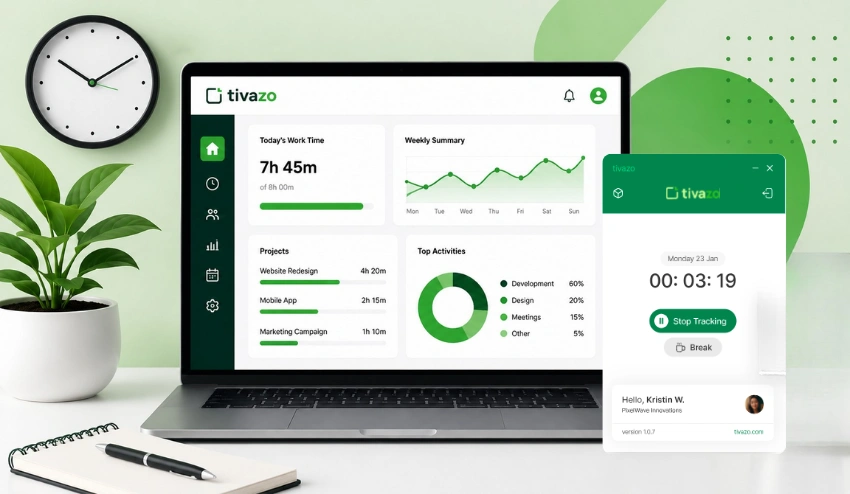
Modern HR Management is not only about tracking your people manually anymore; your HR processes must be automated, accurate, and provide real-time visibility into your workforce. Tivazo is an all-inclusive HR management and time tracking solution that helps you manage your workforce, track time, and perform HR functions from one platform.
Combining the necessary HR functionality with robust business functionality like time tracking, payroll processing, and reporting allows organizations to increase efficiency in HR and improve employee productivity and operational control.

Key Features of Tivazo
- It provides real-time tracking and employee monitoring, helping businesses track productivity and improve workforce management.
- It offers detailed timesheets and reporting tools for better HR decision-making and performance analysis.
- It includes a structured payroll system that helps automate salary calculations based on tracked work hours and attendance data.
- It supports invoicing features, making it useful for teams, agencies, and freelancers to manage billing and client payments efficiently.
- It centralizes employee data, attendance, and work insights, improving overall HR compliance and organizational efficiency.
Conclusion
Human Resource Management is not just an administrative function; it is a strategic pillar of business success. From hiring the right talent to building a strong company culture, HRM influences every aspect of an organization.
Companies that invest in effective HR practices are better positioned to grow, adapt, and succeed in today’s competitive environment.