The first thing you may be wondering is: How much is $25 an hour per year?
Knowing how much an hourly salary equates to an annual salary is crucial whether you’re considering a new position, comparing career options, taking on a freelance job, or budgeting your salary. Looking only at the hourly rate doesn’t always provide the full financial picture.
Luckily, it’s not too hard to find out how much someone earns a year in an hour-and-a-half job.
You can easily figure out what your annual, monthly, weekly, and daily earnings will be for a standard full-time work schedule.
We’re going to cover how many dollars in the year is $25 an hour, including monthly earnings, biweekly paychecks, and weekly earnings, and whether $25 an hour is a good wage for 2026.
We will also guide you through the Tivazo hourly to salary converter so you can make your salary calculation instantly.
$25 an Hour Is How Much a Year?

$25 an hour equals approximately $52,000 per year when working 40 hours per week for 52 weeks per year before taxes.
Calculation:
Annual Salary = Hourly Rate × Hours Per Week × Weeks Per Year
$25 × 40 × 52 = $52,000
Salary Summary Table
| Pay Period | Earnings |
| Hourly | $25 |
| Daily (8 hrs) | $200 |
| Weekly | $1,000 |
| Biweekly | $2,000 |
| Monthly | $4,333 |
| Annual | $52,000 |
Assumes full-time employment of 40 hours per week.
How Do You Calculate Annual Salary From an Hourly Wage?

Many hourly workers need to know their annual salary when applying for a loan, preparing a budget, or considering a new job.
But luckily, it’s easy to convert an hourly wage to an annual income.
Annual Salary Formula :
Annual Salary = Hourly Rate × Hours Worked Per Week × Weeks Worked Per Year
For a worker earning $25 per hour:
- Hourly Rate = $25
- Hours Per Week = 40
- Weeks Per Year = 52
Calculation:
$25 × 40 × 52 = $52,000
That gives you a gross annual income before taxes and deductions.
If your work hours vary, use the hourly pay to annual salary converter on Tivazo to calculate your actual work hours and convert your hourly pay to annual salary.
$25 an Hour Salary Breakdown
Knowing what you are paid on different pay periods makes budgeting easier.
Detailed Salary Breakdown
| Income Type | Calculation | Amount |
| Hourly | $25 × 1 | $25 |
| Daily | $25 × 8 | $200 |
| Weekly | $25 × 40 | $1,000 |
| Biweekly | $1,000 × 2 | $2,000 |
| Monthly | $52,000 ÷ 12 | $4,333 |
| Annual | $25 × 40 × 52 | $52,000 |
This salary breakdown is based on a standard full-time work schedule. If you work overtime regularly, an overtime calculator can help you estimate your extra earnings.
Hourly Earnings
Your base pay is straightforward:
$25 per hour
Every additional hour worked increases your income by another $25 before taxes.
This hourly rate is common in fields such as:
- Customer success
- Healthcare support
- Skilled trades
- Administrative work
- Technical support
- Logistics
Daily Earnings
Assuming an 8-hour workday:
$25 × 8 = $200 per day
That means every standard workday generates approximately $200 in gross income.
If you work 5 days per week:
$200 × 5 = $1,000 weekly
Weekly Earnings
A full-time employee working 40 hours per week earns:
$1,000 per week
This figure is useful for:
- Budget planning
- Savings goals
- Expense tracking
- Debt repayment strategies
Employees who want more accurate records often use a time card calculator to track weekly work hours before payroll is processed.
Biweekly Earnings
Many employers pay employees every two weeks.
At $25 per hour, your gross biweekly paycheck would be:
$2,000
Calculation:
40 Hours × 2 Weeks = 80 Hours
80 × $25 = $2,000
Keep in mind that deductions for taxes, insurance, and retirement contributions will reduce your take-home pay.
Monthly Earnings
Your average monthly gross income would be:
$52,000 ÷ 12 = $4,333
Monthly income is often the most useful figure because major expenses such as:
- Rent
- Mortgage payments
- Utilities
- Insurance
- Car payments
are usually billed monthly.
Understanding your monthly earnings helps you create a more realistic budget and determine how comfortably you can manage your financial obligations.
Annual Earnings
Working full-time throughout the year results in:
$52,000 annual income
For many workers, this level of income provides financial stability, especially in areas with a moderate cost of living.
However, whether $52,000 feels comfortable depends on several factors, including:
- Housing costs
- Family size
- Debt obligations
- Healthcare expenses
- Local cost of living
We’ll explore these factors in detail later in this guide.
$25 an Hour Is How Much a Month?
A person earning $25 per hour typically earns:
$4,333 per month before taxes.
Monthly income calculation:
$52,000 ÷ 12 = $4,333
Example Monthly Budget
| Expense | Estimated Cost |
| Rent | $1,400 |
| Utilities | $200 |
| Transportation | $300 |
| Food | $500 |
| Insurance | $250 |
| Savings | $500 |
| Miscellaneous | $500 |
| Total | $3,650 |
This example allows for savings, emergency funds, or discretionary spending, depending on where you live and your lifestyle.
$25 an Hour Is How Much Every Two Weeks?

Many employers pay employees on a biweekly schedule, meaning every two weeks.
At $25 per hour:
- Weekly income = $1,000
- Biweekly paycheck = $2,000
Biweekly Paycheck Example
| Hours Worked | Hourly Rate | Gross Pay |
| 80 Hours | $25 | $2,000 |
Remember, your take-home pay will be cut by taxes, health care premiums, retirement contributions, and other deductions.
$25 an Hour Is How Much a Week?
Working 40 hours per week at $25 per hour results in:
$1,000 per week before taxes.
Different schedules can affect weekly earnings:
| Hours Per Week | Weekly Earnings |
| 20 | $500 |
| 30 | $750 |
| 40 | $1,000 |
| 50 | $1,250 |
Freelancers and remote workers often use weekly income estimates to forecast cash flow and project earnings.
$25 an Hour Is How Much a Day?
Daily earnings help you understand your real earning power on a workday basis.
Assuming an 8-hour shift:
$25 × 8 = $200 per day
Daily Income Breakdown
| Hours Worked | Daily Earnings |
| 4 Hours | $100 |
| 6 Hours | $150 |
| 8 Hours | $200 |
| 10 Hours | $250 |
Additional overtime hours can significantly increase daily income. Use the overtime calculator of tivazo to estimate your overtime earnings accurately.
Why Daily Income Matters
Daily income is useful for:
- Freelancers charging per day
- Part-time workers
- Gig workers
- Side hustlers
It also helps compare job opportunities more realistically.
For example, a $200/day job might sound small until you realize it equals:
- $1,000 per week
- $4,333 per month
- $52,000 per year
This shows how $25 an hour is how much a year becomes meaningful when broken down.
$25 an Hour After Taxes
When people ask how much a year is $25 an hour, the real question is usually: how much will I actually get paid?
Your gross income of $52,000 a year is different from your net income (take-home pay). Your actual earnings are reduced by taxes and deductions.
“How much is $25 an hour after taxes?”
The answer depends on:
- Federal income taxes
- State taxes
- Social Security taxes
- Medicare taxes
- Retirement contributions
- Health insurance deductions
Understanding payroll deductions is important when estimating your take-home pay. Our Employee Payroll Management Guide explains how taxes, benefits, and payroll deductions affect your final paycheck.
What Gets Deducted From Your Paycheck?
Your $25 hourly wage is subject to:
- Federal income tax
- State income tax (varies by location)
- Social Security tax
- Medicare tax
- Health insurance premiums (if employer-provided)
- Retirement contributions (401k, pension, etc.)
Estimated Annual Take-Home Pay
| Gross Salary | Estimated Tax Rate | Approximate Take-Home |
| $52,000 | 15% | $44,200 |
| $52,000 | 20% | $41,600 |
| $52,000 | 25% | $39,000 |
Gross income is not your real income.
After taxes, a $52,000 salary typically becomes:
- Low tax scenario: $44,200/year
- Medium tax: $41,600/year
- High tax: $39,000/year
This depends on:
- Location
- Tax bracket
- Insurance
- Retirement contributions
If you want deeper comparisons, see how higher wages behave after taxes, such as: $30 an hour is how much a year after taxes. This helps you understand how income growth impacts real take-home pay.
Estimated Monthly Take-Home Pay
| Tax Rate | Monthly Net Income |
| 15% | $3,683 |
| 20% | $3,467 |
| 25% | $3,250 |
Your actual take-home pay may differ based on your personal tax situation.
Gross Income vs Net Income
- Gross Income: Income before deductions.
- Net Income: Income after taxes and other deductions.
Understanding this difference also aids in developing better budgets.
Is $25 an Hour a Good Salary in 2026?
It depends on where you live and your lifestyle and financial obligations.
National Outlook
$25/hr ($52,000/year) is considered in many parts of the U.S. and other developed countries:
- A little above entry level
- A blue-collar paycheck, solid
- A decent middle-income salary for people
When $25/Hour Is Considered Good
It is generally a good wage if:
- You are in a single- or dual-income household
- You live in a low-to-moderate cost area
- You have manageable debt
- You budget wisely
When $25/Hour Feels Tight
It may feel limited if:
- You live in high-cost cities
- You support dependents
- You have large student loans or credit debts
- Housing costs exceed 30–40% of income
Cost of Living Comparison Insight
| Location Type | Comfort Level |
| Rural areas | Comfortable |
| Small cities | Comfortable |
| Mid-size cities | Manageable |
| Large metro cities | Tight budget |
So while a $25 an hour salary is solid, lifestyle comfort depends heavily on location.
Can You Live Comfortably on $25 an Hour?

Yes, but it depends on financial habits. Let’s break it down realistically.
1. Housing Costs
Experts recommend spending no more than 30% of income on rent.
At $4,333/month income:
- Ideal rent: ~$1,300–$1,500
In expensive cities, rent alone can exceed this limit.
2. Food & Groceries
Average monthly grocery spending:
- Single person: $300–$600
- Family: $600–$1,200
Cooking at home significantly improves affordability.
3. Transportation
Depending on lifestyle:
- Public transport: $100–$200/month
- Car owners: $300–$700/month
Includes fuel, insurance, and maintenance.
4. Healthcare & Insurance
Employer coverage helps, but out-of-pocket costs still apply:
- $150–$400/month typical range
5. Savings Potential
A well-budgeted $25/hour income can allow:
- Emergency fund savings
- Retirement contributions
- Small investments
A realistic savings range is:
- $300–$700/month depending on expenses
Jobs That Pay Around $25 an Hour
Many industries offer roles close to this wage.
Common $25/hour Jobs
| Job Title | Typical Hourly Pay |
| Bookkeeper | $22–$28 |
| Customer Success Representative | $22–$30 |
| Medical Assistant | $20–$27 |
| Administrative Assistant | $20–$28 |
| IT Support Specialist | $23–$35 |
| Skilled Trades Worker | $24–$35 |
Main Takeaway
Most jobs in this range are:
- Mid-level positions
- Require some experience or certification
- Offer growth potential beyond $25/hour
Many positions can go much higher over time, with experience.
How to Earn More Than $25 an Hour

If you’re currently earning around this range, there are several ways to increase your income.
1. Upskill Yourself
High-demand skills include:
- Data analysis
- Cybersecurity
- Digital marketing
- Software development
- Project management
2. Earn Certifications
Certifications can increase your value quickly:
- Google Career Certificates
- PMP (Project Management)
- CompTIA (IT certifications)
- Trade certifications
3. Track Your Work Hours
Use tools like a Time Card Calculator to track weekly work hours and Time Tracking software to understand where your time is spent, improve productivity, and maximize earning potential.
4. Use Overtime Strategically
Overtime can significantly boost income:
Use an overtime calculator to calculate overtime earnings and see how extra hours impact yearly income.
Even 5 extra hours/week can add thousands annually.
5. Negotiate Your Salary
Many workers are underpaid due to a lack of negotiation.
Tips:
- Research market rates
- Highlight performance
- Ask for structured raises
Key Takeaway for $25 an Hour
At this stage, we can clearly see:
- $25/hour = $52,000/year (gross)
- ~$39,000–$44,000/year (net after taxes)
- Moderate but livable income in many regions
Understanding this helps you make smarter financial and career decisions.
Compare $25 an Hour With Other Hourly Rates
Knowing how much $25 an hour equals per year can be helpful in understanding the wage rate, but it is always helpful to compare it to the wage rates of surrounding areas.
Any small increment in your hourly wage can have a huge impact on your annual income.
Hourly Wage Comparison Table
| Hourly Rate | Annual income (40 hrs/week) |
| $20/hour | $41,600 |
| $25/hour | $52,000 |
| $30/hour | $62,400 |
| $35/hour | $72,800 |
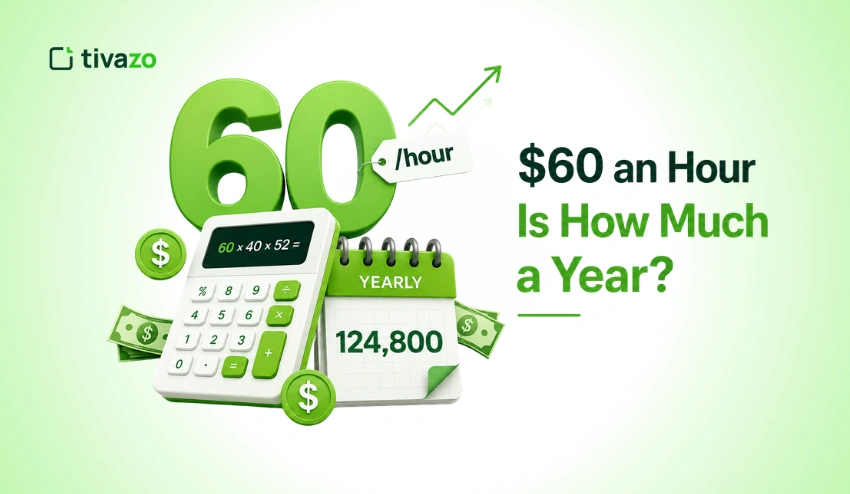
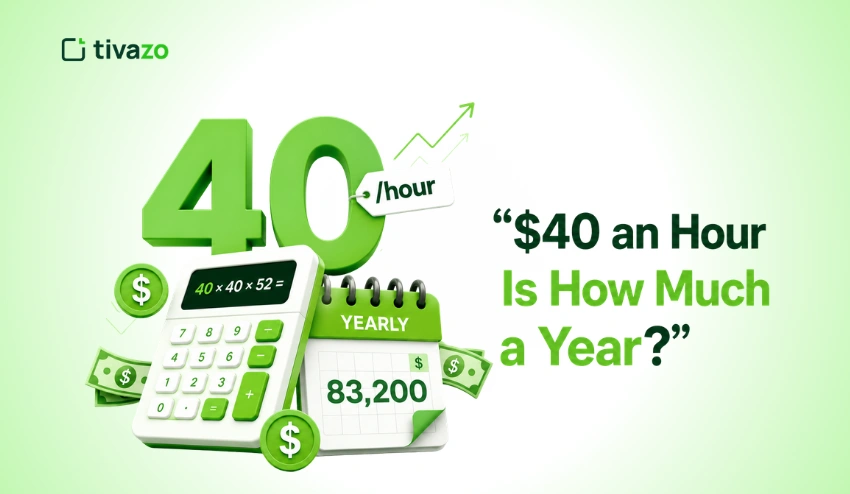
| $40/hour | $83,200 |
What This Comparison Shows
- A $5/hour increase from $25 → $30 adds $10,400/year
- A $10/hour increase from $25 → $35 adds $20,800/year.
- Even small raises compound into major annual gains
If you’re comparing job offers, you may also want to read:
These guides will allow you to understand the financial consequences of various incomes on your future financial growth.
Use Tivazo Hourly Salary Calculator
When manual calculations are made each time, it can become confusing, particularly when overtime, shifts, and schedules change.
That’s where Tivazo tools come in handy to make it easier.
Why Use the Tivazo Calculator?
With the help of the calculator you can use, Tivazo can help you:
- Calculate your annual salary instantly
- Convert hourly pay to yearly income
- Estimate monthly and weekly earnings
- Compare multiple job offers
- Plan budgets accurately
How It Helps You in Real Life
Instead of guessing:
- Should I accept a job for $25 an hour?
- How many dollars will I make each month?
- So what if I work overtime?
Conclusion
Therefore, $25 per hour is equivalent to how much per year?
The simple answer is
That totals to an approximation of $52,000 before taxes each year.
Which works out to:
- $4,333 per month
- $2,000 biweekly
- $1,000 per week
- $200 per day
But what you’ll really make depends on taxes, deductions, and lifestyle.
Knowing about these breakdowns will assist you in comparing job offers, budgeting, and making better financial decisions.
Easily determine your earning potential with Tivazo’s Hourly Salary Calculator and compare different hourly rates, schedules, and overtime scenarios.
If you want to simplify time tracking, payroll calculations, and workforce management, you can also try Tivazo for free.