Mandatory overtime is both a work requirement and a component that can influence an employee’s personal life and a business’s status of operations. Both employers and employees must understand the rules, legality, and effects of mandatory overtime. If handled incorrectly, mandatory overtime can have negative effects on work-life balance, employee morale, and productivity. So many organizations engage in mandatory overtime during busy seasons or emergencies that it is important for employees to know their entitlements.
This guide is meant to cover all aspects, including allowable hours, notice periods, and legal issues. We also address many frequently asked questions and provide tips for managing or avoiding mandatory overtime responsibly, while ensuring both compliance and employee health.
For both employers and employees, it is essential to have a clear understanding of mandatory overtime. You may want to ensure you’re compliant with labor regulations or simply understand your rights in the workplace. Understanding how mandatory overtime works can help you make informed decisions.
Defining Mandatory Overtime

Mandatory overtime refers to an employer’s requirement for employees to work beyond the scheduled hours required of them. In contrast, voluntary overtime is an optional choice for the employee. However, with mandatory overtime, the employee is required to work the mandatory overtime regardless of whether they want to. If the employee refuses to work overtime, the employer may follow the protocols outlined in their company policy or local labor laws, with possible disciplinary actions. Consider these 7 factors to help clarify mandatory overtime:
1. Mandatory Overtime
Employees must accept mandatory overtime requests unless authorized not to do so legally.
2. Pay for Overtime
Employers usually have to pay employees for working overtime, per labor laws.
3. Impact on Work-Life Balance
There can be too much mandatory overtime, leading to exhaustion, burnout, stress, and lower productivity.
4. Legal Requirements
Employers must comply with predominantly local laws on limits to hours worked and notification.
5. Industries with habitual mandatory overtime
Healthcare, manufacturing and other production workplaces, retail, and emergency services typically have mandatory overtime.
6. Employee Rights
Employees just need to be knowledgeable about their rights to refuse or bargain over overtime under certain conditions.
7. Business Need
Mandatory overtime is often used as a necessity of the business, for example, when an expanding project has urgent deadlines, or there is an unanticipated/undocumented shortage in staffing.
If all parties understand and can utilize these items around compulsory overtime, they can manage the inevitable better, maximize compliance, and enhance employee satisfaction.
Is Mandatory Overtime Legal In the US?
The legality of mandatory overtime is dependent on the country, state, and industry. In general:
In most cases, mandatory overtime is legal in the United States under the Fair Labor Standards Act (FLSA). An employer can implement an overtime policy requiring workers to clock in for more than 40 hours per week if they are compensated according to the overtime policy, which generally dictates that employees work overtime at 1 ½ times their regular pay rate (for non-exempt employees).
But the legality is subject to employment categorization and industry regulations:
- Non-exempt employees: Can be required to work overtime and must be paid overtime wages.
- Exempt employees: Employers can require overtime hours without additional pay for those who work in exempt positions, which have certain job duty requirements and salary thresholds.
- Special industries: Some industries, such as health, transport, and public safety, may have more requirements. For instance, the Department of Transportation (DOT) establishes limits on hours of service for truck drivers, and some states limit required overtime for nurses.
The overtime is legal, but it may be possible to argue over excessive or unsafe overtime under workplace safety laws or employment contracts.
Other Countries
Local laws can vary widely, so it is critical to know what your local labor laws state. For example, some countries limit the number of overtime hours an employee can work in a single week and may require the employee to “consent” to work overtime specifically.
How to get out of mandatory overtime?
There are a number of different ways to get out of mandatory overtime, depending on your contract, type of role, and local labor laws. Common approaches include:
- Check your contract: contracts may include limits on working time or voluntary overtime provisions.
- Determine exemption status: When exemption or non-exemption status is in question, a legal challenge to overtime may be warranted.
- Accommodation/exemption: Staff can apply for reduced overtime hours due to medical, family, or personal reasons.
- Representation by a Union: Collective bargaining agreements may also restrict the amount of overtime that is required.
- Express workload issues: In some firms, if workload is regularly excessive, it can be negotiated for hiring on to other workload or to increase the number of staff.
In a majority of at-will employment situations, refusing to perform work duties without legal or contractual justification may be subject to disciplinary measures, which is why it is important to know what your rights are before taking action.
What is the new law about overtime?
Changes in overtime regulations in the United States have been mainly salary threshold adjustments issued by the Department of Labor (DOL). These proposed changes are designed to broaden the overtime exemptions by raising the minimum salary level for overtime exemption.
Key points include:
- Increase salary threshold: The rule calls for an increase in the minimum salary for overtime employees, which would result in more employees receiving overtime pay.
- Adjusting thresholds more often: The DOL plans to periodically update thresholds to reflect inflation and wage increases.
- Additional personnel: Mid-level staff who are not traditionally covered, such as the majority of salaried employees, could be entitled to overtime pay.
In some cases, however, these changes have been challenged in court, and they have not been put into effect yet, so implementation dates may be different from state to state and depend on court decisions. Employers should watch for federal and state changes closely to stay in compliance.
The general trend of overtime law in the United States is to broaden the worker eligibility for overtime benefits and to tighten the standards of the law regarding wage protection. Enforcement of overtime law is evolving in the United States, but the direction is towards worker eligibility and stronger protections of workers’ wages.
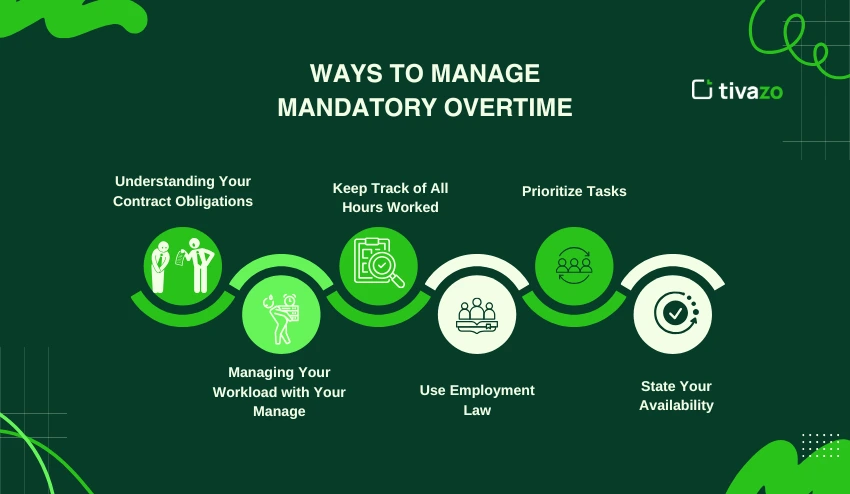
Ways to Manage Mandatory Overtime
As an employee, you may be able to manage your mandatory overtime or even avoid it altogether by:
1. Understanding Your Contract Obligations
It’s important to understand how things worked in your contract regarding working overtime. To understand your rights and obligations, you need to be clear about how often you may be required to work overtime and on what basis.
2. Managing Your Workload with Your Manager
Preparing for a discussion with your manager is a good approach to shifting the dialogue about mandatory overtime. If you can discuss your workload and suggest solutions to mitigate unnecessary overtime, it may be a way to find common goals between your manager’s needs and your well-being.
3. Keep Track of All Hours Worked
Document your timetable and hours worked to manage “out of control” mandatory overtime. Keeping records is valuable if you need to refer back to HR or management about discrepancies in overtime requests or hours worked.
4. Use Employment Law
Excessive or mandatory overtime can violate local/ provincial employment laws. Consult with HR or your local labor authorities to challenge or contest excessive overtime that breaches employment regulations. When you know your legal entitlements, you will equip yourself to better defend against poor practices.
5. State Your Availability
You can communicate, appropriately, your requirement for work/life balance by letting the supervisor/ department head know your limitations. The more aware they are, the less likely they are to consistently demand your involvement outside of planned working hours.
6. Prioritize Tasks
Ensure you are addressing priority tasks and not allowing additional hours to become mandatory to your work, which may save you hours from being included as well. Managing the tasks you have to complete may help limit mandatory overtime.
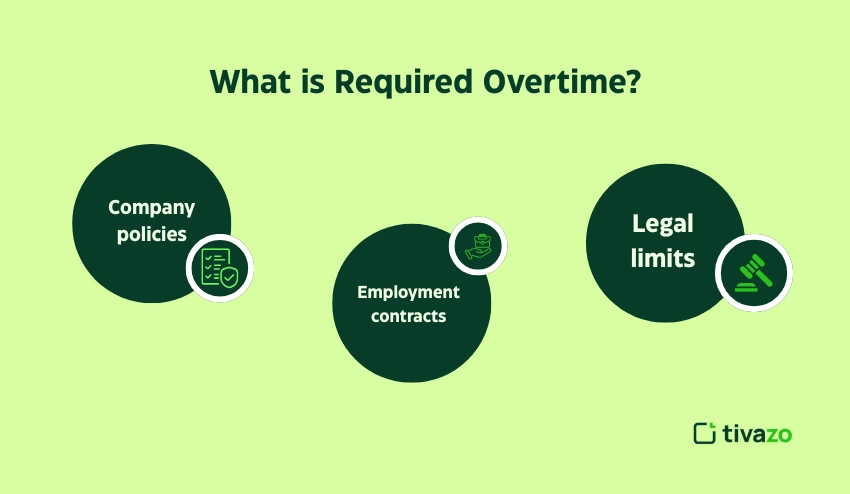
What is Required Overtime?
There are no limits on mandatory overtime; it depends on:
- Company policies
- Employment contracts
- Legal limits in your country or state
| Type of Employee | Overtime Threshold |
| Non-exempt employees | Over 40 hours of work weekly (FLSA) |
| California employees | Over 8 hours per day or 40 hours/week. |
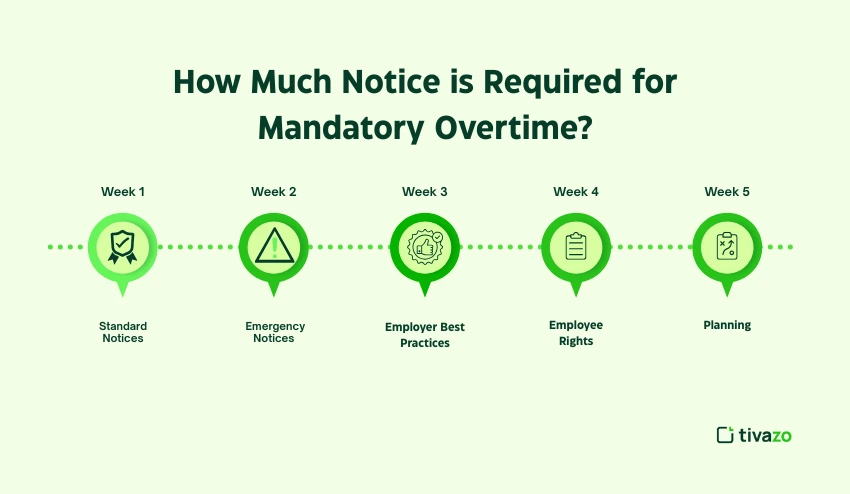
How Much Notice is Required for Mandatory Overtime?
Notice requirements for mandatory overtime depending on company policy, industry, whether one is unionized, and if there are local labor laws:
- Standard Notices: Some companies may let you know 24-48 hours in advance of the mandatory overtime. This way, you can organize your responsibilities to maintain your work-life balance.
- Short-Term or Emergency Notices: In some industries like healthcare, manufacturing, or retail, employers may send short-term notices for the mandatory overtime because of an urgent operational need or an unexpected staffing shortage.
- Employer Best Practices: While there are no regulations governing notice and/or limitations, communication is key. The employer should clearly define its policy on e in a collective agreement or employee handbook that delineates how much notice an employee may receive as one effective way of doing this.
- Employee Rights: Employees should be ”in the know” about their rights in terms of what notice they are entitled to have for overtime. Employees may be aware that excessive, short, or unreasonable notice might be contrary to the labor laws where they are working.
- Planning: Sufficient scheduling and forecasting time to alleviate unexpected imminent mandatory shifts can minimize unplanned last-minute overtime, benefit employees, and the employees’ agency.
By understanding what notices are reasonable about mandatory overtime, employees can better prepare to fulfill the unnecessary anticipated work demands, and employers can also ensure fairness while remaining compliant with working laws, and maintain the morale of all employees in the workplace.
Is Overtime Required?
Overtime can be required depending on:
- Employment contract
- Company policy
- Business needs (such as peak/busy times, emergency work)
Nevertheless, employees may have rights to refuse under certain labor laws and/or union contracts.
Ways to Avoid Mandatory Overtime
Employees can manage, as well as avoid, mandatory overtime by:
- Clarifying your Contract: Understand your rights and obligations regarding mandatory overtime. Read your contract to understand how often and under what conditions you can be required to work overtime.
- Talking About Your Workload: Your manager is responsible for managing the workload of their employees. Having an open discussion with your manager regarding your workload, the quality of your output, and ways to avoid mandatory overtime may be considered as potential improvements to heavy workloads.
- Keeping good records: Document your hours worked to protect yourself from the abuse of mandatory overtime. If situations arise that require talking with HR or management, your records will establish your written proof of concerns regarding mandatory overtime.
- Using labour laws: If mandatory overtime is excessive or more than is allowed under local policy, then consultation with HR, employee unions, or the governing authority may be appropriate in protecting your rights and entitlements.
- Creating boundaries: Be honest and sincere with your availability to avoid unnecessary overtime professionally.
- Prioritize and delegate important tasks: Concentrate on the most important task of the day and delegate as much as possible before working excessive hours.
- Creating flexible options: Offer flexible options such as shift exchanges, flexible hours, and remote options, which allow your employer to accommodate their business needs without excessive mandatory options, leaving disgruntled employees
By doing these activities and being mindful of their rights and employee wellness, employees can take proactive measures to reduce mandatory overtime in their lives while also ensuring they comply with labour regulations.
Can an Organization Mandate Overtime?
Yes, organizations can mandate their employees to work overtime for business needs. However:
- They must comply with laws regarding maximum hours.
- Compensation for all hours must be within legal parameters.
- Good communication and fair notice to the employee are critical for employee satisfaction and morale.
Can An Employer Make You Work Overtime Without Notice?
- Short answer is: Yes, by company policies and applicable laws, then maybe.
- Certain situations with an urgent business need will require immediate overtime.
- Best Practice: Designated notices for overtime, wherever possible, allow for legal compliance and give employees notice/morale.
Is Overtime Mandatory In California?
- Yes, it is mandatory at certain times: California law requires employees’ overtime pay at time and a half once they have worked eight (8) hours in a day or forty (40) hours in a work week, as specified in California law.
- There are exceptions to mandatory payment for overtime: For example, salaried employees or “exempt” positions may not be entitled to overtime pay.
- Employees should also understand their contracts, which typically outline employment status and refer to the California labor code for specific regulations.
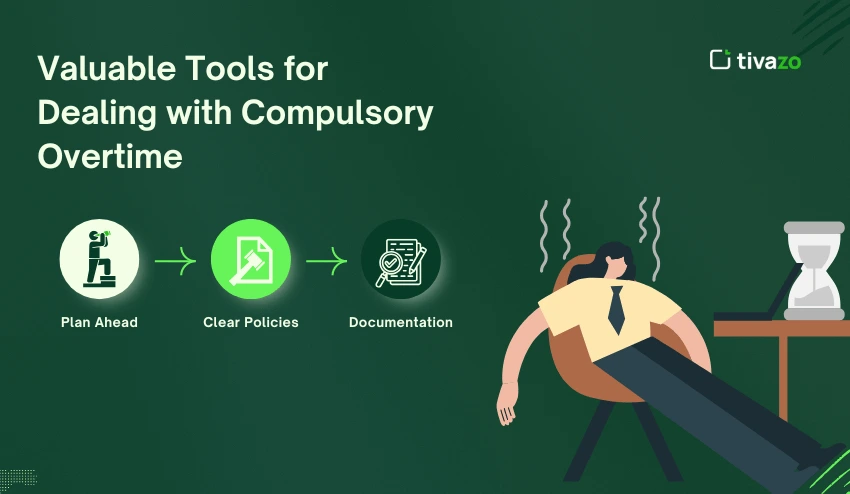
Valuable Tools for Dealing with Compulsory Overtime
- Plan Ahead: If your organisation is able, plan your projects instead of facing surprise compulsory overtime.
- Clear Policies: Create policies that clearly state your expectations for employees in relation to compulsory overtime.
- Documentation: Use an instrument (a timesheet, an ad hoc spreadsheet, or an application) that allows for the documentation of hours and for employees to be able to confirm their compliance with the organisation’s policy.
Be Attentive to the Well-Being of Employees: Monitor employee workloads and stress levels to ensure employees do not experience burnout.
Mandatory Overtime: Pros and Cons
| Pros | Cons |
| To accommodate urgent business needs | Employee fatigue, stress, and burnout |
| Increased productivity during times of need | Decreased motivation and job satisfaction |
| Ability to meet critical project deadlines | Risk of legal consequences if non-compliant with the current labor law |
Conclusion
Mandatory overtime is an important area for both parties to manage, with the employer and employee needing to fulfil their respective duties. For the employee, it is important to understand what one’s rights are when it comes to mandatory overtime. For example, notice, hours worked, and protection are important areas in preventing exploitation and maintaining a work-life balance. For the employer, it also needs to ensure there is compliance with labour laws, notify staff when members are required to work overtime, and ensure the workloads are planned to minimize unwanted overtime.
Employers should employ fair policies, accurately track hours worked, and offer options when reasonable to attribute in combating the drawbacks of mandatory overtime, improve job satisfaction, and maintain productivity in the workplace.