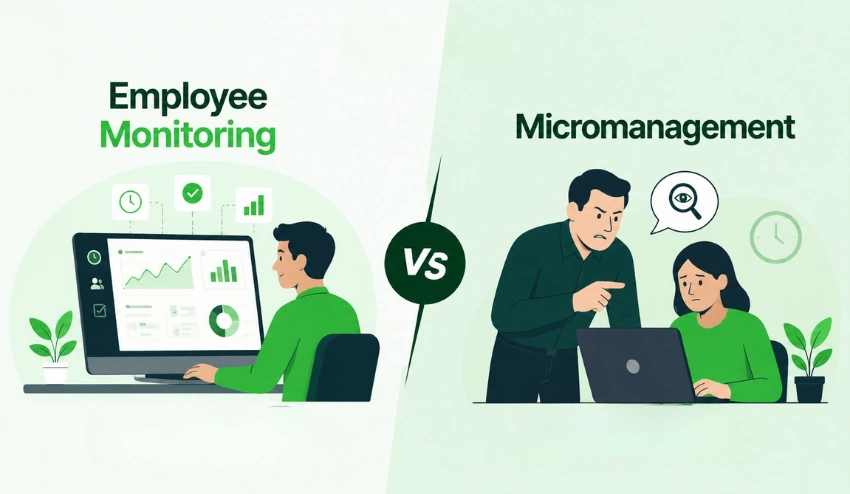
The workplace has transformed. In today’s digital workplace, where remote and hybrid teams, flexible work, and a digital culture are the norm, managers are rethinking their approach to measuring productivity and enabling employee performance.
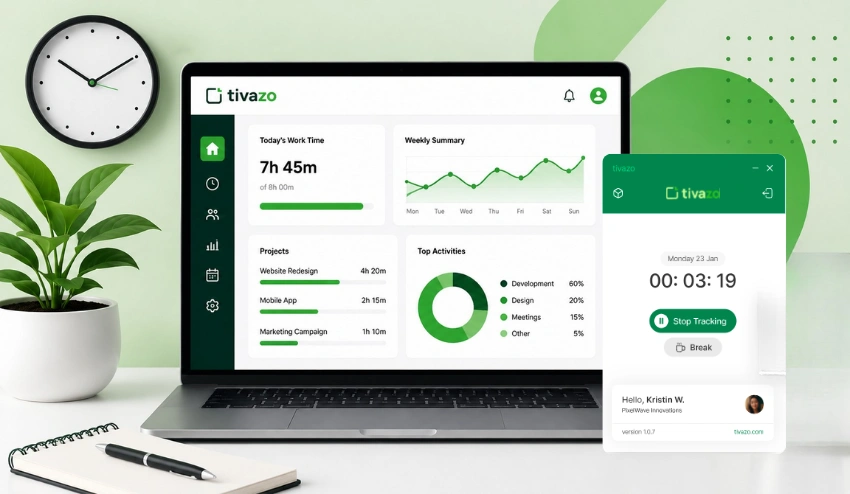
Employees are no longer being observed in a physical workspace, but rather employee monitoring software, time tracking, productivity analytics, and performance dashboards are being used to gain insight into how work happens.
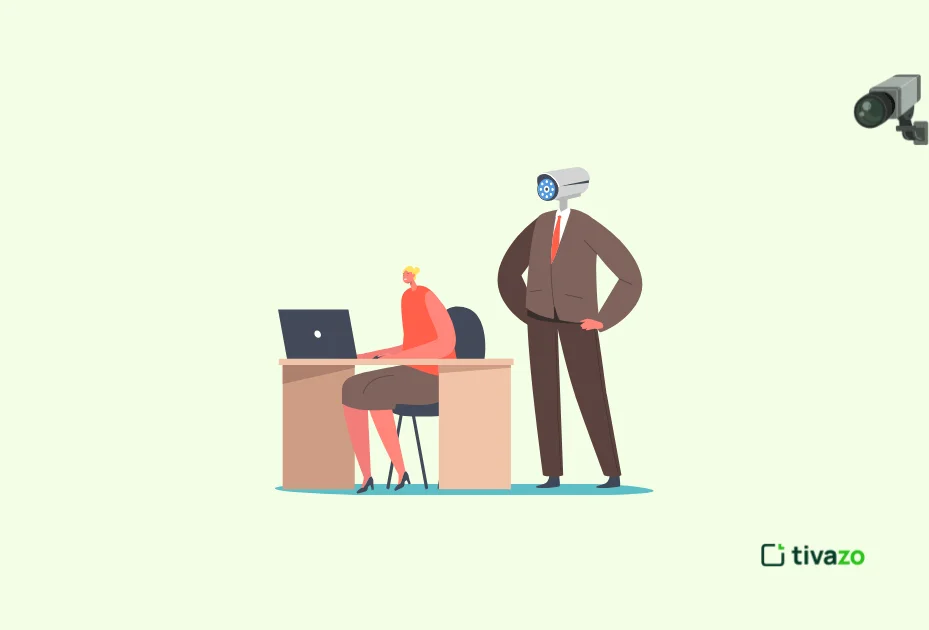
This change has also raised a pertinent question, though: is employee monitoring more than micromanagement?
Both employers and employees are concerned that the workplace is being monitored to the extent that every move is being tracked and that the reduction in supervision of the working environment will result in a drop in productivity or deadlines being missed.
The truth is a bit more complicated. Employee monitoring/micromanagement does not equal ethics. The first is based on transparency, accountability, and improvement. The other one comes from overcontrol, lack of trust, and too much interference.
The difference is vital and impacts more than just productivity indicators. It affects employee engagement, trust within the workplace, psychological safety, innovation, retention, and general culture.
Monitoring is a great tool for managers when it’s used appropriately to enable them to spot bottlenecks, to allocate resources better, to coach effectively, and to assist employees who are working remotely without an overbearing manager.
However, over-monitoring or over-accessing can affect employee morale and stress and can put employees on trial.
Today’s employees also expect greater transparency. They wish to understand what type of data is being collected, why, how it will be used, and how it will help them and the organization. To be trusted and held accountable, organizations need to practice these actions openly and communicate them.
Here are all the tips you’ll find in this extensive guide:
- What employee monitoring really means
- How micromanagement differs from healthy performance management
- The key differences between employee monitoring and micromanagement
- When monitoring becomes excessive
- The benefits of ethical monitoring for both employers and employees
- Real-world workplace examples
- Best practices for monitoring employees without damaging trust
- How modern employee monitoring software like Tivazo helps organizations improve productivity while respecting employee autonomy
If you’re an HR professional, founder, team leader, ops manager, or employee looking to better understand workplace monitoring, then this guide is for you to help you dispel the myths and help create a healthier, more productive workplace.
What Is Employee Monitoring?
Employee monitoring is the collection of work-related data to answer questions such as how employees spend their time at work, how they do their work, how they work with their teammates, and how they contribute to organizational goals.
It is a common misconception that ethical employee monitoring is the same thing as spying on employees.
It is about improving productivity in the workplace, supporting performance management, ensuring compliance, and making informed business decisions.
Today, organizations need not depend on manual supervision. Rather, they leverage technology to gain objective insights that help managers spot productivity trends, remove workflow bottlenecks, and better support employees.
Monitoring can be a valuable management tool, not a source of distrust, if it is transparent and consistent with clear workplace policies.
Why Do Companies Monitor Employees?
Organizations monitor employees for several legitimate business reasons, including:
- Improving workplace productivity
- Tracking project progress
- Supporting remote and hybrid teams
- Measuring billable and non-billable hours
- Simplifying payroll processing
- Enhancing resource planning
- Meeting regulatory and compliance requirements
- Identifying workflow inefficiencies
- Preventing time theft
- Providing performance coaching based on real data
The goal should always be to improve outcomes, not to control every action employees take throughout the day.
Types of Employee Monitoring
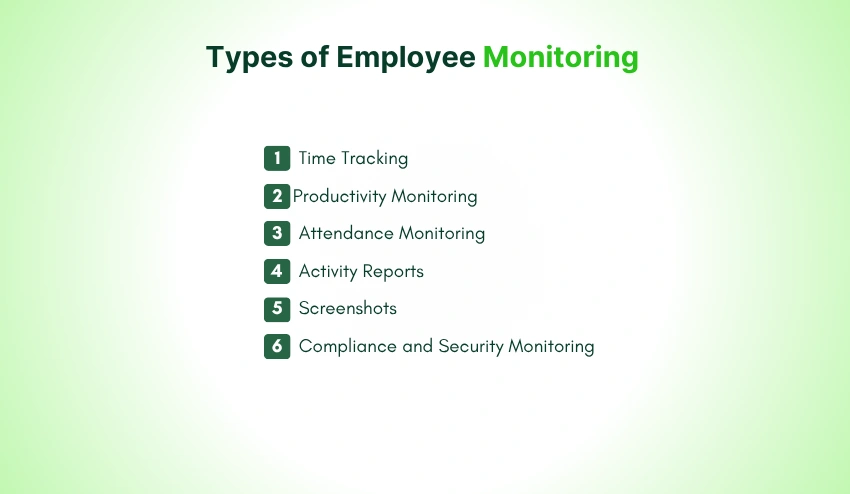
Different organizations measure different parts of work based on their business needs. Ethical monitoring is concentrated on work-related activities with regard to employee privacy.
1. Time Tracking
Time tracking is the recording of hours that employees spend working on projects, tasks, or clients.
It helps organizations to:
- Calculate payroll accurately
- Measure project profitability
- Understand workload distribution
- Improve project planning
- Reduce manual timesheet errors
Contemporary time tracking systems usually have automatic timers, idle time detection, and project-based tracking instead of requiring employees to log every minute manually.
2. Productivity Monitoring
Productivity monitoring analyzes work patterns instead of simply measuring time spent online.
Examples include:
- Active work hours
- Task completion rates
- Application usage
- Website usage
- Project progress
- Productivity trends
- Team workload
The emphasis should remain on understanding work habits rather than evaluating every mouse click or keyboard stroke.
3. Attendance Monitoring
Attendance tracking helps organizations manage:
- Clock-in and clock-out times
- Absenteeism
- Leave management
- Shift schedules
- Overtime
- Hybrid work attendance
Good attendance tracking helps with workforce planning, payroll accuracy, and compliance with labor policies.
4. Activity Reports
Today’s employee monitoring software generates reports that summarize employee activity over a period of time.
These reports may offer information such as:
- Hours worked
- Project allocation
- Task progress
- Productivity patterns
- Team utilization
- Capacity planning
Instead of focusing on specific cases, managers can use long-term trends to make better-informed and more equitable decisions.
5. Screenshots (When Appropriate)
Some monitoring software takes periodic screenshots of employees screens. In certain industries such as outsourced client work or highly regulated environments, this feature can be useful, but use it carefully.
6. Compliance and Security Monitoring
Organizations that handle sensitive customer data often monitor activity to comply with legal, contractual, or security requirements.
Examples include:
- Access logs
- File transfers
- Login history
- Device security
- Data access records
- Regulatory compliance reporting
In these instances, monitoring protects the organization and its employees against security risks and violations of compliance.
Ethical Employee Monitoring: The Foundation of Trust
The difference between helpful monitoring and harmful surveillance is in the way it is implemented.
The ethical approach to employee monitoring focuses on transparency, fairness, and respect for employees.
Organizations should clearly communicate:
- What information is collected
- Why the data is collected
- How long it is stored
- Who can access it
- How it benefits employees and the business
- Employees’ rights regarding monitored data
When employees understand the reason behind the monitoring, they are more likely to see it as a tool for collaboration rather than control.
Best Practice: Distribute your employee monitoring policy during onboarding and review it regularly. Transparency reduces uncertainty and builds trust, from day one.
Benefits of Modern Employee Monitoring
When implemented responsibly, employee monitoring offers measurable advantages for both employers and employees.
| Benefits | How It Helps |
| Better productivity insights | Identifies workflow bottlenecks and improvement opportunities |
| Accurate payroll | Ensures employees are paid correctly for hours worked |
| Fair performance reviews | Uses objective data instead of subjective opinions |
| Improved workload balance | Prevents employee burnout and uneven task distribution |
| Better remote work management | Keeps distributed teams aligned without excessive meetings |
| Enhanced accountability | Encourages ownership of responsibilities |
| Better coaching | Managers can provide personalized support using real performance data |
| Compliance | Helps meet labor, security, and industry regulations |
Employee Monitoring in Remote and Hybrid Workplaces
Remote work has changed the way organizations manage performance in a fundamental way.
Managers cannot rely anymore on visual supervision or chance encounters in the office to check progress. They want objective insights that are geared towards outcomes.
Modern employee monitoring software gives you visibility into remote and hybrid teams and helps them with:
- Work hours
- Project progress
- Task completion
- Team collaboration
- Productivity trends
- Resource allocation
Used transparently, these tools cut down on the number of status meetings and check-ins, give employees more flexibility, and keep managers in the loop.
What Is Micromanagement?
A leadership style that involves a manager being overcontrolling of their employees, watching them operate, and making decisions regarding what they do and their activities, rather than relying on their employees to make their own decisions.
While employee monitoring is about using objective information and transparency to bring about better performance, micromanagement is driven by a lack of trust and an over-dependence on control.
It is even more relevant in today’s remote and hybrid work environments. One common error many managers make is that they think if they can monitor or manage more, productivity will be better.
But the frequent check-ins, seeking permission for each decision, or tracking time spent on the job can backfire, leading to less trust for employees, sluggish decision-making, and unnecessary stress.
A healthy organization recognizes that accountability is achieved with clear expectations and measurable outcomes, not by watching all the actions being taken by the employees.
That’s why it’s important to understand the difference between employee monitoring and micromanagement before implementing any workplace productivity tools
Characteristics of Micromanagement
Micromanagement is a behavior. Not a technology. While one company can use modern employee monitoring software ethically and not micromanage, another company can micromanage its employees without the use of any monitoring tools at all.
Here are the most common traits of micromanagement:
- Constantly asking for progress updates without a clear reason
- Requiring approval for routine decisions
- Monitoring every small task instead of focusing on outcomes
- Interrupting employees frequently during focused work
- Correcting insignificant details unnecessarily
- Discouraging independent decision-making
- Measuring activity instead of results
- Overreacting to minor mistakes
- Focusing on hours worked rather than work completed
- Expecting employees to be available at all times
The Psychology Behind Micromanagement
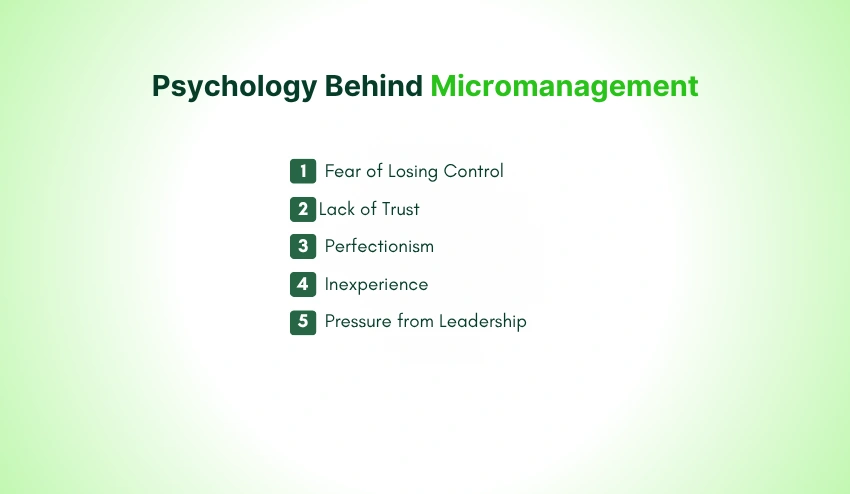
Micromanagement is not always done with ill will, it is sometimes motivated by psychological issues. Knowing these drivers can assist organizations in tackling the underlying causes.
1. Fear of Losing Control
Some managers think that if you can see it, then you must be productive. They may step up supervision when they can’t be physically present, particularly for employees working remotely, to bring a sense of control.
2. Lack of Trust
Managers who can’t trust their staff might feel they need to check on everything, thinking that their staff will slack off if they aren’t closely watched.
3. Perfectionism
Perfectionist leaders might think that there is one right way to do something. For this reason, they often interfere, even when staff is getting the job done right.
4. Inexperience
Sometimes, new managers mistake close supervision for effective management. If they are not trained, they can micromanage the staff, trying to show themselves accountable.
5. Pressure from Leadership
When managers are under unrealistic expectations for performance and have short deadlines, they might begin to impose stress on their staff members through excessive monitoring.
Once these psychological motivators are identified, it will be easier to overcome the urge to micromanage and adopt a coaching, trust-based, and effective approach.
Common Micromanagement Behaviors
If one or more of these warning signs are observed, watch for them:
- Inquiries that are repetitive and have no objective
- Scanning all emails prior to sending
- When moving jobs, and the jobs are not performed “your way”
- Discouraging independent decision-making
- Keeping track of the internet at all times!
- Contacting workers as soon as after short periods of work rest.
- Instead of measuring effort rather than results
- Giving too much information about “how-to” tasks
- Taking regular breaks from concentrated work to check in
- Mistakes and criticism instead of constructive feedback
These actions can actually be counterproductive and leave staff members more time reporting on the work than actually doing it.
Real Workplace Example
Scenario: Ethical Employee Monitoring
Time tracking software helps a remote marketing team to gain insight into how long campaigns take, discover workload imbalances, and enhance project planning.
Staff are aware of what information is being gathered, have access to their own report, and managers have monthly coaching sessions to talk about trends. The emphasis is on making things more efficient and ensuring that employees have the chance to develop.
Scenario: Micromanagement
Another manager expects his employees to be constantly connected to the messaging boards, wants to be notified every half hour, asks what they are doing when they are not, and analyzes screenshots looking for small things.
Distrust of employees, more meetings, and less productivity as people waste time explaining work.
Both have monitoring tools but a very different approach to managing them (and therefore to the experience of employees).
Employee Monitoring vs. Micromanagement: What’s the Difference?
An important misconception in today’s workplaces is that monitoring and micromanagement are synonymous.
Both require that employees performance be watched by their managers, but their intent, application, and effect on their employees are totally different.
The difference is not whether a company has monitoring software but how they are using it and the data produced.
When monitoring employees in an ethical manner, managers can gain accurate information about employee productivity, project progress, and workload distribution to help their staff, eliminate barriers, and make informed decisions. Too much control, too many interruptions, and not trusting lead to micromanagement.
A manager who monitors productivity trends weekly and looks for coaching opportunities is engaging in healthy monitoring of employees is an example of this.
On the contrary, a manager who monitors the screenshots each hour, inquires about every short break, and requires regular updates is micromanaging.
If you’re new to workplace monitoring, explore what employee monitoring software is to understand how modern tools help organizations improve productivity without compromising employee trust.
Employee Monitoring vs. Micromanagement: Comparison Table
| Factor | Employee Monitoring | Micromanagement |
| Purpose | Improve productivity, accountability, and business performance | Control employee behavior and daily activities |
| Management Style | Coaching and support | Excessive supervision |
| Trust Level | High trust with verification | Low trust and constant checking |
| Transparency | Employees understand what is monitored and why | Monitoring is often unclear or excessive |
| Employee Autonomy | Employees decide how to complete work | Managers dictate every step |
| Decision Making | Employees are empowered to make routine decisions | Managers approve even minor decisions |
| Performance Measurement | Focuses on outcomes and goals | Focuses on activity and presence |
| Technology Usage | Uses monitoring software for productivity insights | Uses monitoring tools to oversee every action |
| Feedback | Constructive coaching based on data | Frequent criticism and corrections |
| Communication | Scheduled check-ins and collaborative discussions | Constant interruptions and status requests |
| Employee Engagement | Encourages ownership and motivation | Reduces confidence and initiative |
| Stress Levels | Lower due to transparency and fairness | Higher due to constant pressure |
| Innovation | Encourages creativity and independent thinking | Discourages risk-taking and experimentation |
| Business Outcome | Higher productivity, stronger collaboration, better retention | Burnout, disengagement, and increased turnover |
Quick Summary
If you only remember one thing, remember this:
| Employee Monitoring | Micromanagement |
| Supports employees | Controls employees |
| Builds trust | Creates distrust |
| Focuses on outcomes | Focuses on activities |
| Encourages accountability | Encourages dependency |
| Uses data for improvement | Uses oversight for control |
| Promotes autonomy | Limits independence |
8 Key Differences Between Employee Monitoring and Micromanagement
Both are about supervision, but they are different in how they are utilized.
So let’s see some of the most crucial differences.
1. Purpose: Improvement vs. Control
The difference is the intention.
The job of employee monitoring is to:
- Improve workplace productivity
- Identify workflow bottlenecks
- Support employee development
- Balance workloads
- Improve project planning
- Make sure payroll and compliance are accurate.
Managers collect data to make better decisions—not to monitor every action.
There’s another goal to micromanagement, too.
Rather than streamline or refine work procedures, micromanagers pay attention to how employees do their work. Each task, decision, or even small activity must be approved; employees have limited space for independent thinking.
2. Trust vs. Suspicion
In order to build effective leadership, you must build trust.
Ethical monitoring organizations make the assumption that managers want to do a good job. Monitoring is just a mechanism for providing objective information to enable managers to provide better support.
The first step to micromanagement is suspicion.
When managers can’t keep checking the employee’s work, they assume it is not productive.
The absence of trust can render people vulnerable to:
- Frequent status requests
- Constant follow-ups
- Excessive oversight
- Reduced employee confidence
Treated employees will be more inclined to solve issues on their own, take initiative, and offer innovative ideas.
3. Transparency vs. Hidden Monitoring
Healthy monitoring is made clear.
Employees understand:
- What data is collected
- Why it’s collected
- How it’s used
- Who has access
- How it works to help the employee and the organization.
Organizations should establish a transparent time tracking system employees can easily understand, ensuring monitoring supports accountability rather than creating uncertainty.
This transparency is missing when it comes to micromanagement. Staff might think they are being monitored, but they might not know why and grow distrustful and uneasy.
4. Employee Autonomy vs. Constant Approval
Ethical monitoring allows for employee autonomy.
The manager sets goals, expectations, and deadlines and allows workers to be flexible in the way they complete their work.
This approach:
- Builds confidence
- Encourages innovation
- Improves accountability
- Develops future leaders
Without micromanagement, that independence will not exist.
Routine decisions require approval from the employee, which slows down the process and creates bottlenecks.
5. Outcomes vs. Activity
The primary difference between ethical monitoring and micromanagement is what managers decide to measure.
Healthy organizations evaluate:
- Project completion
- Work quality
- Customer satisfaction
- Collaboration
- Goal achievement
- Business impact
Some micromanagers tend to pay too much attention to:
- Mouse movement
- Keyboard activity
- Online status
- Immediate replies
- Minutes of inactivity
Just measuring activity does not necessarily indicate actual productivity.
Rather than that, organizations need to pay more attention to employee productivity tracking for meaningful insights on their work patterns, resource allocation, and overall performance, and not just when they’re working at that moment.
6. Coaching vs. Criticism
Monitoring data should enable managers to become better coaches.
Examples of productivity reports can include:
- Staff who require further training
- Teams who have too much to do.
- Projects experiencing delays
- Opportunities for enhancements to collaboration
This will allow managers to give specific coaching and support. The same data is often used in different ways by micromanagers.
7. Accountability vs. Dependency
Ethical monitoring helps to get employees to take responsibility for their work.
Managers set clear goals and review progress at predetermined points instead of checking on staff all day long.
Micromanagement creates dependency.
This takes away the decision-making process from employees who think that managers will check, correct, and/or cancel out any decision made by employees.
As a result:
- Innovation declines
- Productivity slows
- Managers become bottlenecks
- Employees lose confidence
8. Technology is neutral—leadership makes the difference.
Many people think that the use of employee monitoring software leads to micromanagement.
It doesn’t. Technology is just a means to deliver information.
For instance, a manager can use automatic time tracking to:
- Simplify payroll
- Improve project planning
- Understand workload distribution
- Generate productivity reports
- Reduce manual timesheets
Or they can misuse the same technology by making regular checks on activity, checking screenshots too often, and questioning each break.
Benefits of Ethical Employee Monitoring
Transparency, fairness, and respect for employee privacy in implementing employee monitoring are powerful levers to enhance workplace performance, not to control employees.
Ethical monitoring is not micromanagement, but rather it offers a set of facts to inform managers, allow them to grow, and foster a culture of accountability.
Monitoring data is used by modern businesses to find workflow bottlenecks, to balance workloads, and to enhance collaboration, particularly in remote and hybrid settings.
What successful organizations track instead of clicks and minutes of activity are meaningful performance indicators—such as project progress, task completion, and business outcomes.
If you’re considering the tools to help you do this, check out the benefits of employee productivity tracking and discover how data can prove to be a helpful tool to enhance employee productivity without compromising trust.
Key Benefits of Ethical Employee Monitoring
| Benefits | Why It Matters |
| Improves Productivity | Identifies workflow inefficiencies and helps teams stay focused on priorities. |
| Increases Accountability | Encourages employees to take ownership of their work through clear expectations and measurable goals. |
| Enhances Time Management | Accurate Time Tracking helps teams understand how work hours are spent and improves project planning. |
| Supports Remote & Hybrid Teams | Gives managers visibility into project progress without requiring constant check-ins. |
| Simplifies Payroll & Reporting | Reliable Timesheets and Report features reduce manual errors and ensure accurate payroll processing. |
| Provides Performance Insights | Data-driven coaching helps managers recognize achievements, identify skill gaps, and support professional development. |
| Reduces Time Theft | Ethical monitoring helps organizations address unproductive work patterns while promoting fairness across teams. Learn more about preventing time theft without damaging employee trust. |
Ethical Monitoring Creates Trust
Transparency is a key element in the success of any monitoring strategy. Staff should be made aware of the information that is being gathered, the reason for this, and how it will make their life easier and help the organization.
A clear and transparent time tracking process that employees respect fosters accountability and minimizes privacy and monitoring worries.
Tivazo employee monitoring solution, for example, is a tool that can supplement this strategy, as it tracks time, analyzes productivity, and offers performance insights, alongside ensuring communication and employee-friendly policies.
The intention is to enable managers to coach teams better rather than to micromanage and manage day-to-day.
Monitoring is not a tool to be used to control an organization, but rather a tool to be used for coaching and planning that can create a workplace environment that is conducive to accountability, trust, and long-term performance.
Negative Effects of Micromanagement
Ethical employee monitoring can lead to better team performance, but micromanagement can have the opposite effect.
Employees who require constant supervision, need frequent check-ins, and lack trust can very easily lose morale in the workplace and become unwell.
Rather than giving employees autonomy, micromanagement causes employees to feel they’re being monitored every move they make.
This leadership approach impacts the individual, team, innovation, and growth of the business over time.
How Does Micromanagement Impact Employees and Organizations?
| Negative Effect | Impact on the Workplace |
| Burnout | Constant pressure and supervision leave employees mentally exhausted. |
| Low Morale | Employees feel undervalued and lose enthusiasm for their work. |
| Higher Turnover | Talented employees are more likely to leave organizations where they lack trust and autonomy. |
| Reduced Creativity | Employees avoid sharing ideas or taking initiative because they fear criticism. |
| Lower Productivity | Frequent interruptions reduce focus and delay meaningful work. |
| Decision Fatigue | Employees become dependent on managers for routine decisions, slowing workflows. |
| Poor Employee Engagement | Lack of ownership decreases motivation and commitment to organizational goals. |
Real Workplace Examples: Employee Monitoring vs. Micromanagement
It’s simpler to comprehend the distinction between worker monitoring and micromanaging when you look at actual examples.
The same monitoring tool is being used in each of the examples below, but the manager’s approach creates a sense of support or control for employees.
Scenario 1: Remote Marketing Team
Ethical Employee Monitoring
Productivity reports and time-tracking data are used by a marketing manager to track the progress of a campaign during regular one-on-one meetings.
Staff are aware of what information is being gathered and how they apply these reports to better plan and manage their workloads.
Micromanagement
The manager asks for status every 30 minutes, inquires about screenshots all day long, and asks questions of employees if they haven’t had activity on their screens for several minutes.
Result: Using the first approach creates accountability and trust, using the second approach creates unnecessary stress and lowers productivity.
Scenario 2: Software Development Team
Ethical Employee Monitoring
Project hours are tracked automatically by the developers, and a review of milestones is conducted at the end of each sprint by the project manager. The team talks together about obstacles and solutions if delays arise.
Micromanagement
The manager must approve all the code changes, interrupts developers while they are doing focused work, and constantly demands progress reports.
Result: Developers lose faith and waste more time in explaining what they are doing than actually producing quality code.
Scenario 3: Customer Support Team
Ethical Employee Monitoring
A selection of customer interactions is checked weekly by managers for coaching opportunities and rewards for good service.
Micromanagement
All interactions with customers are tracked in real-time, and workers are immediately criticized about minor errors.
Result: Their workers get stressed and concentrate more on not making mistakes than on providing fantastic customer service.
Scenario 4: Sales Team
Ethical Employee Monitoring
CRM reports and activity dashboards help sales reps track pipeline growth and conversion rates. Managers coach according to trends in performance over time.
Micromanagement
Business managers must let employees know to report any phone call, email, or client contact upon completion.
Result: There are fewer hours in a day to report and more to sell.
Scenario 5: Hybrid Project Team
Ethical Employee Monitoring
Performance Insights, Timesheets, and Report features are used by project managers to manage workloads, recognize resource gaps, and offer support to members of the project team that may require extra help.
Micromanagement
Managers monitor online status throughout the day and assume employees are unproductive whenever they appear offline.
Result: Employees feel pressured to appear busy instead of focusing on meaningful work.
Learn how to monitor staff working from home without invading privacy to maintain visibility while respecting employee trust.
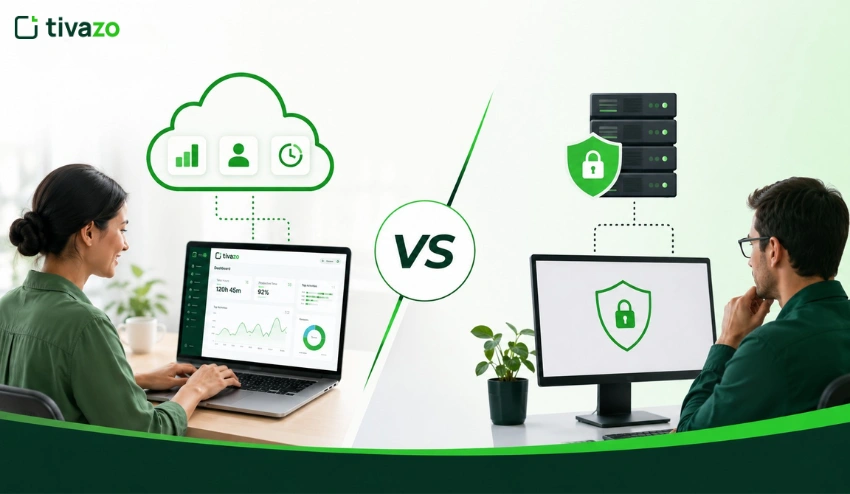
Employee Monitoring vs. Employee Surveillance
Although the terms are often used interchangeably, employee monitoring and employee surveillance are not the same.
Knowing this difference can help organizations with their ethical workplace practices and safeguard employee privacy.
| Employee Monitoring | Employee Surveillance |
| Focuses on improving productivity and performance | Focuses primarily on observing employee behavior |
| Transparent and communicated through company policies | May be continuous or more intrusive depending on the purpose |
| Collects only relevant work-related information | May involve extensive monitoring for security or legal reasons |
| Supports coaching, planning, and accountability | Often used for compliance, fraud prevention, or workplace security |
| Respects employee privacy and autonomy | Can raise privacy concerns if implemented without transparency |
When Is Employee Surveillance Appropriate?
Employee surveillance may be appropriate in situations where organizations need to:
- Secure business or customer information.
- Detect and deter fraud or unauthorized use.
- Satisfy legal and/or regulatory requirements.
- Investigate and report serious security incidents.
- Safeguard company assets and intellectual property.
In such cases, employers should make clear their policies for surveillance and make sure that monitoring is proportionate to their legitimate business needs.
Best Practice: Transparency is First
In the implementation of monitoring or surveillance, the organizations should always:
- Describe information gathered.
- State the intent behind collecting data.
- Get permissions, as necessary, per the law.
- Only monitor work-related activities.
- Securely store and manage employees’ data.
- Regularly review monitoring policies to ensure fairness and compliance.
But with ethical software like Tivazo employee monitoring, organizations can enhance productivity, streamline time tracking, and extract meaningful performance data without crossing the line into invasive monitoring.
Employee monitoring vs. employee surveillance is a comprehensive comparison of the two that explains the differences among them in legal, ethical, and practical terms.
Key Takeaway: Transparency, ethics, and outcome-based employee monitoring are most effective. The use of employee surveillance should be for a legitimate security or compliance purpose and should be communicated and respected regarding employee privacy.
Micromanagement
Managers check online status all day long and assume that when employees are offline, they are not being productive.
Conclusion
The distinction between Employee Monitoring vs. Micromanagement is crucial to creating a workplace that can be beneficial for both employees and businesses. Both are similar terms, but are vastly different management philosophies.
Transparency, trust, and accountability are the hallmarks of ethical employee monitoring. It can enhance productivity in the workplace, help manage remote and hybrid teams, simplify payroll, and enable coaching based on objective performance metrics.
If the employees know what this monitoring is and why it is undertaken, they will be less likely to view it as a surveillance tool and more likely to see it as a growth tool.
But with micromanagement, the result is the reverse. Over-involvement, frequent interruptions, and lack of trust lead to decreased employee engagement, decreased creativity, high employee burnout, and lower overall team performance.
Micromanagement prevents ownership and hampers decision-making, rather than creating it.
The most successful organizations look at results rather than at continuous observation. Clear communication, fair monitoring policies, and the use of modern productivity tools can help businesses foster a culture of trust, support, and motivation among employees, allowing them to perform at their best.
When it comes to enhancing efficiency while respecting employee privacy and autonomy, the Tivazo employee monitoring solution is a perfect mix of automatic time tracking, productivity insights, performance reporting, and workforce analytics for organizations seeking solutions that foster transparency instead of control.
The bottom line isn’t to ‘watch’ employees more closely, it’s to help them work smarter, collaborate more effectively, and produce impactful results.
That is the difference between Employee Monitoring and Micromanagement, and that’s the basis of a productive and trusting workplace.