One of the biggest challenges in modern workplaces is employee accountability. Missed deadlines, unclear responsibilities, low productivity, and poor communication are common in many remote and hybrid teams. Trust erodes fast when managers can’t see how work is progressing.
That is why more businesses are using time-tracking and productivity tools nowadays to enhance workplace accountability without always needing to supervise.
What Is Employee Accountability?
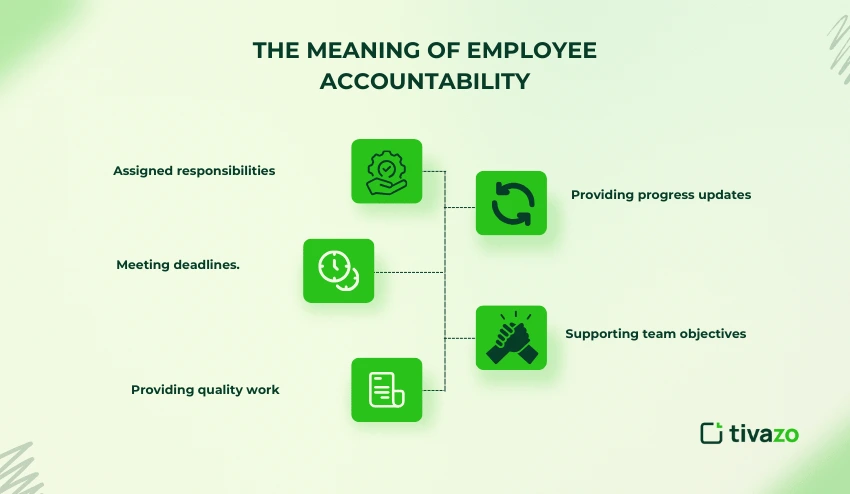
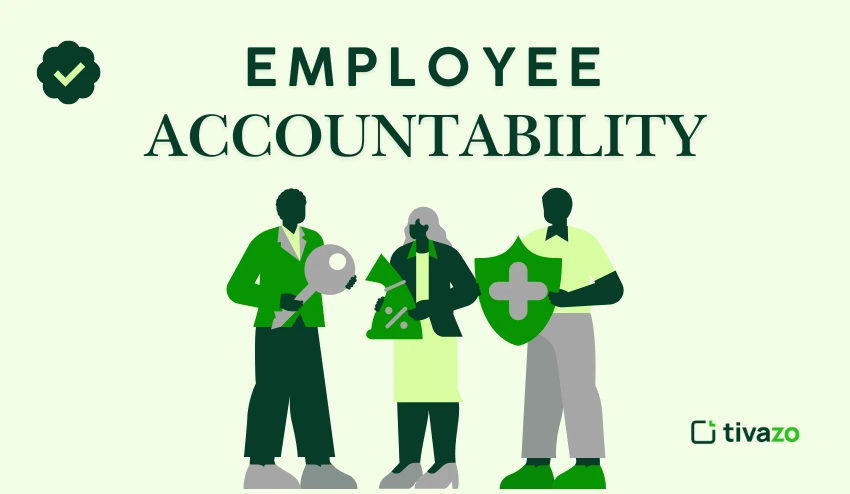
Employee accountability is when employees take ownership of their work and its results in the workplace.
That means employees:
- Perform assigned duties
- Meet deadlines
- Adhere to company policies
- Share advancements
- Take responsibility for mistakes
- Contribute to team goals
Accountability isn’t about blaming employees. “It’s about creating a work culture where everybody knows their part, and everybody is doing their part all the time.
A Simple Workplace Example
Picture a remote marketing team.
Without accountability:
- Tasks are delayed
- The status of the project is not known.
- Meetings don’t work.
- Team members blame each other
With Accountability:
- Everyone can easily track progress
- Managers get updates on the workload
- The deadlines are sensible
- Better communication
This is the very reason why accountability at work directly affects productivity and business growth.
Why is Accountability Essential for Employees?
Accountability is far more than just another management trend. When a team has employees who can take ownership of their roles and tasks, it has tangible business benefits:
Productivity increase: Visibility into everyone’s tasks has a great way of keeping people focused, not out of fear of surveillance but out of clarity that makes tasks progress.
According to Harvard Business Review, clear accountability and ownership help teams improve performance, trust, and workplace communication.
Using tools to track employee work hours automatically helps managers understand where time is spent and where productivity drops.
Deadlines get met: Team deadlines are consistently met, as the employees are well aware of what they and their coworkers are accountable for, ensuring no balls are dropped.
Trust increases: Teams that consistently follow through on tasks they claim boost confidence. People are less likely to worry about who is responsible for carrying weight when others always follow through.
Payroll accuracy: From hourly worker data to client billing, especially in situations where tools like a time card calculator or overtime calculator are needed to track work time precisely, the results are higher payroll accuracy and fewer discrepancies.
Remote team productivity: Even without being in the office with staff all day, accountability is key to ensuring that employees stay on track through visibility into their work hours and task progress.
Accountability transforms teams from simply being in operation to truly excelling.
6 Common Accountability Issues at Work
Before you solve the problem, it helps to call it out. Here are the most common team accountability issues:
1. Missed deadlines without prior warning: The blockers don’t get flagged in advance, so by the time a manager hears about a problem, it’s already too late to fix it.
2. Unclear task ownership: “I assumed they would take care of it.” This results in tasks getting neglected.
3. Bad communication: Everything is done during meetings. Progress is assumed, and not explicitly communicated. Problems only surfaced when they reached crisis proportions.
4. Lack of transparency: Managers lack visibility into how time is spent, and remote teams are prone to the “out of sight, out of mind” accountability problem.
5. Inconsistent standards: One employee is expected to perform higher than another, creating a culture where accountability is seen as a punishment, rather than a profession.
6. Inefficient or absent tracking tools: Using spreadsheets and email threads to manage work is more guessing than accountability.
How Does Time Tracking Improve Employee Accountability?
This is where the real fun happens:
Time tracking is one of the single greatest accountability measures you can implement, not because you are watching your team, but because it creates transparency for everyone.
This is how it works:
1. Transparency builds accountability: When your team tracks their hours, they start to become naturally mindful about how they are spending their time. A manager doesn’t need to chase them for updates.
2. Data takes the place of guesswork: Rather than wondering who is taking on too much or who isn’t contributing, you have real data. This takes personal emotions out of conversations and makes them objective.
3. It will allow you to distribute the workload effectively: Knowing how long tasks take allows you to allocate assignments evenly. No one will quietly be taking on too much workload, and burnout will decrease.
4. It allows for performance monitoring: Managers will quickly see trends, the employees who consistently meet deadlines, the processes that slow people down, and the projects that consistently run over time.
5. It cultivates self-awareness: Most employees have no idea where their time goes and are shocked by time tracking – but in a good way! They don’t view it as punishment.
Especially for remote teams, employee monitoring software instills the structure that a physical office naturally builds.
To figure out how to do it, have a look at our in-depth guide on how to track employee hours automatically.
8 Best Strategies to Improve Employee Accountability
1. Be transparent from day one
The first place for accountability is at the start of the workday. If employees don’t have a clear idea of their responsibilities, you can’t hold them accountable.
Be specific about roles and tasks: Assign roles and responsibilities in project briefs, shared task boards, and onboarding checklists. Eliminate all ambiguity.
2. Set clearly defined performance indicators
Accountability that is vaguely worded will be vaguely enforced. Instead of “improve customer response time,” write “respond to customer service issues within four hours.”
When you have specific and measurable targets, it’s easy to track your progress and have honest conversations if performance is slipping.
3. Track time using automated tools
When it comes to logging hours, manual timesheets can be unreliable. Automated timesheets will track your hours accurately, whether you have a good memory or are genuinely busy.
Tools such as Tivazo work silently in the background. The advantage for managers is instant, up-to-the-minute visibility, and for employees, proof of time spent working. A simpler starting point might be clock-in clock-out apps for the more straightforward teams.
4. Use a timer for focused sprints
Being focused and using time effectively requires structure. Use an online Pomodoro timer or an online timer to encourage people to work in focused time chunks.
Small habits, when accumulated over time, create a culture where focus and effort become part of an individual’s routine.
5. Provide consistent and specific feedback
Without feedback, accountability can easily fade into oblivion. Employees may assume that it doesn’t matter if they miss the deadline if no one says anything.
Make feedback as specific as possible. Avoid vague generalities and comment on the specific task and its outcome, rather than on the individual worker.
6. Implement effective communication protocols
Make updates a norm. Having a company-wide expectation like ‘update your task status daily by 5 pm means that nobody needs to ask ‘do you know that I’ve completed this?’
Use asynchronous communication methods to ensure that people don’t have to be in front of their screens at the same time. Task boards, shared documents, or short video updates could all work.
7. Foster accountability over compliance
Don’t make people feel as though they are being monitored; instead, instill a sense of being trusted.
When employees understand how their individual accountability benefits the rest of the team, customers, and the business as a whole, it becomes a positive characteristic that they adopt naturally.
8. Simplify timesheet submissions
If employees find it inconvenient or overly complex to log their time, it won’t get done.
Using automated timesheet and report tools and processes makes it incredibly easy for people to verify and submit their timesheets with minimal hassle.
Manual Tracking vs. Automated Time Tracking: A Comparison
| Feature | Manual Tracking | Automated Time Tracking |
| Accuracy | Low, prone to errors and guesses. | High, real-time, precise data |
| Effort required | High, employees must remember to log | Low runs automatically |
| Scalability | Hard to manage beyond 5–10 people | Scales to teams of any size |
| Reporting | Manual compilation is slow. | Instant reports, visual dashboards |
| Transparency | Limited, managers rely on trust alone. | Full visibility across the team |
| Accountability | Inconsistent | Built-in by design |
| Payroll accuracy | Errors common. | Accurate, auditable records |
The data is clear: manual tracking creates more work and less accountability. Automated tools solve both problems at once.
6 Common Mistakes Companies Make with Accountability
Even the best-intentioned managers can inadvertently kill accountability in their organizations. Beware of these:
1. Micromanaging instead of trusting: Over-monitoring is a sure way to let people know you don’t trust them, and resentment and inaction will be far more prevalent than productivity. Accountability comes in the form of results, not hovering.
2. Tracking without understanding: The fact that an employee tracked for six hours doesn’t say very much at all without context or actual task completion.
3. Not enforcing consistency: This only leads to a political environment where accountability isn’t equal, and then the entire point is lost. Hold everyone to the same standard and to the same rules.
4. No feedback loop: If you are not talking about that data and using it to build better one-on-one meetings or team reviews, then what is the point of tracking time at all?
5. Not monitoring time theft on remote teams: Buddy punching, exaggerating hours, or idle time are all problems and are even more pronounced on a remote team, but don’t require building a surveillance culture, you just need to use the right kind of tool to detect this sort of thing.
6. Choosing the wrong type of tool: Just because you’re buying a time-tracking software doesn’t mean that it’s the best tool for your specific team.
Why Modern Teams Use Tivazo
Tivazo is specifically designed for the kind of accountability issues this post discusses.
It provides managers with a view into how teams spend their time without being overly intrusive or becoming a spying mechanism. The specific reasons teams use it include:
Employee time tracking: Automated time tracking means you will not miss employee working hours or have incorrect timesheets.
Productivity monitoring: Teams can see productive and focused work hours. Productivity insights provided by Tivazo give managers context for all work that is being done.
Screenshot activity: Clients often ask for a log of the tasks that were completed over a specific period of time. Using this software, employers will automatically log the progress made by employees with optional screenshots.
Team management: Manage schedules, shifts, project assignments, and more within built-in team management tools.
Reporting: Generate reports for employees, for example, payroll and client billing or employee reviews, in just minutes.
Non-intrusive employee monitoring: Tivazo employee monitoring software will always inform employees that their monitoring is turned on. Employees can even see their own information on their screen to build trust.
Many businesses use Tivazo for employee monitoring software and have improved their overall team responsibility without the use of overly intrusive monitoring tools.
Conclusion
Accountability isn’t built overnight, and it certainly isn’t built on a bed of surveillance.
Accountability is built on a foundation of clear expectations, honest communication, predictable patterns, and the tools to ensure visibility throughout.
When employees know what their responsibilities are and managers can support the conversation with data, the whole team will improve.
So what now? Just pick one thing from the strategies in this guide and try it this week. Clear out task ownership, implement a lightweight time tracking tool, or start a daily stand-up habit. Small, consistent wins are the foundation for a cultural change, and everything else falls into place from there.
If you’re looking for an actionable place to begin, check out time tracking and accountability tools like Tivazo, designed for actual teams and not just corporate dashboards.