Time management is not about fitting more into your day. It’s about using your time more deliberately to focus on what’s most important, to reduce stress, and to work more efficiently.
The right time management method will help you plan better, avoid distractions, stay consistent, and not feel overwhelmed. Whether you’re a student, employee, freelancer, or manager, the right system can make a massive difference in how productive and in control you feel.
In this guide, we will go over the best time management methods, how they work, and which tools can help you better implement them in everyday life and at work.
Quick Answer
Time management methods are organized systems that help people plan, organize, and get tasks done faster. Known methods include the Pomodoro Technique, Time Blocking, the Eisenhower Matrix, Getting Things Done (GTD), the Pareto Principle (80/20 Rule), and the ABC Method.
The best way depends on your work style, responsibilities, and goals. When combined with a solid time tracking solution, they can help improve focus, reduce procrastination, increase productivity, and create a better work-life balance.
What is Time Management?
Time management is the process of planning and organizing how to divide your time between specific tasks effectively. It helps individuals prioritize important activities, reduce stress, increase productivity, and achieve both personal and professional goals. By mastering time management, you can work smarter, meet deadlines consistently, and make more time for what truly matters.
What Are Time Management Methods?
Time management is the process of planning and exercising conscious control over the time spent on specific activities. It helps you work more efficiently within your available hours and not just respond to everything last-minute.
Good time management isn’t about working faster. It’s about picking what’s worth your attention, prioritizing, and using your time in a way that gives you better results with less stress.
When people manage time well, they are usually better able to:
- meet deadlines consistently
- reduce procrastination
- focus on important work
- create balance between work and personal life
- improve productivity without feeling constantly rushed
Why Time Management Matters
Time management matters because time is one of the few resources you cannot recover once it is gone. How you use it affects your productivity, stress levels, work quality, and even your overall well-being.
Without a clear system, it becomes easy to lose time to distractions, poor planning, and constantly shifting priorities. Over time, that can lead to missed deadlines, unfinished tasks, and burnout.
With better time management, you can:
- get more done with less pressure
- stay focused on high-value tasks
- make room for breaks and recovery
- improve consistency in your work
- feel more in control of your day
In short, time management is not just about efficiency. It is about creating a more sustainable and productive way to work.
How to Build a Sustainable Time Management System?
A productive day is not built by working longer hours; it is built by using a sustainable time management system that you can keep up with consistently. Rather than jumping from one productivity method to the next every week, choose a method that fits your workflow and improve it.
Figure out your most important tasks. Schedule time to get into flow. Review your progress at the end of each day. A weekly review also helps you to re-prioritize and eliminate activities that are not helping you meet your goals.
With a digital Time Tracking solution, you can see where your time is going and what is distracting you and make a better call about how you plan to spend it. By integrating time tracking with Performance Insights, teams can optimize their productivity even more, providing managers with a clear view of workloads and performance trends.
Bites of sustainability should additionally contain routine rest breaks, sensible deadlines, and adaptability for unexpected work. These habits, over time, form a regular workflow that can lead to a greater level of productivity without added stress.
How to Choose the Right Time Management Method?
There are numerous productivity systems around, and you may think that one is effective for everybody. In practice, the ideal time management technique is going to vary according to the different working styles, duties, and difficulties you encounter on a day-to-day basis.
An exam revision student, a project manager with several teams, and a freelancer managing several clients will have different time management strategies.
Take the time to find out what is getting in the way of your productivity before you select a method. Do you frequently put things off? Have trouble prioritizing?
Do meetings and interruptions consume so much of your time you have little time for focused work? Knowing what you’re looking to overcome will help you choose the right approach that will help you achieve results, rather than bouncing between different productivity systems.
Choose the Best Time Management Method Based on Your Needs
| If You… | Recommended Method | Why It Works |
| Frequently procrastinate | Pomodoro Technique | Breaks work into short focus sessions, making it easier to get started and stay motivated. |
| Have too many priorities | Eisenhower Matrix | Helps separate urgent tasks from important ones so you can focus on high-impact work. |
| Miss deadlines | Time Blocking | Reserves dedicated time for important tasks and reduces distractions. |
| Manage multiple projects | Getting Things Done (GTD) | Organizes complex workloads into clear, actionable steps. |
| Spend too much time on emails or meetings | Task Batching | Groups similar tasks together to minimize context switching and improve efficiency. |
| Need better long-term planning | SMART Goals | Creates clear, measurable objectives that keep your daily work aligned with larger goals. |
Time management is an art that is developed through practice, and the proper technique should make your work easier, not harder.
Before you start to implement a new productivity system, you might want to read our article on common time management problems if you are still struggling with being unproductive, poor time management, or missed deadlines.
How to Prioritize Tasks Effectively?
Being unproductive is not a problem of time, it’s a problem of priorities. All tasks can appear pressing, however, not all are worthwhile.
To begin with, find out what activities are most important for your objectives. The Eisenhower Matrix is one way to distinguish urgent work from important work, and the ABC Method is one way to prioritize work.
The Pareto principle may indicate that in many cases 20% of your activities contribute to 80% of your outcomes, leaving you with an easier choice of which 20% to concentrate on. When workloads are visible, it’s even simpler for teams to prioritize.
Team Management software enables managers to distribute work efficiently and avoid workload imbalances and bottlenecks that might stall productivity. Don’t make one list of things to do; look at priorities every day. Little tweaks made daily will make sure your most important work is always done first.
What is the ABC method of time management?
The ABC technique of time management is an excellent time management method that is aimed at assisting individuals in prioritizing their tasks depending on their urgency and significance. This method helps professionals, students, and any other individual who wants to be more productive to concentrate on the important things by dividing the tasks into three categories: A, B, and C.
- A Tasks (High Priority): These are urgent tasks that are to be done at once. These tasks can have severe consequences if they are missing or delayed. As an example, deadlines, urgent client requests, or a project report.
- B Tasks (Medium Priority): These are not urgent but important jobs. The completion of these should follow the A tasks. B tasks usually involve preparation, scheduling, and planning tasks that facilitate general productivity.
- C Tasks (Low Priority): These are small tasks that are not urgent and not very important. This can be checking normal emails, arranging files, or other non-important administrative duties.
Upon applying the ABC technique, you can simplify your task management system, reduce procrastination, and become more efficient. This way, by simply knowing what tasks need to be prioritized and what ones can be postponed, you will be able to maximize your output and make more out of your working time.
Numerous practitioners use the ABC technique together with other time management techniques, such as the Eisenhower Matrix or the Pomodoro Technique, to develop an effective productivity system. By adopting this approach in your day-to-day activities, you will be able to prioritise, handle your workloads efficiently, and reach your goals quickly.
Importance of Time Management Methods
Time management methods are a key factor in the realization of individual and work objectives. By getting to know how to plan, prioritize, and allocate time effectively, people can maximize the use of their days and minimize needless stress.
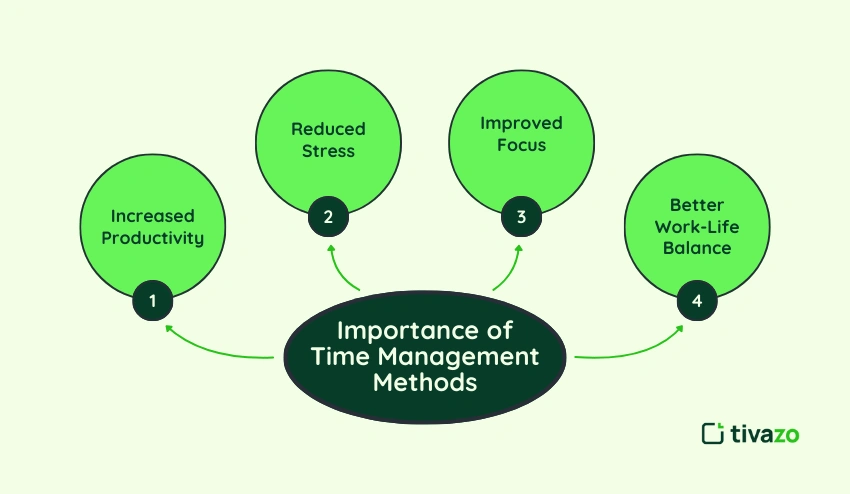
1. Increased Productivity
The adoption of effective time management methods enables people to plan their work and establish priorities. By prioritizing high-impact activities and reducing the time spent on low-value work, you will be able to accomplish more within a shorter time and can achieve measurable results.
In addition, organized systems such as time blocking or the Pomodoro Technique will allow dividing the work into small portions, which will not be overwhelming and will allow making steady progress on priorities. Based on research conducted on productivity, the above strategies can help to increase productivity by up to 25%.
2. Reduced Stress
Effective time management methods can eliminate last-minute rushes and missed deadlines, resulting in a more relaxed workplace. When planning is done in advance, it is easier to handle the responsibilities without being overwhelmed.
Other strategies, like scheduling, prioritization, and task batching, can enable people to plan work so that they can know when the workload is likely to peak and how to use their time. This alleviates stress, sharpens the mind, and makes one calmer in the way they handle their day-to-day duties.
3. Improved Focus
Time management methods will promote increased focus on important tasks since distraction and multitasking will be discouraged. This makes it so that the focus is on activities that are of utmost value.
Tools such as the Eisenhower Matrix can help understand the difference between urgent and important tasks and remain focused on what really matters. The ability to stay focused using systematic techniques makes it more accurate, minimizes errors, and increases the overall performance of the task.
4. Better Work-Life Balance
Efficient time management methods enable people to devote time to their professional and personal lives, which leads to a healthier lifestyle. The setup of free time and recreation ensures that individuals are able to rejuvenate without compromising their productivity.
Avoiding burnout by managing work and personal life is an efficient way of maintaining long-term efficiency. Tools and techniques, such as daily planning or time blocking, can help to establish a proper schedule that will help to balance career and well-being.
Introduction of time management methods in everyday activities not only improves productivity but also improves the overall quality of life. These strategies will help individuals to work smarter, lower stress, and healthily balance work and personal obligations.
You May Also Like: 6 Reasons Why Work-Life Balance Is Important
Signs You Need a Better Time Management System
Are you feeling like you don’t get any rest during the day and are having trouble getting things done? If that’s the case, you may have an inefficient time management system.
If you’re able to see these signs early, you can pick the time management approaches that will enable you to be more effective and less stressed throughout the day.
Here are some of the typical indicators that you need to get better at time management:
- You often miss deadlines because tasks aren’t planned or prioritized properly.
- Your to-do list keeps growing, making it difficult to focus on what matters most.
- You multitask frequently but accomplish very little, leading to mistakes and reduced productivity.
- You feel busy all day without making real progress, often spending too much time on low-priority tasks.
- You regularly forget important tasks or meetings, creating unnecessary stress and last-minute work.
- You struggle to maintain a healthy work-life balance, with work spilling into your personal time.
If you can relate to several of these challenges, don’t worry—you’re not alone. The good news is that the right time management techniques can help you organize your workload, improve focus, and achieve more without working longer hours.
8 Best Time Management Methods to Boost Productivity
There is no single time management method that works for everyone. The best approach depends on your workload, the type of tasks you handle, and how you prefer to work.
Below are some of the most effective time management methods used by professionals, students, and teams to improve focus and productivity.
1. Pomodoro Technique
The Pomodoro Technique breaks work into short, focused sessions, usually 25 minutes long, followed by a short break. After several work sessions, you take a longer break.
This method works well for people who struggle with procrastination or find long work sessions mentally draining.
Why it works:
- makes large tasks feel easier to start
- encourages focused work in short bursts
- helps reduce mental fatigue
- creates a clear rhythm between work and rest
Best for:
- students
- writers
- remote workers
- anyone who gets distracted easily
2. Time Blocking
Time blocking means dividing your day into dedicated blocks of time for specific tasks or categories of work. Instead of reacting to tasks as they come up, you decide in advance when each type of work will happen.
This method is especially useful for people with busy schedules or multiple responsibilities.
Why it works:
- gives your day more structure
- helps protect focused work time
- reduces multitasking
- makes priorities more visible
Best for:
- managers
- founders
- busy professionals
- people who handle many different responsibilities
3. Eisenhower Matrix
The Eisenhower Matrix helps you prioritize tasks based on urgency and importance. It divides work into four categories:
- urgent and important
- important but not urgent
- urgent but not important
- neither urgent nor important
This method helps people spend less time reacting and more time focusing on work that actually matters.
Why it works:
- improves prioritization
- reduces time spent on low-value tasks
- helps separate urgency from importance
- supports better decision-making
Best for:
- leaders
- decision-makers
- people with overloaded task lists
4. Getting Things Done (GTD)
Getting Things Done, often called GTD, is a productivity system built around capturing tasks, organizing them clearly, and deciding what to do next based on context and priority.
Instead of trying to remember everything, you move tasks into a system you can review and act on.
Why it works:
- reduces mental clutter
- helps manage large numbers of tasks
- improves organization
- makes next actions clearer
Best for:
- professionals with many responsibilities
- project managers
- people who feel overwhelmed by too many open tasks
5. Task Batching
Task batching means grouping similar tasks together and completing them in one focused session. For example, instead of answering emails throughout the day, you might handle them during one or two dedicated periods.
This method is useful because switching between different types of tasks too often can reduce focus and waste time.
Why it works:
- reduces context switching
- improves efficiency
- helps maintain momentum
- makes repetitive work easier to handle
Best for:
- admin-heavy roles
- customer support teams
- marketers
- anyone with recurring daily tasks
6. SMART Goal Method
The SMART method is often used for planning and goal-setting. SMART stands for:
- Specific
- Measurable
- Achievable
- Relevant
- Time-bound
This approach helps people turn vague goals into clear, trackable actions.
Why it works:
- makes goals easier to follow
- improves accountability
- gives clearer direction
- helps measure progress over time
Best for:
- teams
- managers
- project planning
- personal productivity goals
7. Pareto Principle (80/20 Rule)
The Pareto Principle, also called the 80/20 Rule, implies that about 80 percent of your outcomes are from 20 percent of your endeavors.
This approach isn’t about doing all the things, but rather choosing the things that will have the biggest impact. For instance, a sales manager might find that a select few of their clients account for the majority of business, and a software developer might see that narrowing down a handful of critical bugs can greatly boost user satisfaction.
High-value work can be handled first to improve productivity without having to work more hours.
Why it works
- Focuses on high-impact activities
- Reduces unnecessary work
- Improves productivity
- Supports smarter decision-making
Best for
- Entrepreneurs
- Managers
- Business owners
- Team leaders
8. Eat That Frog Method
The Eat That Frog Method encourages you to complete your most difficult or important task first before moving on to smaller tasks. Finishing your biggest priority early creates momentum and reduces procrastination throughout the day.
This approach works especially well for professionals who frequently delay challenging work because completing difficult tasks first makes the rest of the day feel more manageable.
Why it works
- Reduces procrastination
- Builds momentum
- Improves focus
- Increases daily productivity
Best for
- Professionals
- Students
- Managers
- Freelancers
Comparison of the Best Time Management Methods
Not all time management techniques apply to all. Some methods focus on sharpening concentration, others on prioritizing tasks, project management, or time planning on a daily basis.
Below you will find a comparison table that will help you determine which productivity system best fits your needs before going into each method in detail.
| Time Management Methods | Best For | Difficulty | Main Benefit |
| Pomodoro Technique | Students, writers, remote workers | Easy | Improves focus and reduces distractions |
| Time Blocking | Professionals and busy managers | Medium | Creates a structured daily schedule |
| Eisenhower Matrix | Managers and decision-makers | Easy | Helps prioritize urgent and important tasks |
| ABC Method | Beginners | Easy | Organizes tasks based on priority |
| Pareto Principle (80/20 Rule) | Entrepreneurs and business owners | Medium | Focuses on high-impact activities |
| Getting Things Done (GTD) | Project managers and multitaskers | Advanced | Organizes complex workflows efficiently |
Each of these time management techniques comes with its advantages. We’ll go over the methods, who they’re for, and how they can help you be more productive in the following sections.
6 Time Management Methods Examples
1. Eisenhower Matrix
The Eisenhower Matrix is one of the most popular time management methods that classifies activities according to their urgency and importance. Paying attention to the most important tasks and delegating or getting rid of less important tasks, you will be able to eliminate stress and make certain that your daily activities are goal-directed. This method aids individuals and teams in maximizing their working processes and remaining productive.
2. Time Blocking
One of the most important time management methods is time blocking, when certain time blocks are assigned to a task, meeting, or personal activity. This approach will enable them to focus when they are doing something, reduce multitasking, and make sure that all duties are covered. The use of digital calendars or planners will improve the efficiency of this strategy.
3. Pomodoro Technique
The Pomodoro Technique is a time management method that helps people to work in short bursts of 25 minutes followed by short breaks. The method enhances focus, eliminates burnout, and improves the level of productivity. It can be especially helpful to students, employees, and professionals with a heavy workload.
4. 80/20 Rule (Pareto Principle)
Pareto Principle (or the 80/20 rule) is a conceptual productivity tool that suggests that 20% of activities are responsible for 80 percent of the outcomes. By improving the focus and determination of the high-impact activities, you can accomplish more with less time and focus on high-value-added activities, both personal and professional.
5. Task Batching
Task batching is a time management method of grouping similar tasks so that they can be done in a more efficient manner. This will reduce switching context, save mental resources, and increase focus. These examples can be responding to emails in one block or doing administrative work at a set time of the day.
6. Digital Tools
Time management tools, like Trello, Asana, or Tivazo, can be successfully used to enhance productivity because they help to track tasks, deadlines, and priorities. Such features can support methods such as task planning, time blocking, and process optimization of work, and help to make the process of staying organized and being effective in goal achievement.
6 Time Management Methods in the Workplace
1. Delegation
Delegation is an important time management method at work that involves the delegation of tasks to the appropriate team members. Managers can delegate duties in such a way that they can concentrate on the top priority projects and still give staff a chance to offer relevant contributions. This method increases efficiency in workflow, minimizes bottlenecks, and increases the overall productivity of the team.
2. Setting SMART Goals
SMART goal setting (Specific, Measurable, Achievable, Relevant, and Time-bound) is a good time management method among employees and managers. It gives a sense of direction, coordinates work with organizational goals, and makes it possible to measure progress. Employees are able to prioritise day-to-day actions that will directly lead to the achievement of these goals.
3. Regular Breaks
Taking breaks is another lesser-known but important time management method in the workplace. The short breaks between tasks or meetings also prevent burnout, keep focus, and maintain high levels of productivity during the day. Short rests have also been found to enhance mental performance by 20 percent.

4. Prioritization of Tasks
Prioritization is one of the basic time management methods that helps employees concentrate on the things that are important. Digital planners such as the Eisenhower Matrix enable teams to prioritize tasks according to urgency and importance, which helps to avoid burnout and improve productivity. Appropriate prioritization also avoids time wastage in activities of low value.
5. Task Scheduling
Task scheduling is a solid time management tool that arranges work according to deadlines, the timeline of a project, and the availability of employees. Task management tools such as Trello, Asana, or Tivazo enable teams to schedule, monitor, and streamline their tasks. This will make operations smooth and projects completed on time.
6. Minimizing Distractions
One of the most important time management methods in the workplace is to reduce distractions. Employees can enhance focus by placing limits, disabling notifications, and creating a specific working environment. Distraction-free practice enables teams to perform the work faster and of better quality.
Project Time Management Techniques
Being successful in project management goes beyond completing projects on time. Good project time management guarantees that activities happen in the correct order, assets are utilized efficiently, and the development is followed throughout its life cycle.
Some popular project time management techniques are:
- Work Breakdown Structure (WBS)
- Time Blocking
- Gantt Charts
- Critical Path Method
- Milestone Planning
- Sprint Planning for Agile teams
Team Management, combined with Timesheets and reports, can help businesses with multiple projects to manage deadlines, employee workloads, and project progress.
Additionally, project managers need to monitor performance on a regular basis, referring to the Performance Insights to detect delays early on and determine the appropriate schedule changes.
Time Management Methods for Employees
Structured time management processes are highly beneficial to any employee, and they help them maximize their day-to-day activities and improve productivity.
Daily planning, prioritization of tasks, and time blocks are examples of methods that ensure that employees concentrate on activities with a high impact and reduce distractions.
This can be achieved by strategically organizing work and setting clear goals, which employees can employ to make sure that deadlines are met in the most effective way, enhance performance, and also lessen the amount of stress in relation to work.
Based on research, workers who take an active approach to time management have better job satisfaction and greater productivity gains that can be measured.
Besides planning and prioritizing, it is possible to utilize such time management tools as Trello, Asana, or Tivazo to allow employees to monitor their progress and deadlines and stay organized.
The use of techniques such as the Pomodoro Technique, task batching, and a reduction of interruptions contributes to increased levels of concentration and enables employees to complete more tasks in shorter periods.
The regularity with which these productivity measures are used not only increases productivity but also helps to maintain a healthier work-life balance that helps employees excel in their careers and in their personal lives.
Which Time Management Method Is Best for Different Professionals?
Time management methods depend on your job, what you do each day, and your unique style. Maybe you struggle with attention span and need to focus more.
Maybe you are too nice, and you are taken advantage of by everyone. Whatever you need, a time-management technique from the table below will work.
| Profession | Recommended Time Management Method | Why It Works |
| Students | Pomodoro Technique | Improves concentration, reduces procrastination, and makes studying more manageable. |
| Managers | Eisenhower Matrix | Helps prioritize important tasks, delegate effectively, and make better decisions. |
| Freelancers | Time Blocking | Creates a structured schedule for managing multiple clients and deadlines. |
| Business Owners | Pareto Principle (80/20 Rule) | Focuses on the activities that generate the greatest results and business growth. |
| Remote Teams | Task Batching | Reduces distractions, improves collaboration, and streamlines repetitive work. |
| Software Developers | Getting Things Done (GTD) | Organizes complex projects, tracks multiple tasks, and keeps development work on schedule. |
Choosing the Right Method for Your Workflow
Don’t follow every productivity trend; pick a method that is going to address your biggest problem. For instance, some students might benefit from shorter, more focused work sessions, and managers can gain from systems that enhance decision-making and task prioritization. Similarly, freelancers and business owners usually need some planning to support them with several duties.
Using these productivity tools in conjunction with the right technology can enhance accountability and collaboration within a remote/hybrid workforce.
For example, businesses that track employee hours gain better visibility into workloads, making it easier to plan projects and prevent employee burnout.
Likewise, software development teams can also take advantage of software time tracking software for software developers to keep an eye on the progress of software projects, properly estimate the project workload, and enhance software sprint planning.
With the trend of flexible work on the rise, knowing what the future of remote work holds and implementing effective time management strategies will be crucial for staying productive with distributed teams.
The best time management technique is the one you can use on a regular basis. Use one method, test it, and then improve it over time to develop the habit of productivity.
Differences Between Time Management Strategies, Techniques, and Methods
| Aspect | Definition | Purpose | Example |
| Strategies | Broad plans or approaches to manage time effectively. | To set a long-term framework for productivity. | Prioritizing important tasks over urgent ones. |
| Techniques | Specific procedures or skills used within a strategy. | To implement strategies in practical, actionable ways. | The Pomodoro Technique or time-blocking. |
| Methods | Step-by-step systems or tools to manage time. | To provide a structured routine for consistent time management. | Eisenhower Matrix, GTD (Getting Things Done). |
Time Management Methods for Students
Students frequently don’t know how to manage coursework, assignments, exams, and other personal commitments. Selecting the appropriate time management technique can help to maintain concentration and lower stress in the midst of hectic learning years.
The Pomodoro Technique is ideal for revision time, as it sets a time limit for studying in short bursts, followed by regular breaks. Time Blocking involves students scheduling time to attend lectures, do homework and revision without distractions.
Simple tips for boosting academic productivity include making weekly study plans and checking priorities each morning and keeping digital distractions to a minimum.
Students can also utilize a Pomodoro Timer to keep their study sessions consistent and to keep them from getting mental fatigue.
Best Time Management Tools to Improve Productivity
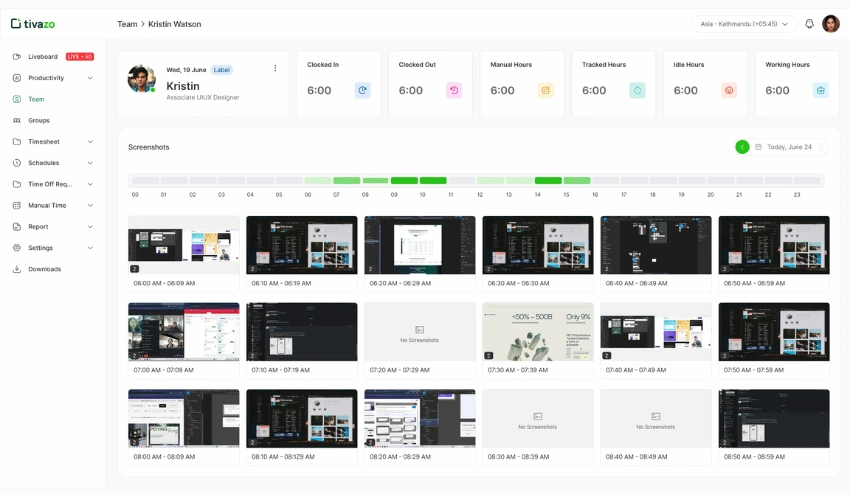
Tivazo
Tivazo is an efficient time management software that can assist individuals and teams in monitoring their activities and productivity, as well as streamline their work processes. Offering the integration of task scheduling, time tracking, and reporting, Tivazo enables employees to employ useful time management practices and ensure that all priorities are kept in one place. This tool is best suited to increase productivity, minimize missed deadlines, and organize work schedules.
Trello
Trello is a flexible time management tool that allows organizing projects and tasks with visual boards and cards. It facilitates time management skills such as prioritizing tasks, time blocking, and project monitoring, thus helping individuals and teams to be more productive. Trello enables teamwork, and thus everyone is on the same page, and the work is executed effectively.
Asana
Asana is a widely used productivity and time management program that allows one to organize and plan their work, create deadlines, and monitor it. By adopting organized time management methods in Asana, workers will be able to manage their time, follow up on their work, and make sure that important projects are successfully completed within the set time. It also allows teamwork and reporting of progress.
What Makes a Great Time Management Tool?
Not every productivity tool comes with the same capabilities. For both small-scale and expanding teams, seek out a solution that offers the following features:
Time Tracking
The first step to becoming more productive is to learn where time goes! Use a time tracker to measure your work time, track distractions, and optimize time spent. Team and planning management.
Team and planning management.
An effective productivity tool should be easy to use for task assignments, prioritization, and organization of projects.
With Effective Team Management, everybody will be aware of their duties, and they will collaborate effectively with other team members to meet given deadlines.
Employee Monitoring
Employee Monitoring offers business enterprises and remote teams valuable insights into the nature of work, enabling managers to support employees, enhance accountability, and locate workflow bottlenecks without micromanaging.
Performance Analytics
Use data to measure productivity, not assumptions. Businesses can leverage features such as Performance Insights to gain insights into productivity trends, pinpoint areas for improvement, and make informed decisions about their operations.
Automated Reports
You should select software that automatically generates Timesheets and Report summaries so that reports don’t need to be created manually.
These reports make it easy to handle payroll, forecast tracking, and billing to clients and save precious admin time.
How Time Management Tools Improve Productivity?
Time management tools can make it easier to apply time management techniques consistently, while the methods can help you prioritize and organize work. In contrast to manual planners and spreadsheets, modern-day productivity tools automate redundant tasks, provide greater transparency into work, and allow you to focus on priorities.
From a single practitioner to a small team to a large team, the right instrument can make your life easier and make you more productive.
1. Planning and Scheduling
The time management tool helps organize your day, plan tasks, set priorities, and schedule tasks efficiently. If you have a well-defined list of tasks, it will be easier to stay focused and not miss deadlines.
2. Tracking Work Progress
A time tracker can give you insights into how you are using your time. Time Tracking tools enable you to discover activities that are consuming your time, minimize distractions, and make better decisions on which activities should be focused on.
3. Managing Employees and Teams
Productivity is not a one-person job for businesses, it’s a team thing. With the Employee Monitoring features, managers can gain insight into employee patterns of work, enhance accountability, and support employees to improve their workload planning.
With the proper support of Team Management, organizations can assign the work effectively, improve communication, and ensure the project is moving forward.
4. How to measure productivity using Analytics
Data-driven decisions result in higher productivity. Performance Insights tools help companies track productivity trends, pinpoint bottlenecks, and pinpoint ways to enhance team productivity without trial and error.
5. Simplifying Reporting
Creating work reports can be tedious and time-consuming and is susceptible to human error. Track work hours, track project progress, and create accurate reports for managers, payroll, and clients, with ease using Automated Timesheets and reports.
The reasons why Tivazo is an effective time management tool
Tivazo brings together the critical aspects of productivity and workforce management in one platform, simplifying business and personal time management.
With Tivazo, you can:
- Accurately track work hours with Time Tracking.
- Enhance teamwork with Team Management.
- Monitor productivity with Employee Monitoring and Live Screenshots.
- Use Performance Insights to analyze work performance. Create accurate
- Timesheets and reports for payroll and project management.
Tivazo can also benefit businesses outside the realm of productivity. For employee compensation managers, resources such as the Employee Payroll Management Guide, Overtime Calculator, and Hourly to Salary Converter can ease payroll calculations and workforce planning.
Integrating a clock in clock out app enhances time accuracy and accountability, and implementing best employee-tracking methods increases the transparency of the workplace and improves productivity.
Using the right productivity tools and techniques, you can streamline manual tasks, enhance teamwork, and make informed decisions with real-time data.
6 Common Mistakes When Using Time Management Methods
The best time management techniques will not work if they are not used correctly. Many people fail to get a productivity system off to the right start because the problem is that they aren’t using the system correctly.
By steering clear of these common pitfalls, you can improve your chances of achieving better results and establish effective time management practices.
1. Using Too Many Methods at Once
Using multiple productivity techniques at once can be more confusing than productive. If more than one system is used, select one that works for you and stick with it while you are trying to implement it, then change to another if necessary.
2. Ignoring Breaks
Exercise extreme caution to not work for extended periods without breaks, as this can diminish focus, creativity, and overall performance. Taking short breaks during the day will help you refresh and be productive for longer periods.
3. Not Reviewing Priorities
The priorities can shift from day to day during the week. Checking your task list regularly helps you to ensure that you’re working on the most important task, rather than doing something that isn’t really worth your time.
4. Overplanning Your Day
It would be great to plan a detailed schedule, but if everything is packed in, there won’t be any room for the unexpected. Be flexible with your plans, and don’t let stress build up.
5. Multitasking Too Often
While multitasking can appear efficient, the switching back and forth of tasks can lower concentration and enhance the chance for erroneous tasks. It’s best to tackle one task at a time.
6. Not keeping on top of time tracking
If you don’t know where your time goes, you’ll have a hard time figuring out how you can become more productive or how you can better your routine. One of the best time-tracking software solutions can assist you in discovering time leakages, planning your day better, and deciding on your workload with much more clarity.
With this in mind, you will get more out of any of the time management techniques you use and will have a more productive day.
Key Takeaways
- Time management methods help improve productivity, focus, and work-life balance.
- The Pomodoro Technique is ideal for improving concentration.
- Time Blocking helps organize busy schedules.
- The Eisenhower Matrix simplifies task prioritization.
- The Pareto Principle focuses on high-impact work. GTD helps manage complex workloads.
- Students benefit from structured study schedules and the Pomodoro Technique.
- Businesses improve productivity by combining effective methods with Time Tracking, Team Management, and Performance Insights.
Conclusion
No single time management technique is best for all people. The right one will be dependent on your duties, work ethic, and personal objectives. Both the Pomodoro Technique for getting things done and Time Blocking for building structure are great approaches to use if you want to work efficiently, as is the Eisenhower Matrix for prioritization and the Pareto Principle for getting more done than you are doing.
The best people aren’t just managing time, they are creating systems to make them work smarter every day. First, pick one and stick to it, then check and take steps to make small improvements over time.
For people and developing teams, effective productivity strategies along with tools such as Time Tracking, Performance Insights, Timesheets, and Reports offer better visibility into work, enhance accountability, and aid in sustaining long-term productivity.
Effective time management is not about being busy, it’s about being productive!
For those aiming to boost their productivity, check out our article on the Best Time Management Tools for Your Productivity to understand the different tools available and select the one that suits you best, both personally and for your business.
Great time management is not about working harder, it is about working smarter, being consistent, and developing habits that will prove to be successful in the long run.